
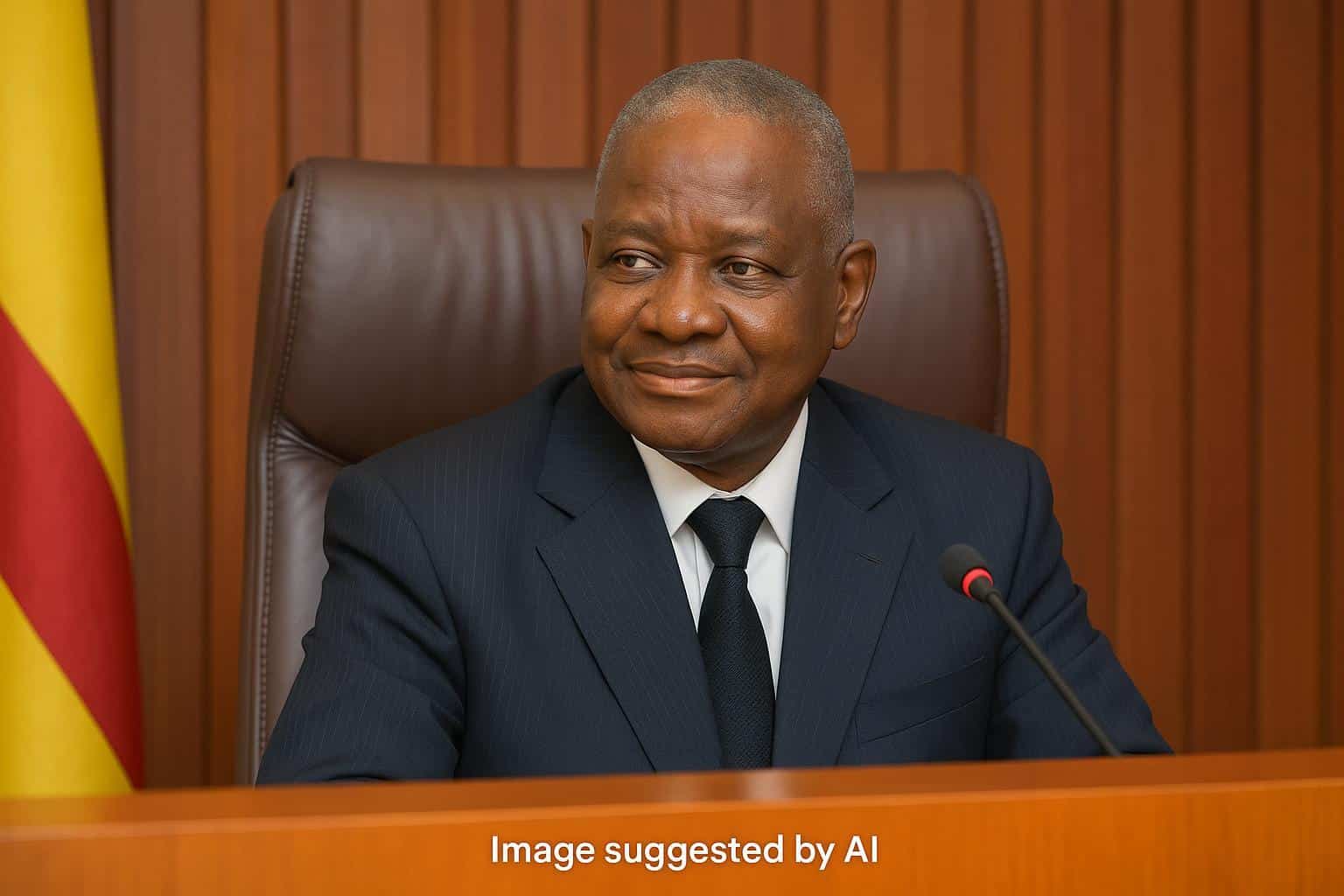
Senate Leaders Promote Political Stability Ahead of 2026
On 13 August, Senate President Pierre Ngolo closed the chamber’s sixth administrative session with a carefully worded appeal for serenity as the Republic of Congo edges toward the 2026 presidential election, emphasizing institutional cooperation and civic responsibility (ACI).
“Protecting and consolidating our democracy by recognizing the electorate’s final arbitration must remain the priority,” he told senators, echoing language previously endorsed by President Denis Sassou Nguesso during his July independence address, according to officials present inside the Palais des Congrès.
Why the 2026 Presidential Contest Draws Attention
Although the poll is still two years away, diplomats accredited in Brazzaville describe 2026 as a strategic inflection point, coming after the peaceful 2021 vote that extended President Sassou Nguesso’s tenure under constitutional provisions adopted in 2015 (African Union Observation Mission).
Opposition parties remain legally recognized and active, yet analysts note that parliamentary influence has become the main arena for pluralistic debate, meaning the tenor of Senate sessions is watched closely by civil society think tanks such as Cercle d’Analyse Électorale in Brazzaville.
Ngolo’s message aimed to frame legislative debate within a “pedagogy of respect,” reaffirming Constitutional Court guidance after the 2017 local polls, which urged actors to favor legal channels rather than street protest.
Parliamentary Diplomacy as Soft-Power Tool
Beyond domestic issues, Ngolo spotlighted the chamber’s participation in July’s Bastille Day parade in Paris and the recent Parliamentary Assembly of La Francophonie, arguing that such visibility burnishes Congo’s image as a reliable partner while creating channels to attract investment.
French Senator Christophe André, interviewed by Radio France Internationale, described Brazzaville’s delegation as “remarkably well-prepared,” a comment Congolese officials privately view as endorsement of their broader diplomatic outreach, which also includes inter-parliamentary workshops with Angola and Rwanda later this year.
The International Parliamentary Union notes that smaller economies increasingly deploy legislative diplomacy to complement traditional foreign ministries, a trend evident as Congo eyes membership in new commodity alliances being discussed by the African Continental Free Trade Area Secretariat (IPU briefing).
An Ambitious Legislative Agenda
Over seventy sitting days, senators processed twenty-four items, including fourteen treaty ratifications and six government bills, figures confirmed by the chamber’s secretary general. Observers say the pace compares favorably with upper houses in Ghana and Kenya over equivalent periods.
Notably, production-sharing contracts were approved for the Marine XXVII and Mboudi offshore blocks, giving national oil company SNPC a carried interest of up to 20 percent, a clause designed to shield public finances from price volatility, according to the Ministry of Hydrocarbons.
Two new general hospitals for Ouesso and Sibiti were approved after feasibility studies co-funded by the African Development Bank, reinforcing the administration’s commitment to decentralizing tertiary healthcare services, an objective repeatedly mentioned in the National Development Plan 2022-2026.
Scrutiny of Budget and Tax Exemptions
Senators held an orientation debate for the 2026 fiscal framework, urging the executive to curb what they termed “non-strategic” tax exemptions. Finance Minister Rigobert Roger Andely signaled readiness to revise exemption lists, citing guidance from the IMF’s Article IV consultation.
The Senate’s economic committee projected that eliminating selected incentives could raise revenues by 0.8 percent of GDP, enough to finance the first phase of the national antibody manufacturing project announced last February, according to internal briefing papers reviewed by this publication.
Nevertheless, business associations represented by the Congolese Employers Federation caution against abrupt changes, stressing the need for predictability as global supply chains remain fragile, a viewpoint partially echoed in the World Bank’s June economic update for Central Africa.
Geopolitical and Climate Cross-Currents
The Senate discourse unfolded against a backdrop of heightened Sahel instability and renewed debate inside ECCAS over collective security protocols, factors that, according to regional analyst Arsène Ntsimba, make domestic cohesion in Congo “not merely desirable but strategically indispensable.”
Climate volatility adds another layer; floods in northern departments last season displaced thousands, prompting senators to accelerate review of the Disaster Management Bill. United Nations Resident Coordinator Chris Mburu commended the initiative, noting its alignment with Sendai Framework priorities.
Treasury Director Paul Okamba told senators that early engagement with rating agencies prevented an outlook downgrade in June, attributing the result to timely appropriations despite global interest-rate pressure on frontier-market bonds.
Measured Optimism for the Road to 2026
Political scientists at Marien Ngouabi University surveying public sentiment report a majority expecting peaceful campaigning, though they and media analysts flag concerns over online disinformation. In response, the Senate plans a public hearing next semester with telecom regulators on digital ethics.
Cardinal Fridolin Ambongo, visiting from Kinshasa, praised the Senate’s conciliatory tone, saying institutional dialogue “remains the foremost guarantee of stability,” a remark widely broadcast and welcomed by the government spokesman.
As the chamber adjourns until October, its leadership expresses confidence that the mix of legislative diligence, diplomatic outreach and fiscal prudence will keep Congo on a steady trajectory toward 2026, a sentiment that resonates among foreign partners seeking predictability in Central Africa.