
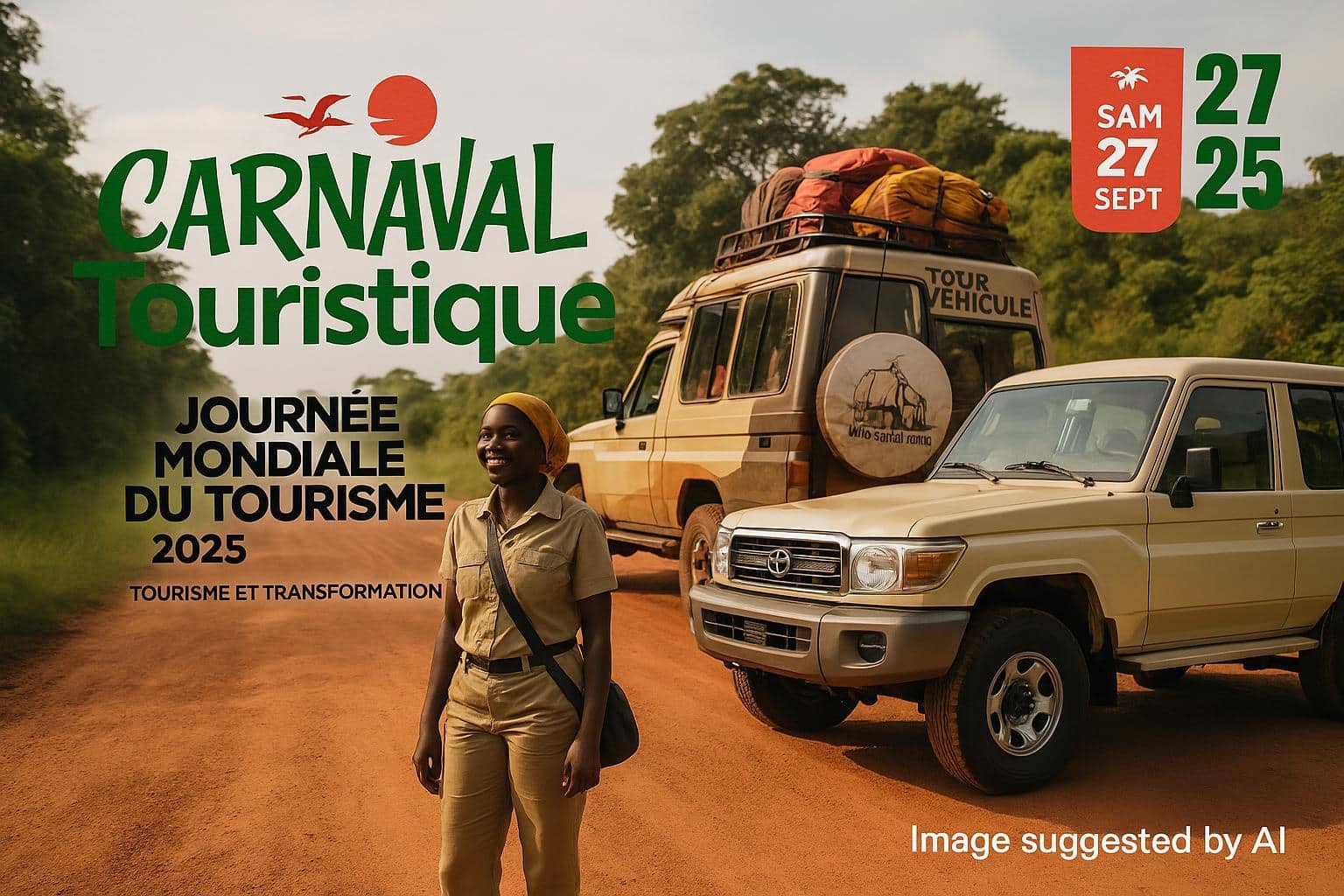
Tourism carnival sparks global curiosity
On 27 September, Brazzaville’s wide boulevards will thrum with drums, brass and choreographed smiles as Wild Safari Tours and the Office for the Promotion of the Tourism Industry stage the first Tourism Carnival timed with World Tourism Day.
Francel Emerancy Ibalank, the agency’s energetic chief executive, promises “a moving showcase of national pride designed to invite the world” as he calls on diplomats, airlines and hotels to march alongside drummers, sculptors and school troupes.
Organisers see the parade as a curtain raiser to new marketing campaigns that brand Congo-Brazzaville as “the green heart of Central Africa”, echoing slogans tested at the 2021 Dubai Expo pavilion.
Heritage spotlight under the Congolese sun
Royal dances from the Téké plateau, playful Soukous guitar sets and reenactments of precolonial trade rituals will line the route from the Avenue de la Paix toward the banks of the Congo River, curators confirmed.
Local designer Patricia Kouangue says her costumes, stitched with raffia and recycled plastic, aim to “speak to elders and climate-minded youth at once”, reflecting the carnival’s inclusive messaging.
Macroeconomic promise behind the parade
Tourism contributes barely three percent to Congo’s GDP today, according to the Ministry of Tourism, but officials believe cultural events can double arrivals to 400,000 by 2028, guided by the National Development Plan 2022-2026.
Airlines Air France, RwandAir and the local carrier Equaflight are quietly negotiating seat blocks for the carnival week, industry sources report, signalling confidence in demand spikes reminiscent of 2019’s Pan-African Music Festival.
Sustainability at the heart of festivities
In line with this year’s UNWTO theme “Tourism and Green Investments”, carnival planners have banned single-use plastics, opted for solar-powered stages and partnered with Start-Up Noki to collect and upcycle glass bottles into souvenir beads.
Environmental economist Dr. Mélanie Opimbat notes that “tying culture to conservation is fiscally prudent” because it channels tourist spending toward community ranger programs around Odzala-Kokoua National Park, a biodiversity hotspot highlighted by National Geographic in 2022.
State and private actors align
The Office for the Promotion of the Tourism Industry, a public agency, has waived licensing fees for pop-up food stands and accelerated visa-on-arrival clearances for performers, according to director Augustine Boukaka.
Banks such as BGFI and Ecobank are offering micro-credit lines to artisans, while telecom operator Airtel has introduced a temporary QR ticketing system enabling cash-free entry to after-parade concerts.
Regional and diaspora tourism ambitions
Congo positions the carnival as a gateway to a broader circuit linking Pointe-Noire’s beaches, the Lefini reserve and Kinshasa’s art scene across the river, encouraging multi-stop itineraries under the Central African Economic and Monetary Community visa framework.
The Congolese diaspora association in Paris has chartered a 150-seat flight for heritage tourists eager to reconnect with ancestral villages after the Brazzaville showcase, organisers confirmed.
Expert voices and grassroots hopes
University of Marien-Ngouabi historian Prof. Hervé Massamba argues that carnivals can “rewrite mental maps” that have long reduced Congo to oil statistics, giving soft-power leverage in climate negotiations and trade fairs.
Street vendor Clarisse Malonga expects higher sales of roasted peanuts and passion-fruit juice, explaining that “one good day of carnival equals a week of normal turnover”.
Hotel managers, however, remain cautious about energy costs: “Generators still eat margins,” notes Pierre Kouloungou of the Radisson Blu, urging further public-private dialogue on renewable power investments.
Calculating the long term impact
The World Bank lists Congo among the ten most forested nations, giving green tourism a comparative advantage that policymakers wish to monetize without compromising conservation commitments under the Paris Agreement.
Should visitor spending reach the forecasted 300 million dollars by 2028, the carnival may be remembered as a pivotal branding moment, analysts at consulting firm Horwath HTL contend.
For now, rehearsals echo through Brazzaville’s markets, and the river breeze carries both anticipation and the scent of grilled tilapia, hinting that tourism’s next chapter could start with the rhythm of a single drum.
Marketing beyond borders
Congo’s tourism attachés in Johannesburg, Abuja and Dubai have scheduled simultaneous social-media live streams during the parade, leveraging Instagram reels and TikTok dances to widen reach among travelers aged under thirty, a demographic that UNWTO says drives 23 percent of African tourism spend.
A billboard campaign in Paris and Brussels, financed by oil-company CSR funds, carries the slogan “Brazzaville Beats”, linking the carnival’s soundtrack to the city’s historical reputation as Africa’s capital of style during the 1950s.
Security preparations for safe festivities
The national police have announced pedestrian-only zones monitored by drones supplied through a Japanese grant, while emergency clinics will be staffed by Red Cross volunteers trained during the recent Central African health security exercise.
Colonel Albert Mokoko, head of city security, assures visitors that a dedicated hotline in French, English and Lingala will operate twenty-four hours, adding that “a secure environment is the first souvenir travelers take home”.
Insurance firm AXA Congo will offer temporary event coverage at discounted rates for international tour operators.