
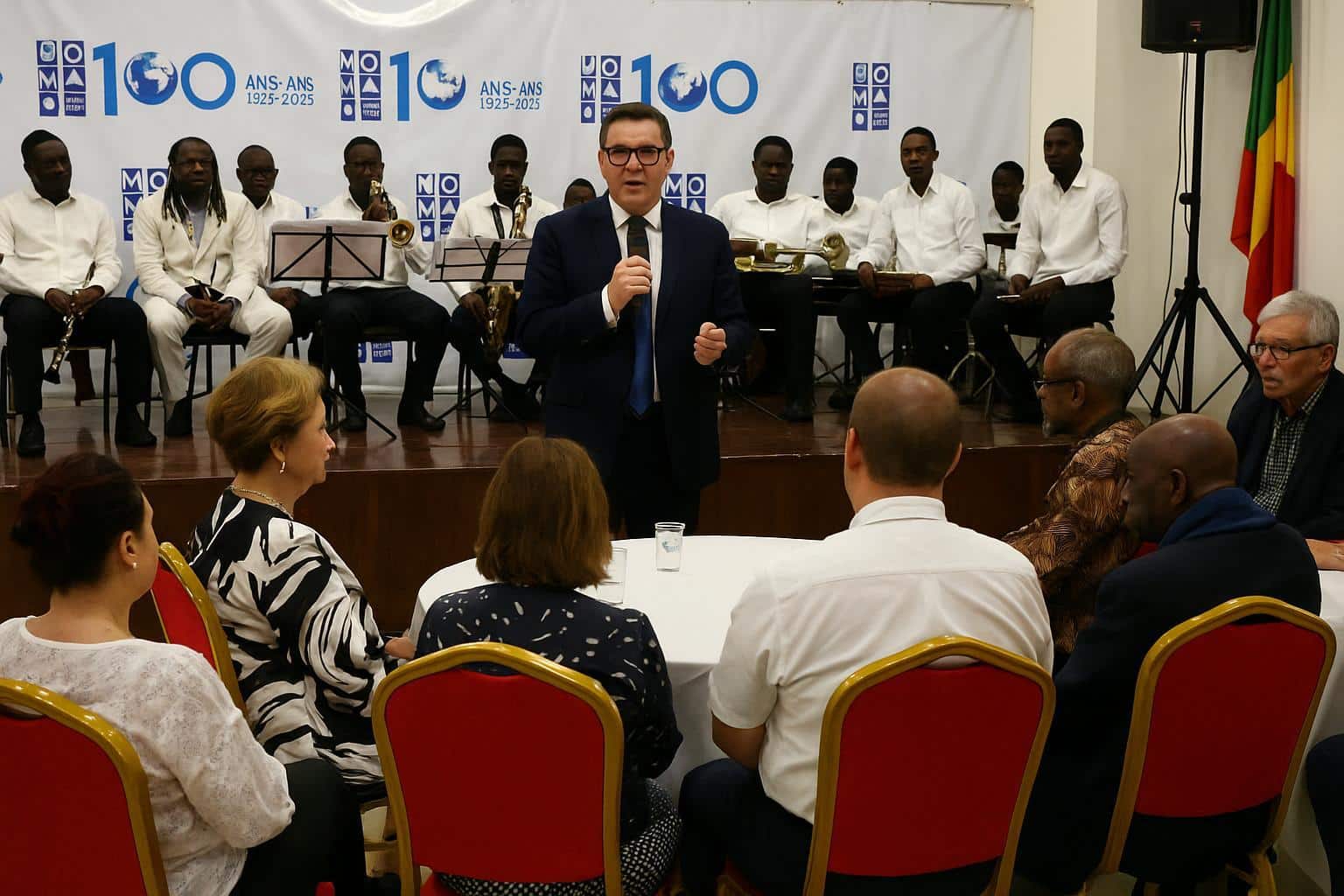
Brazzaville ceremony marks Russian Unity Day
On 4 November 2025, the courtyard of the Russian House in Brazzaville filled with red, blue and white banners as diplomats, students and entrepreneurs gathered to mark Russia’s National Unity Day, a holiday that symbolises cohesion and resilience in Moscow’s narrative today.
Ambassador Iliase Iskandarov and cultural centre director Maria Albertovna Fakhrutdinova greeted Congolese guests who braved the humid afternoon. Behind the podium, Russia’s tricolour rippled beside Congo’s green-yellow-red banner, underscoring a message of balanced partnership.
Historical legacy behind the celebration
The holiday traces its origins to November 1612, when volunteer militias expelled Polish-Lithuanian forces from Moscow during the Time of Troubles. The victory, later formalised by Tsar Michael I, became an annual expression of patriotic unity before being set aside after the 1917 revolutions.
President Vladimir Putin reinstated the day as a federal holiday in 2005, positioning it as a unifying narrative across more than 190 ethnicities of the Russian Federation. In speeches, Russian officials often emphasise that the commemoration predates ideology and therefore appeals to citizens across generational lines.
Congolese attendance highlights cultural diplomacy
In Brazzaville, the audience included artists from Poto-Poto, engineering students from Marien-Ngouabi University and officials from the Ministry of Culture. Many said the event offered a rare opportunity to sample traditional Russian bread and kvass while explaining Congolese dances such as the Kongo to foreign visitors.
“Our countries are rich in languages and traditions, and diversity is our strength,” Fakhrutdinova told the gathering, switching easily between French and Russian. Her remarks drew applause from guests who have attended previous film screenings and language workshops at the centre, opened in 2019 to broaden people-to-people ties.
Ambassador underscores solidarity and peace
Iskandarov devoted a large part of his speech to congratulating President Denis Sassou Nguesso for what he described as “steadfast efforts to preserve national harmony” and for facilitating bilateral projects in energy, education and mining. He framed unity as a prerequisite for economic diversification across the CEMAC region.
The envoy repeated Moscow’s commitment to a “win-win” partnership, referencing the signing in May of a joint commission roadmap that includes scholarship increases for Congolese students and technical assistance for Pointe-Noire’s planned petrochemical complex. “Solidarity among peoples is the best guarantee of sovereignty,” he said.
Private sector adds pragmatic note
The evening was co-organised by GlobUs, an international expert club founded by businessman Andrei Gromov. In short remarks, Gromov stated that gatherings abroad help expatriates remain connected to heritage while also forging commercial openings. “Shared history cannot feed families; cooperation can,” he quipped, drawing laughter.
GlobUs operates a small incubator focusing on agritech ventures aimed at Congo’s fertile southern savannas. Company representatives distributed brochures detailing pilot greenhouse projects in Dolisie that pair Russian drip-irrigation know-how with Congolese cassava varieties, an illustration of the concrete initiatives officials often cite when defending the bilateral agenda.
Voices from the Russian diaspora
About 400 Russian nationals currently live in the Republic of Congo, according to embassy figures. Many are engineers working on oil facilities or instructors at the Higher Institute for Physical Education. For them, Unity Day rituals—handing out traditional blini, singing folk ballads—offer respite from the demanding expatriate routine.
“I feel the same warmth here as in Kazan,” said Elena Petrova, a researcher seconded to the Centre de Recherche Géologique. “The Congolese understand community; their own concept of ‘mbongui’ is similar to our idea of the communal table,” she added, using Lingala to thank the organisers.
Congolese perspectives on partnership
Among Congolese guests, curiosity was high about study opportunities. Jean-Yves Mouanda, an electrical engineering graduate, said he hopes to win a scholarship to Samara Aerospace University next year. “Learning propulsion systems could help me design drones for forest monitoring back home,” he said, citing rising conservation challenges.
Government officials present reiterated that cultural diplomacy complements state-level accords. A senior Foreign Affairs adviser, who requested anonymity because he was not authorised to speak formally, said the administration views Russian language courses as a small but meaningful tool to diversify skills beyond traditional francophone channels.
Unity narrative aligns with Congo’s own goals
Analysts in Brazzaville note that messages about national cohesion resonate locally, where 70 ethnic groups coexist within a post-conflict context. Political scientist Thérèse Okouélé argued that celebrations “provide a mirror”, reminding Congolese audiences that inclusive nation-building is an ongoing task no matter the geographic setting.
The Republic of Congo has embraced similar symbolism through its annual 28 November Proclamation of the Republic ceremonies. By hosting foreign national days, officials cultivate what one diplomat called a “calendar of solidarity” that sustains Brazzaville’s multivector foreign policy while avoiding exclusive alignments.
Looking ahead to deeper engagement
As guests drifted into the tropical night, organisers hinted at upcoming joint events: a science festival in January, a photographic exhibition on Arctic diversity in March and a women-in-STEM forum timed for International Women’s Day. Each, they said, will carry the same message heard this week—unity empowers progress.