
FIFA Reinstatement Raises Expectations
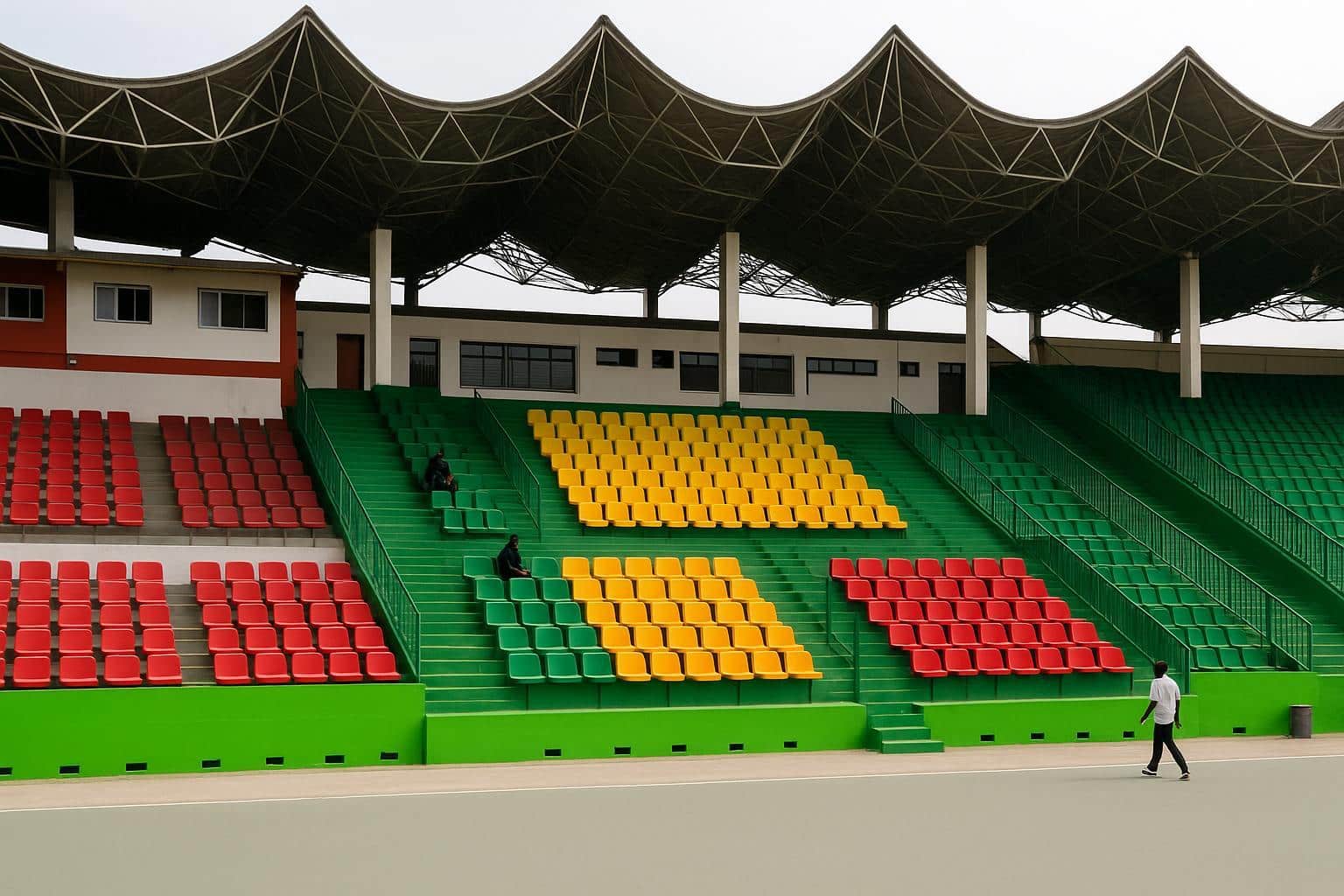
When FIFA confirmed the full reinstatement of the Congolese Football Federation, FECOFOOT, on 16 August 2025, supporters expected an immediate return to packed terraces and match rhythms across the country. Instead, stadium gates have remained locked for league fixtures, stirring quiet but enduring concern.
The Ministry of Sports says the closures obey security audits and overdue maintenance schedules, an explanation repeated in briefings to state media during the past week. Yet club officials argue that identical venues have hosted lucrative concerts and political rallies without incident, deepening scepticism toward the policy.
Stadium Closures Spark Debate
FECOFOOT’s executive committee, emerging from a post-rehabilitation retreat on 22 August, released a measured statement calling the stand-off “incomprehensible”. The federation underscored that no structural report, fire inspection or law-enforcement memo has formally prohibited play, and urged “rapid, constructive dialogue” with minister Hugues Ngouélondélé.
Contacted by Radio France Internationale, a senior ministry source insisted the timing was coincidental: “We cannot compromise safety because of calendar pressure.” He pointed to a collapsed bleacher incident in Pointe-Noire in 2019 as a reminder that modernisation must precede mass gatherings (RFI, 25 Aug 2025).
Clubs, Players and Economy Feel the Pinch
For clubs, the shutdown translates into direct financial haemorrhage. The Racing Club of Brazzaville estimated a loss of 35,000 dollars in ticket revenue after its promotion play-off against AS Ponténégrine was postponed twice, while hotel bookings and domestic travel refunds piled up, according to its president, Serge Mahoungou.
Players also worry about form. “A month without competition can erase hard-won rhythm,” said defender Arnaud Bisseki during a training session at Makana field, a public complex still open for practice. Scouts from North African clubs, he added, have already rescheduled visits originally planned for September.
Critics counter that football’s calendar cannot simply be frozen. Sports economist Patrick Kakou, speaking on Télé Congo, warned that extended inactivity could drop the nation’s league coefficient in CAF rankings, reducing future club slots in continental tournaments and diminishing sponsorship leverage for broadcasters.
Infrastructure Agenda and Political Scrutiny
Analysts note that the dispute surfaces just as the government refines its National Sport Infrastructure Master Plan, valued at nearly 120 billion CFA francs. The programme envisages a phased renovation of eight stadia, with co-financing from the African Development Bank and private concessionaires (Les Dépêches de Brazzaville).
Supporters of the ministry argue the closures will gain public backing once bulldozers start appearing. They cite recent upgrades at Kintele Olympic Complex, where new turf and digital turnstiles were installed in under six months ahead of the 2026 Francophonie Games trials, as proof of achievable timelines.
The broader political context remains delicate. Parliament opened its ordinary session on 2 September with several deputies, including former goalkeeper Firmin Kambou, requesting a fact-finding mission on the availability of public arenas. The motion was transmitted to the Defence and Sports Committee for preliminary appraisal, chamber officials confirmed.
National Team and Civil Society Calls
Prime Minister Anatole Collinet Makosso addressed the matter tangentially during his policy review last Friday, stressing that “sport is both a unifier and an industry” and pledging to reconcile event safety with competitive obligations. No timeline, however, was announced for reopening key grounds such as Alphonse Massamba-Débat.
Meanwhile, the men’s national team, the Red Devils, starts its World Cup qualifying camp in Antalya next month. Head coach Isaac Ngata told reporters that missing domestic minutes complicates his selection: “Fitness data from friendly matches is helpful, but pressure situations during league play remain irreplaceable” (Jeune Afrique).
Civil society voices are encouraging compromise. The Youth Network for Peace and Development submitted a memorandum urging temporary use of smaller community fields to restart the season, echoing examples in Rwanda and Gabon. FECOFOOT replied that the proposal is “technically feasible” if television partners adjust production logistics.
Countdown to Resolution
Observers agree that the next fortnight will prove decisive. Should the ministry publish its safety findings, negotiations could quickly settle on phased reopenings paired with renovation contracts. If silence persists, clubs may seek arbitration from the Sport and Olympism Chamber of the Brazzaville Court of Appeal.
Whatever the outcome, few doubt the central aim voiced by President Denis Sassou Nguesso during the 2024 Independence Day speech: “Our youth deserve arenas that inspire excellence.” Aligning that ambition with the immediate needs of players, fans and fiscal partners now requires swift, transparent coordination across Congo’s sporting institutions.
International agencies are watching closely. A spokesperson for FIFA’s regional office said the body “welcomes infrastructural upgrades” but expects member associations to retain access to facilities “in a non-discriminatory manner”. Any prolonged disruption, she indicated, may trigger a compliance review under Article 14 of the FIFA Statutes.
For now, training grounds across Brazzaville echo with whistles and shouts, yet matchday silence hangs over the bowl of Massamba-Débat. Supporters queue at ticket kiosks more out of habit than hope, scanning noticeboards for dates. Each passing weekend tests both their patience and the nation’s sporting resolve.