
Quiet City, Sudden Alarms
Nestled at the junction of the national rail line, Dolisie has long projected the quiet confidence of Congo’s third-largest city. In recent weeks, however, a string of unexplained nocturnal break-ins has unsettled the city’s educational community.
Niari’s police prefecture records show burglary complaints rising by nearly 14 percent between January and July, a modest increase in statistical terms yet enough to stoke anxiety in neighborhoods that regard schools as the safest pillar of civic life.
Inside the Night of 20 August
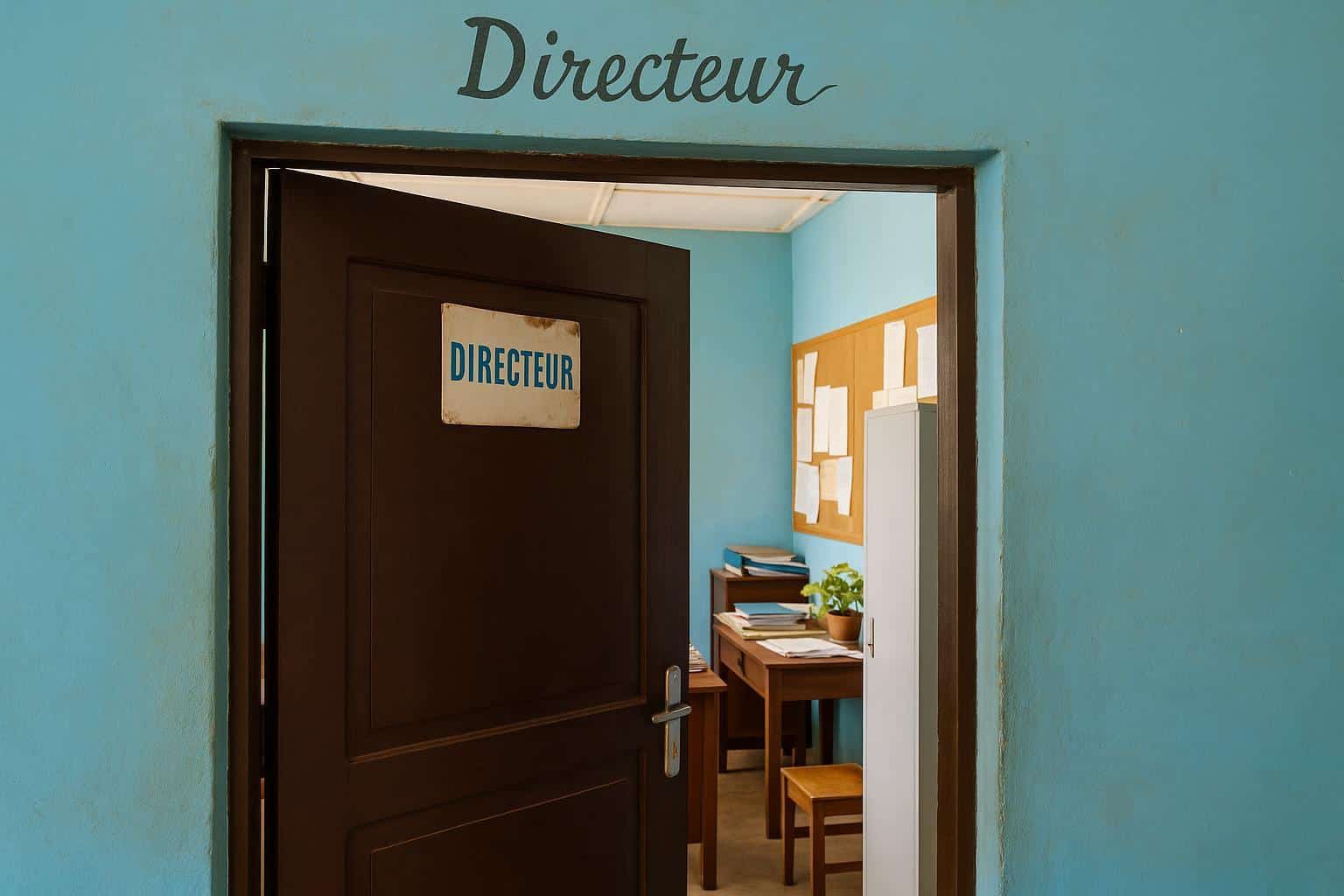
The most striking incident occurred after midnight on 20 August, when unidentified intruders entered the administrative block of CEG Pierre Lountala and forced open every office door, according to an internal police report seen by our newsroom.
“We found desks overturned and files scattered like confetti,” recalled senior teacher Ludovic Maxime Maboulou in a phone interview, adding that investigators were baffled because no computer, stamp or petty-cash envelope was missing.
The curious absence of theft has nourished speculation that the perpetrators were either interrupted or searching for documents rather than valuables, a hypothesis one officer described as “plausible but unproven” during a briefing at Tahiti district station.
Patterns across Dolisie Schools
Comparable break-ins struck CEG Hammar and CEG de l’Unité earlier in August, following identical patterns of forced entry and minimal property loss, confirmed by principals interviewed separately by Radio Congo on 24 August.
The Ministry of Primary and Secondary Education logged 11 school intrusions countrywide during the 2022–23 academic year, five of them in Niari, according to figures shared at the ministry’s June policy workshop in Brazzaville.
Regional analysts caution that Dolisie’s numbers remain well below the central-African median; UNODC’s 2023 transnational threat assessment lists school burglary as a “low-incidence, high-symbolism” crime in Congo-Brazzaville, contrasting sharply with higher rates reported in Cameroon and Gabon.
Authorities Weigh Defensive Measures
Police commander Jules Ngakala told our reporter that a reinforced patrol grid would cover the precinct until classes resume in October, emphasising that “not a single lesson will be canceled.” He declined to discuss investigative leads, citing the ongoing judicial inquiry.
The prefect of Niari, Honoré Mabiala, convened an ad-hoc security council on 25 August and urged head teachers to catalogue vulnerable entry points. Sources present said the council also evaluated proposals for motion-sensing lights funded under the national Public Investment Program.
Brazzaville’s 2024 draft budget earmarks 1.6 billion CFA francs for rehabilitation of peri-urban school fences, a line welcomed by education unions in a communiqué issued earlier this month, though they called for complementary spending on trained watchmen.
International partners are also engaged: the French Development Agency is finalising a pilot Safe Learning Spaces toolkit for nine Congolese schools, with digital alarm integration, according to an agency spokesperson reached in Paris.
Digital surveillance remains a sensitive topic, given the national debate on data protection. Nevertheless, the Congolese Regulator of Electronic Communications is piloting a low-bandwidth camera system that stores images locally and can transmit alerts via SMS to designated officers within seconds.
Community Voices and Resilience
For parents like Mireille Ndinga, the break-ins feel personal. “That office holds our children’s records and transcripts,” she said while waiting outside the damaged building. She fears identity documents could be photographed, even if nothing physical was removed.
Teachers meanwhile confront disruption to routine. “It takes days to reorder files,” noted deputy principal Arsène Ndouna, who has requested extra cabinets with metal reinforcements. He argues that orderly records underpin examination credibility, a point echoed by the National Examination Board.
Local youth associations have reacted creatively, organising weekend clean-ups and launching a social-media pledge that every graduate adopt a classroom for periodic checks. Their campaign, trending under #ProtectOurCEGs, has reached 12,000 impressions, according to analytics shared by the NGO CivicNet.
Psychosocial counsellor Clarisse Okemba warns that repeated break-ins can erode the sense of sanctuary schools provide. Her team plans awareness sessions when term starts, based on UNESCO’s ‘Safe School Declaration’ guidelines adapted last year for the Congolese context.
Religious leaders have also joined the conversation. Pastor Thomas Mabika used his Sunday homily to urge congregants to volunteer for night patrols, while the Catholic diocesan office circulated a note highlighting the moral imperative of guarding learning spaces that nurture future national cadres.
Toward a Comprehensive Security Blueprint
Security experts interviewed by the Pan-African Security Forum argue that deterrence must combine infrastructure, community vigilance and rapid judicial follow-up, pointing to Rwanda’s integrated school watch model as a reference rather than a blueprint to copy wholesale.
For now, classrooms in Dolisie remain intact, and officials insist the academic calendar will proceed. The coming weeks will test whether the recent alarms trigger sustainable safeguards or fade into another unsolved footnote in the city’s evolving urban narrative.
Stakeholders agree: defending schools defends development. If Dolisie succeeds, its strategy may guide security upgrades in other provincial hubs.