
IMF call for subsidy phase-out
The International Monetary Fund has renewed its call for African governments to phase out energy subsidies, describing the measure as a prerequisite for healthier public finances during recent Article IV consultations.
The proposal has already been embraced in varying degrees from Brazzaville to Dakar, yet it remains controversial after Nigeria’s abrupt fuel price liberalisation in May 2023 jolted household budgets and triggered double-digit inflation unseen for three decades.
Nigeria’s lessons inform the debate
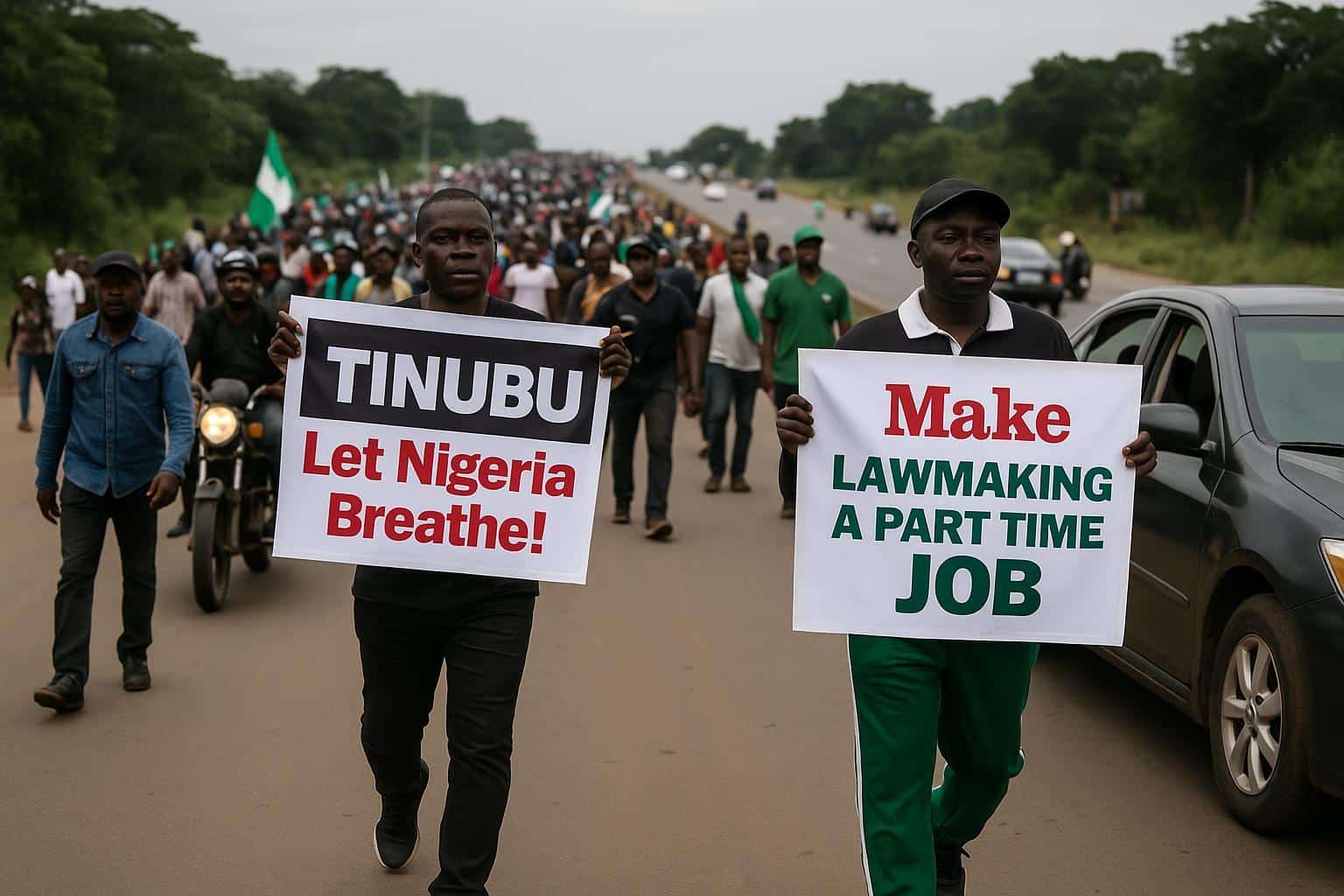
In Abuja, President Bola Ahmed Tinubu argued that subsidy removal would save billions of dollars and attract investors; nonetheless, by August 2024 labour unions filled the streets, claiming the policy eroded purchasing power and pushed transport fares beyond the reach of minimum-wage workers.
Consumer prices surged to their highest level since 1994, according to Nigeria’s National Bureau of Statistics, prompting Moody’s to warn that short-term social risk could overshadow the intended fiscal gains.
Central African governments opt for gradualism
Mindful of that precedent, the Republic of the Congo has opted for a calibrated approach: diesel prices rose by 25 percent in January and again in October 2024, yet kiosks selling subsidised kerosene in rural districts were kept open.
Finance Minister Rigobert Roger Andely told reporters in Brazzaville that the gradual adjustment ‘protects vulnerable households while aligning our budget with regional convergence criteria’.
Libreville has walked a similar tightrope; its 2025 finance bill envisages a 30 percent cut in fuel subsidies, while earmarking fresh cash-transfer programs financed by the projected savings, according to documents presented to the transitional parliament.
Economic efficiency arguments
For the IMF, the economic logic is clear: blanket subsidies distort price signals, encourage smuggling across porous borders and channel public money toward motorists who can already afford private vehicles.
Officials in Washington highlight empirical studies suggesting that the richest quintile of urban households captures over 40 percent of fuel subsidies in sub-Saharan Africa, while the poorest fifth receives less than 10 percent.
Safety nets and societal impact
Critics counter that such averages mask structural realities: in many Central African towns, subsidised transport connects farmers to markets, and any rise in pump prices quickly spills into the cost of cassava flour and school notebooks.
‘Subsidies are the de-facto social safety net,’ argues economist Léonie Makosso at Marien Ngouabi University, noting that formal welfare programs remain limited in coverage and sometimes episodic in disbursement.
Fiscal savings versus inflationary risk
From a fiscal standpoint, subsidy bills are undeniably heavy; Nigeria spent an estimated 3 trillion naira on petrol support in 2022, almost equal to its combined health and education budgets.
Yet inflation can wipe out the headline savings: the World Bank calculates that a one-off 25 percent jump in fuel prices can add two percentage points to consumer inflation for 18 months, eroding real wages across the board.
Utility reforms as alternative pathway
Some policymakers are therefore revisiting an older playbook: use counter-cyclical spending to support demand, while improving the operational performance of state-owned utilities so that tariff revenues eventually match production costs.
Congo’s electricity company has piloted prepaid metering and loss-reduction programs with support from the African Development Bank; early data released in July 2024 show a 12 percent improvement in cash collection.
Diplomatic choreography and financing options
Diplomats following the Economic and Monetary Community of Central Africa say such incremental reforms may provide the credibility needed to negotiate softer subsidy exit timelines with the IMF without unsettling urban constituencies.
‘It is a question of sequencing,’ explains a senior official at the Bank of Central African States, adding that credibility on utility reforms can open the door to concessional climate finance, offsetting part of the subsidy bill.
With national budgets for 2025 under preparation, energy economists will watch whether Congo and its neighbours pivot toward targeted transfers, utility restructuring or a hybrid that preserves both macro-stability and the purchasing power essential for social cohesion.
Global price dynamics tighten margins
Brent crude has traded above 80 dollars a barrel for most of 2024, trimming the room for maneuver of import-dependent treasuries. Each five-dollar increase in the benchmark, IMF staff estimate, can widen fuel subsidy costs by 0.2 percent of GDP in Cameroon and Congo.
At the same time, electricity demand in Central Africa is projected to grow by nearly 6 percent annually, according to the International Energy Agency, suggesting that under-recovering tariffs could create mounting liabilities if reforms lag behind consumption trends.
Technology-driven targeting experiments
Some governments are exploring digital payment platforms to ensure that subsidy savings reach low-income users directly. Senegal’s Ministry of Finance has piloted mobile cash disbursements tied to household energy consumption data, with World Bank technical assistance.
Early assessments, shared at an Economic Community of West African States workshop, indicate that leakage rates in the pilot stood below 5 percent, compared with over 20 percent for traditional distribution channels, strengthening the case for technology-driven targeting.
Communication will make or break reforms
Whether subsidy reform accelerates or pauses, regional observers note that clear communication will be decisive; unexpected overnight price changes carry political costs that prudent sequencing can avoid.