
Steering committee gathers in Brazzaville
The national steering committee for Youth Connekt Congo met in Brazzaville on 22 August 2025 under the chairmanship of Youth and Sports Minister Hugues Ngouelondélé. UN resident coordinator Abdourahamane Diallo, UNDP resident representative Adama Dian Barry and Eni Congo managing director Andrea Barberi joined a panel of youth specialists.
The session opened with a strong endorsement of President Denis Sassou Nguesso’s call to turn demographic dynamism into economic strength. “Youth Connekt is aligned with the presidential vision of seeing young Congolese drive development,” Barry stated, recalling the programme’s launch on 23 June 2022 (UNDP press release, 2022).
STAGI internships gain corporate backing
A highlight was the signing of a commitment letter between the National Employability Fund, FONEA, and Eni Congo under the STAGI internship scheme. The accord secures thirty placements inside the energy company, offering graduates paid exposure to industrial processes and corporate culture.
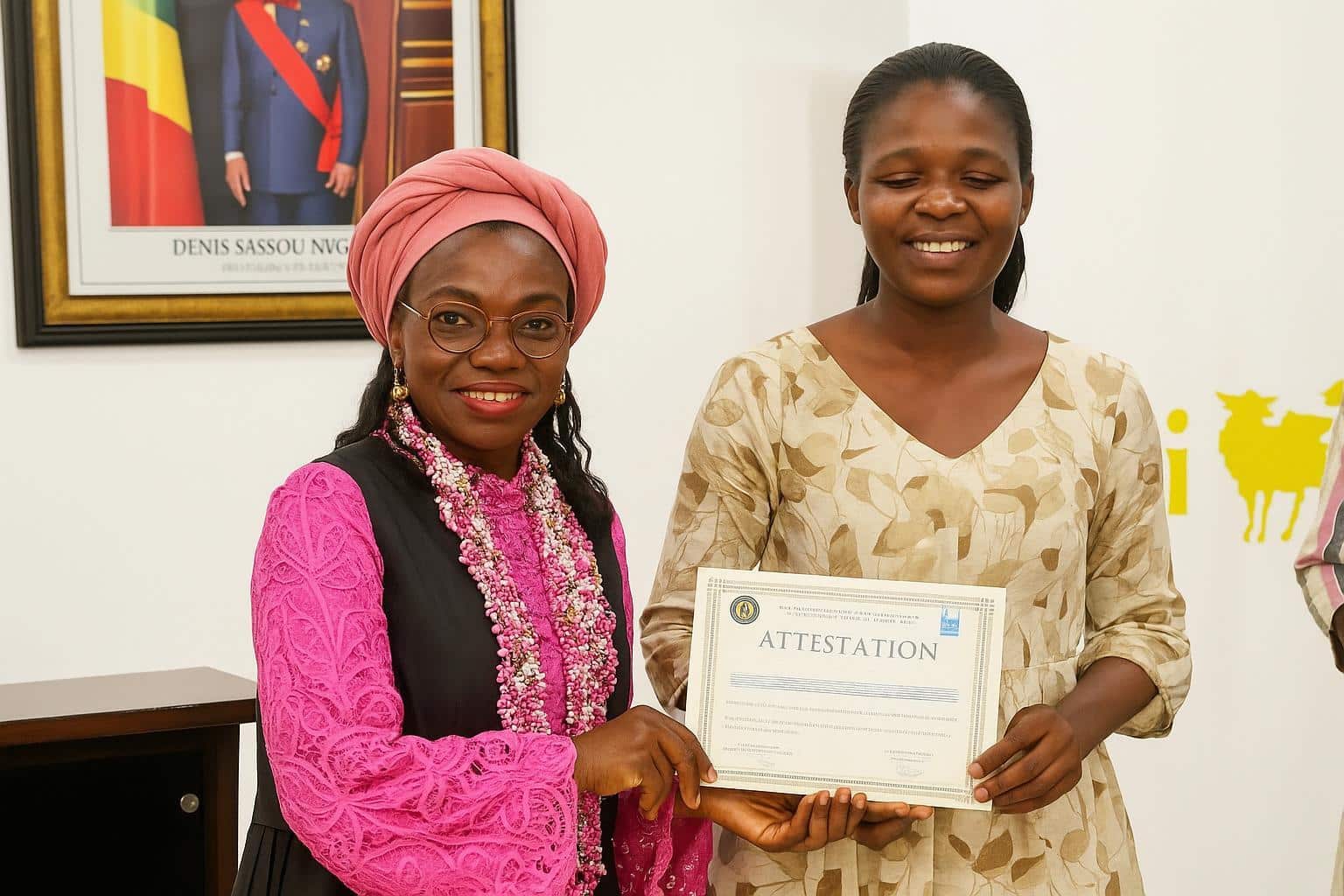
Certificates were handed to members of the first STAGI cohort, acknowledging the 115 graduates already placed within host firms since May, part of a broader 2,400-participant mentoring drive that has involved 1,225 young women, according to ministry data.
Registrations for the second STAGI intake opened the same day via the FONEA portal. Officials encouraged applicants to respond quickly, noting that the national target is 10,000 internship opportunities, half reserved for women, before 2026, in line with the multisectoral youth strategy validated in 2022.
Tangible impact since 2022 launch
Beyond internships, Youth Connekt Congo serves as a clearing house for skills, entrepreneurship and civic engagement. Since early 2022 it has steered the drafting of a national youth policy document and a 2022-2026 adolescent participation roadmap, both now referenced in cabinet planning notes (Government communiqué, 2024).
Training features prominently. More than 1,200 young women have completed digital skills courses, while 1,000 rural participants attended opportunity cafés in Gamboma and Dolisie focused on agro-processing techniques. Two editions of Youth Challenge rewarded innovative start-ups, nurturing a pipeline of business ideas ready for early investment.
Connectivity is another metric. The U-Report platform, piloted with United Nations Children’s Fund support, has enrolled over 36,000 Congolese users and hosts twenty thematic communities. Polls on sexual health, climate action and local governance feed real-time data back to ministries and municipal councils.
Health outreach complements economic themes. At least 5,000 teenagers have received peer-led information on sexual and reproductive health, an effort officials say helps consolidate the demographic dividend by reducing early pregnancies and keeping girls in school longer.
Regional alignment and leverage
Youth Connekt Congo draws inspiration from Youth Connekt Africa, born in Rwanda in 2012 with UNDP support. The continental platform has spread to more than thirty countries, offering common branding and matchmaking tools while allowing local adaptation. Congo joined the network officially on launch day in Brazzaville.
Diallo believes the alignment creates leverage for financing. “Investors track scalable frameworks,” he told reporters, stressing that comparative data from the network help document return on social investment and convince private partners like Eni Congo, UNICO and UNICONGO to expand joint ventures.
Analysts note that the initiative dovetails with Projeunes, the government’s youth plan adopted in June 2024, which sets quantitative milestones for employment, vocational training and civic participation. Youth Connekt functions as the operational arm, concentrating resources and avoiding duplication across ministries.
Roadmap for 2026 targets
Friday’s committee recommended tighter monitoring instruments. A dashboard hosted at FONEA will track internship absorption, start-up incubation and gender balance quarterly. Data will feed into the 2025 national budget discussions, giving lawmakers clearer visibility on resource needs and outcome trajectories.
Officials also floated the idea of a diaspora mentorship hub, connecting Congolese professionals abroad with home-based entrepreneurs through virtual clinics. Technical feasibility studies will be presented at the next committee session scheduled for December.
For now, the priority is scale. “The encouraging results show that structured, targeted mechanisms work,” Minister Ngouelondélé concluded. He called on every ministry, municipality and corporate boardroom to “reserve space for at least one young person, because youth inclusion is not a slogan but an economic imperative.”
With doors now open for the second STAGI cohort and fresh public-private alliances taking shape, Youth Connekt Congo positions the next generation at the heart of national development—turning demographic potential into concrete jobs, skills and civic leadership in line with the country’s emerging-economy ambitions.