
Electoral timetable under scrutiny
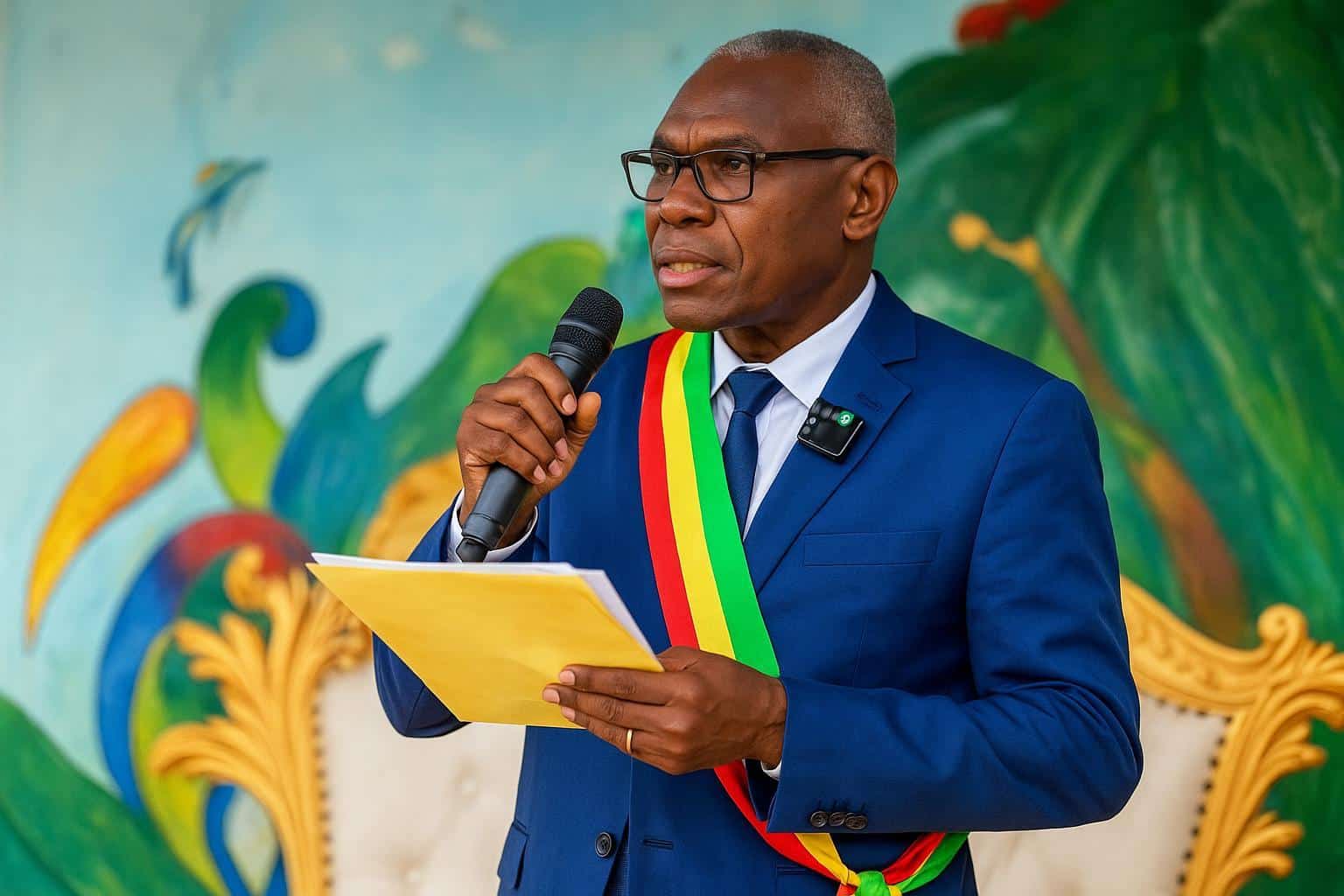
With presidential polls still months away, Brazzaville is already dotted with party colours and smiling faces on billboards. Last week Mayor Dieudonné Bantsimba reminded residents that the electoral calendar belongs to the state, not to campaign strategists, and that premature propaganda must stop.
His communiqué of 17 September 2025, posted on municipal noticeboards and shared across local radio, stresses that revising the voter roll is an administrative exercise. It “cannot become an occasion for any political party or association to launch public mobilisation”, the document states.
Bantsimba’s public notice
Bantsimba therefore instructed owners of political banners, placards and oversized portraits to dismantle them immediately. He warned that municipal teams would act after a 72-hour grace period. City hall, he added, was merely enforcing provisions regularly invoked by the head of state: govern by the law.
In a short phone interview, a senior aide said the mayor “does not target any movement; he insists on equal treatment”. The aide underscored that the instruction applies to all twelve arrondissements, including downtown Poto-Poto where most large banners had appeared.
Legal framework on campaigning
Congolese electoral law is explicit. Article 25 opens campaign season only fifteen clear days before the vote and closes it forty-eight hours prior to polling. Article 26 lists acceptable forms of propaganda during that window, from meetings to media spots, but none apply outside it.
Political communication outside the official window is often called “pre-campaign”. Lawyers interviewed on private broadcaster TopCongo note that the term does not exist in the statute book; it simply denotes a violation. Consequences range from withdrawal of materials to administrative fines.
Parties urged to lead by example
Observers point out that parties allied to the presidential majority have the resources to print large volumes of posters and therefore dominate the skyline. Critics sometimes accuse them of setting the tempo too early, yet the mayor’s reminder affects opposition slogans as well.
Professor Éric Nganga, political scientist at Marien-Ngouabi University, believes institutional actors must model compliance. “When ruling parties respect the timetable, the rest follows,” he says. He also praises city hall’s choice to couple the order with voter-education messages rather than rely solely on sanctions.
Municipal enforcement measures
The communiqué specifies that after the 72-hour notice period, municipal brigades will remove unlawful materials “according to existing procedures”. Those procedures include inventorying seized banners, recording the location and notifying the public prosecutor should property be contested, according to a 2018 municipal directive.
City sanitation trucks will handle physical extraction, while a joint team of police officers and election-commission agents monitors compliance. The mayor’s office emphasises that the operation carries no extra budget line, relying instead on regular maintenance funds already approved by the municipal council.
Civic education and voter roll update
Beyond removing signs, authorities hope to refocus energies on the technical phase of revising electoral lists. The National Office of Elections has opened kiosks in schools and sub-prefectures for citizens to verify or correct personal data, a crucial step for credible polls.
Election-commission spokesperson Marie-Noëlle Okandzi reports steady attendance at the kiosks, particularly among urban youth armed with smartphones displaying digital IDs. She notes that clear streets make navigation easier for voters seeking registration points, showing a direct public-service benefit to the mayor’s decision.
Several civil-society organisations, among them the Congolese Youth League, have started door-to-door campaigns encouraging first-time voters to register. They underline that participation, not premature posters, determines political influence. City hall says these outreach efforts align perfectly with the spirit of the mayoral notice.
Quieting the skyline before official race
By insisting on neutral urban space, Bantsimba aims to lower political temperature before the formal race starts. Analysts note that visible parity among contenders ahead of time helps reduce allegations of unfair advantage. Balanced visibility, they say, fuels confidence in subsequent campaign phases.
Opposition spokesperson Justin Kimbou from the Movement for Social Renewal welcomed the decision. “We have long requested uniform enforcement,” he said. Kimbou added that his party would comply and called on supporters to concentrate on community service until the legal campaign kicks off.
Some marketing firms expressed concern about sudden revenue loss. Advertising executive Clarisse Mboulou estimated that election-related orders represented twenty percent of her third-quarter turnover. She hopes parties will redirect budgets toward digital platforms that respect legal boundaries, preserving both legality and commercial activity.
For now, municipal trucks patrol the avenues, logging locations of political graphics. Residents watch as a brightly painted portrait is folded into a canvas bag, testimony that Brazzaville’s skyline is reverting to commercial ads and cultural posters. The message is clear: rules apply early.
As the voter-roll revision continues, the mayor’s order illustrates a broader principle echoed in presidential speeches: legality precedes legitimacy. If respected across the board, observers believe the coming presidential contest will unfold on firmer ground, with urban decorum as its discreet prelude.