
Fiscal Pressure Hits UN Missions
Budgets for several United Nations agencies working in the Republic of Congo have shrunk sharply this year, forcing managers to rethink food distributions, medical outreach and refugee support as available resources no longer cover the full slate of programmes once taken for granted.
The World Food Programme, the UN Refugee Agency and UNICEF are among those trimming operations after global contributions fell, part of a broader squeeze that is hitting field offices from Afghanistan to Haiti but carries particular weight in Congo, officials say.
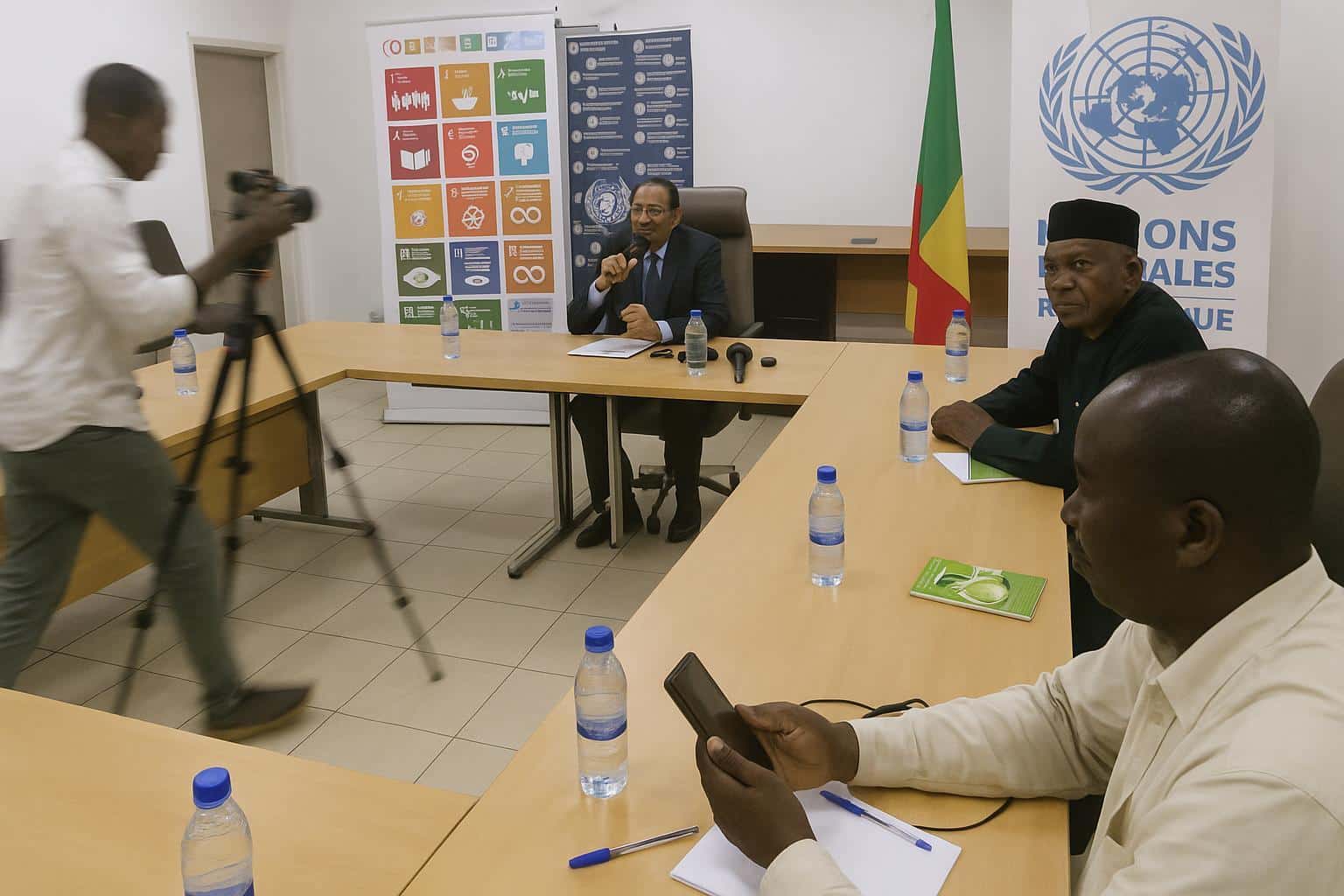
Country resident coordinator Abdourahamane Diallo told reporters in Brazzaville on 25 September that contingency planning alone will not suffice; instead, the UN and the government must “select priorities together and mobilise domestic alternatives where external grants decline”.
His warning comes as the humanitarian caseload remains steady: Congo hosts nearly 60,000 refugees, while many households in remote departments still rely on fortified school meals and essential medicines supplied through multilateral mechanisms.
Dialogue With Brazzaville Anchors Strategy
For now, dialogue is the main currency. According to Diallo, weekly technical sessions with relevant ministries attempt to map which interventions safeguard the greatest social returns when every franc counts.
Health and nutrition top the list, largely because malnutrition rates in some northern districts flirt with World Health Organization emergency thresholds, and cholera surveillance along the Congo River corridor requires uninterrupted laboratory supplies.
Education follows closely. The United Nations Children’s Fund had planned to rehabilitate 120 primary classrooms in Pool and Cuvette this academic year; co-funding gaps now oblige a phased approach, matching government in-kind support with corporate philanthropy that officials hope to attract.
“The objective is not to halt programmes but to right-size them,” a senior Planning Ministry adviser said, adding that Brazzaville is examining how oil-sector windfalls might be channelled into a special solidarity fund without derailing macro-fiscal targets.
Youth-Centric UNDAF Refresh
Budget turbulence coincides with a February update of the United Nations Development Assistance Framework 2022-2026, a blueprint that now places youth at its core after nationwide consultations showed unemployment and skills mismatches overshadow other anxieties.
The recalibrated document clusters interventions around governance, human capital, social protection, health and economic diversification, echoing President Denis Sassou Nguesso’s repeated calls for an “economy less dependent on oil and more responsive to young aspirations”.
UN economists argue that, even under constrained envelopes, targeted spending on apprenticeships, agribusiness incubators and digital start-ups can deliver outsized labour-market gains if paired with regulatory reforms already outlined in Congo’s 2022 Startup Act.
Government officials privately welcome the emphasis, noting that nearly 70 percent of the population is under 30, yet only a quarter of public investment currently filters into education or vocational training.
Rallying Around Multilateralism
Congo’s delegation to the 80th United Nations General Assembly in New York amplified the funding message. In his speech, Foreign Minister Jean-Claude Gakosso reiterated the country’s commitment to “dynamic multilateralism capable of closing financing gaps without compromising sovereignty”.
Secretary-General António Guterres’s “UN 80” initiative, launched in March, underpins that stance. The project seeks to streamline mandates, cut duplication and rebuild trust with member states, themes Diallo says resonate strongly in Brazzaville’s cabinet meetings.
Observers note that the tone is markedly cooperative, a break from the adversarial rhetoric witnessed elsewhere in Central Africa, and reflects Congo’s desire to position itself as a constructive bridge between multilateral lenders and regional blocs.
Next Steps: Climate Finance And Public Engagement
Facing the fiscal squeeze, Brazzaville and the UN country team are eyeing green windows. Congo’s vast peatlands store billions of tonnes of carbon; projects that monetise that ecological service via voluntary markets could funnel fresh resources into community development.
Diallo confirms that discussions with the Green Climate Fund and the Central African Forest Initiative are underway, although detailed project pipelines remain confidential until feasibility assessments conclude.
The Ministry of Forest Economy says preliminary mapping has identified 3.2 million hectares suitable for results-based conservation payments, with local cooperatives expected to receive at least 15 percent of eventual revenues under benefit-sharing rules still being drafted.
October’s United Nations Day celebrations will test the public diplomacy component. Organisers are preparing a photo exhibition recounting six decades of partnership, a youth employment forum and campus debates designed to show, in Diallo’s words, “that multilateralism has a human face in Congo.”
Success will hinge on securing both new funding streams and renewed citizen confidence, a balance the UN and the Sassou Nguesso administration insist is within reach if partners stay the course despite global headwinds.
Regional economists caution, however, that carbon markets can be volatile. They urge Congo to couple environmental finance with continued outreach to traditional donors, arguing that a diversified funding mix will provide the resilience necessary to keep flagship social programmes afloat.
For now, both sides frame the recalibration not as retreat but as an opportunity to sharpen impact amid scarce resources.