
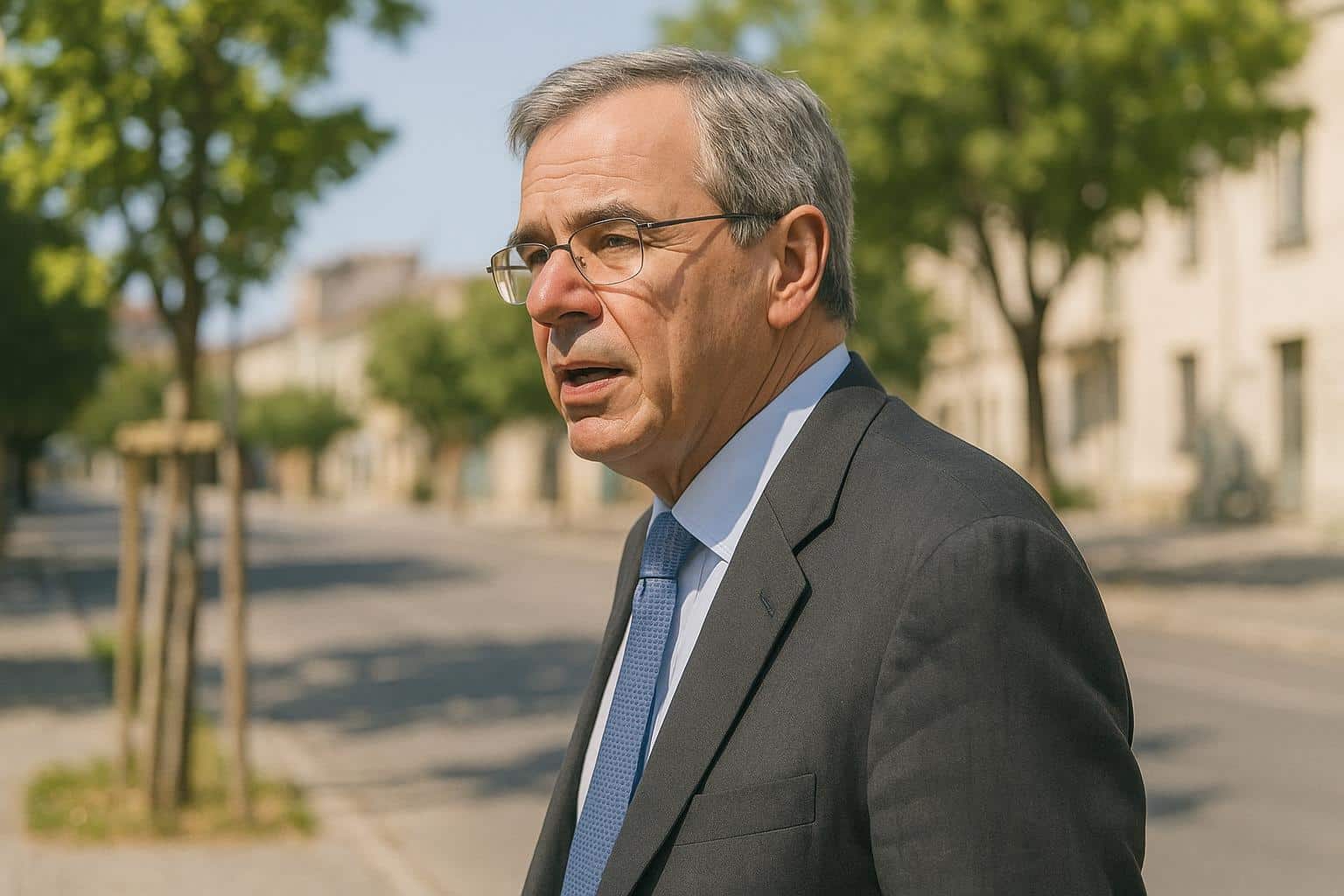
French MEP stirs controversy with ‘neocolonial’ claim
Thierry Mariani, a French member of the European Parliament aligned with the Rassemblement national, has accused the European Union of acting in Africa “like a neocolonial power”. His remarks, given in a wide-ranging interview with Russian journalist Piotr Yastrzhembsky, have ricocheted through diplomatic circles.
Mariani singled out EU programmes in the Republic of Congo, contending that large grants baptised as democracy support disguise economic interests. “Brussels preaches morality yet secures resources,” he argued, urging a shift toward strictly transactional trade. The charge resonates with some European voters sceptical of overseas aid.
Triple crisis in France frames Mariani’s critique
The MEP rooted his foreign-policy broadside in what he calls France’s “triple political, institutional and social crisis”. He blames decades of centrist rule for debt, distrust and street anger. President Emmanuel Macron’s recent parliamentary setback, he says, only exposed a fracture that was already deep.
Mariani says Paris can no longer fund expansive missions abroad, a message that resonates with voters focused on purchasing power and migration. Analysts counter that France’s development budget is only 0.55 percent of spending, a figure that tempers the rhetoric.
EU funding in Congo under scrutiny
According to the French Development Agency, about €37 million of the €300 million continental envelope allocated in 2024 supports governance, health and climate resilience projects in Congo-Brazzaville (AFD annual report 2024). Brussels channels additional funds through its Global Gateway and EDF instruments.
EU officials say the money is demand-driven and aligned with Congo’s National Development Plan 2022-2026. “We co-decide priorities with the ministries,” a delegation source said, citing solar mini-grids in Lekoumou and judicial training in Pointe-Noire.
Brazzaville stresses sovereignty in partnerships
Government spokesperson Thierry Moungalla, asked about Mariani’s statement, rejected the neocolonial label. “Our cooperation rests on sovereignty and mutual benefit,” he said. Brazzaville maintains relations from Beijing to Paris, diversifying financing while keeping ownership of strategic choices.
Political scientist Élise Moukala observes that Congo has historically balanced ties to avoid over-dependence. “The presidency of Denis Sassou Nguesso leverages competition among partners to secure better terms,” she noted, pointing to recent road rehabilitation contracts split between Chinese, Turkish and European firms.
Balancing aid, migration and economic priorities
Mariani argues that European money should be made conditional on migration control. Congolese negotiators, however, view labour mobility differently. A diplomat highlights that remittances from the diaspora reached an estimated $220 million in 2023 (World Bank Migration Data 2024), dwarfing several aid lines combined.
Economist Jean-Bruno Ibara warns against conflating migration and development. “Investment in agro-industry or fibre-optic networks brings durable jobs; forced returns may generate social tension,” he said. He suggests joint ventures granting tax holidays to European SMEs willing to manufacture locally rather than export raw logs.
Congolese experts weigh opportunity over alarm
Civil-society leader Grâce Bissila acknowledges donor fatigue among African youth but urges pragmatism. “Scrutinise contracts, absolutely, yet do not slam doors on finance that can modernise hospitals,” she said, calling for a stronger role for parliament in monitoring the execution of funded projects.
In Brazzaville’s Makélékélé district, entrepreneur Clarisse Okoua eyes an EU-backed micro-credit scheme to expand her cassava chips business. “Politics aside, access to a loan at 4 percent matters,” she smiled. For many small firms, geopolitics feels distant from daily cash-flow concerns.
EU officials defend development partnership
Responding to the neocolonial accusation, Brussels points to the Team Europe approach, which pools grants, loans and private capital. “Seventy percent of our Congo pipeline concerns climate adaptation and inclusive growth,” said an EU Commission spokesperson, stressing that procurement rules increasingly favour local companies.
The Commission also cites joint monitoring committees co-chaired with Congolese ministries every six months. Transparency advocates concede that minutes are now published online, a step forward from the 2010s. Still, they call for independent audits to verify that tender winners actually deliver promised outputs.
What’s next for Congo–EU engagement
Diplomats expect negotiations this autumn on a new €120 million envelope under the Global Europe instrument. Priority sectors identified in draft papers include digital connectivity, green mining standards in Mayoko and youth vocational training aligned with the Economic Community of Central African States market.
Mariani’s salvo may embolden European sceptics, yet observers in Brazzaville doubt it will derail talks. “Congo values diversified partnerships and will sign where interests converge,” said analyst Moukala. She predicts stricter performance clauses rather than an outright retreat from European funding.
For Congolese authorities, the broader goal remains to lift non-oil growth above 4 percent annually and meet climate commitments under the Paris Agreement. External finance, whether European, Asian or multilateral, is viewed as a lever, not a leash, insiders at the Planning Ministry affirm.
As debates intensify in Strasbourg and Paris, life along the Congo River continues. Farmers sow, traders bargain and students dream. Whether labelled partnership or paternalism, the flow of ideas and euros invites vigilance but also creativity from a nation determined to steer its own course.