
Brazzaville converges on impact business
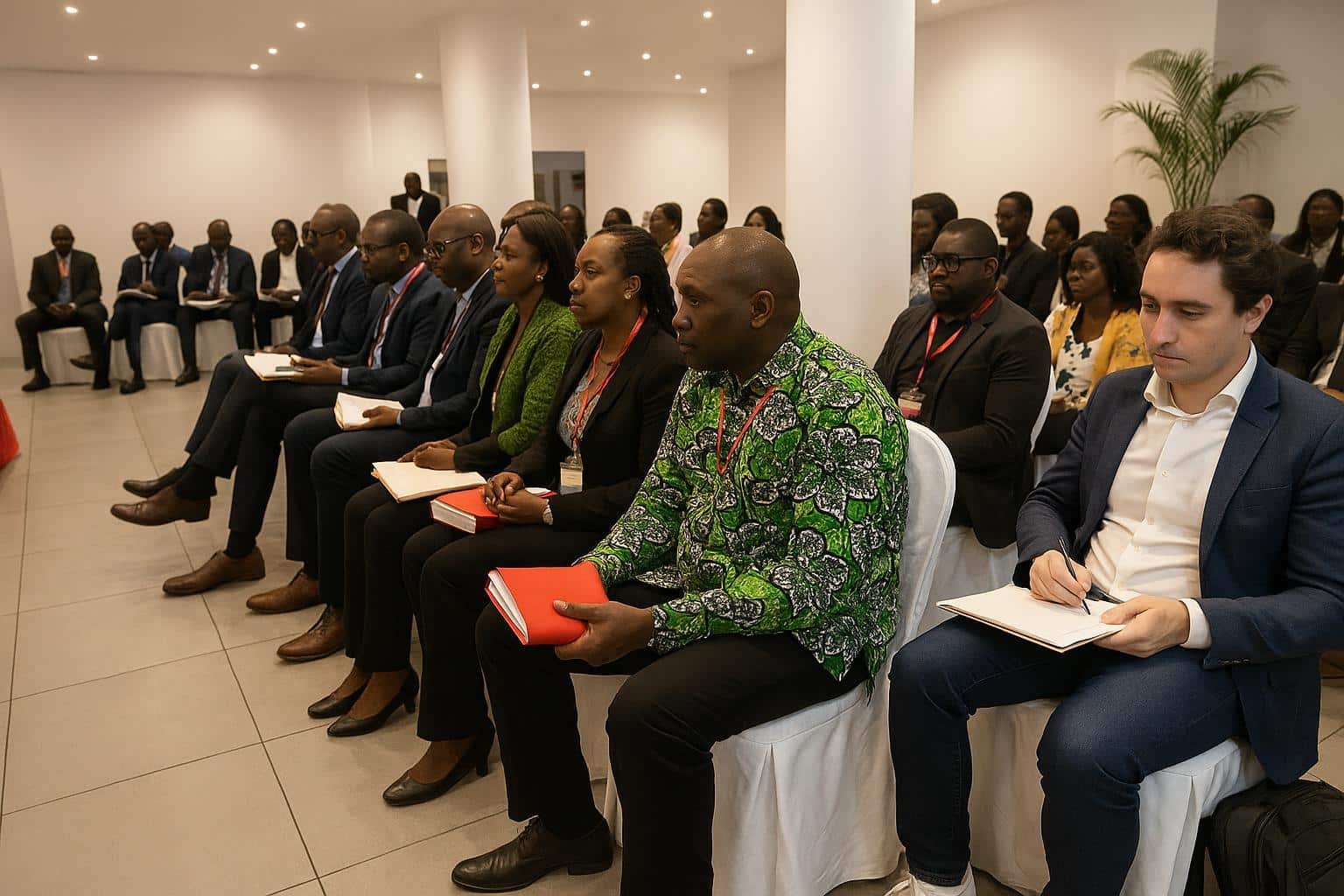
Inside a packed conference room on 26 September, executives from energy, finance and agribusiness mingled with officials and diplomats for the second Doing Good in Africa forum. Hosted by Afrique RSE Congo and partners, the gathering probed how corporate responsibility can accelerate national development.
The theme, “Impact Enterprises: Congolese Companies’ Contribution to the Sustainable Development Goals”, set the tone for candid exchanges. With only five years left before the 2030 deadline, speakers agreed that business, government and citizens must align their agendas more closely than ever.
How Congo ranks on Sustainable Goals
The United Nations Sustainable Development Report assigns the Republic of Congo an overall score of 52.8 out of 100, placing the country 154th of 167 nations. Health, clean energy and climate resilience remain the most urgent gaps, forum organisers reminded participants (UN SDSN, 2023).
“We need hard data to know where we stand,” said Bel Lauretta Tene, managing partner of Afrique RSE Congo. “Numbers focus minds and reveal obstacles. Without them, we risk working in the dark.”
Corporate voices call for action
Tene underscored that a 2019 law already outlines corporate duties toward the SDGs, yet the decree required to enforce it is still pending. She urged companies to keep moving. “Training the private and public sectors on a shared SDG vision is non-negotiable,” she told attendees.
Managers echoed her appeal. “Budgeting for social impact is no longer a side activity; it is a license to operate,” argued Éric Massamba, sustainability lead at a Pointe-Noire logistics firm. “Stakeholders, investors included, read your non-financial scorecard before they read profits.”
Spotlight on health, energy, climate
Panels homed in on three targets. For SDG 3, insurers and telecoms detailed mobile platforms that nudge clients toward preventive screenings. In SDG 7, utilities showcased mini-grid pilots using solar-driven water pumps in rural districts.
Climate discussions centered on SDG 13. Forestry groups outlined carbon-credit schemes, while cement producers described swapping clinker for volcanic pozzolana to cut emissions by 30 percent. Delegates welcomed such experiments as proof that local innovation can flourish even in challenging markets.
Policy enablers and legal gaps
Government representatives highlighted recent incentives, including VAT exemptions on renewable-energy imports and a forthcoming green bond framework. “Our objective is to make sustainable choices economically attractive,” said an official from the Ministry of Economy.
Yet participants returned to the missing decree that would operationalise the CSR statute. “We applaud Parliament for passing the law,” acknowledged lawyer Mireille Ngakala, “but practical guidelines would give companies clarity on reporting standards and tax offsets, unlocking faster compliance.”
Regional interest and diplomatic support
Embassies from Cameroon, Gabon and the European Union sent observers, signalling that Congo’s CSR push resonates across Central Africa. “Cross-border investors look for predictable rules,” noted a CEMAC official. “Harmonising standards could turn Brazzaville into a hub for responsible capital.”
International agencies also weighed in. The United Nations Development Programme offered technical assistance to refine metrics, while the French Development Agency expressed interest in co-financing clean cooking projects that cut indoor pollution.
Awards that set the pace
The day closed with recognitions. A Pointe-Noire software start-up won the Innovation Prize for its low-cost health data app. The Energy Efficiency Award went to a state-owned refinery for retrofitting boilers that saved 12 gigawatt-hours last year.
Such accolades, organisers said, fuel a healthy rivalry among firms. “Visibility multiplies good practices,” explained forum coordinator Pamela Mouangassa. “When peers notice concrete gains—lower bills, healthier staff—they are more likely to replicate the model.”
A shared roadmap to 2030
Before departing, delegates adopted a brief communiqué urging continued dialogue. Priorities include accelerating the CSR decree, expanding SDG training to provincial chambers of commerce and publishing an annual barometer of private-sector impact.
“The forum is a catalyst but not an endpoint,” Tene concluded. “Each month counts between now and 2030. By pooling expertise, Congo can move from the bottom of the index to the middle tier, creating jobs and safeguarding our environment in the process.”