
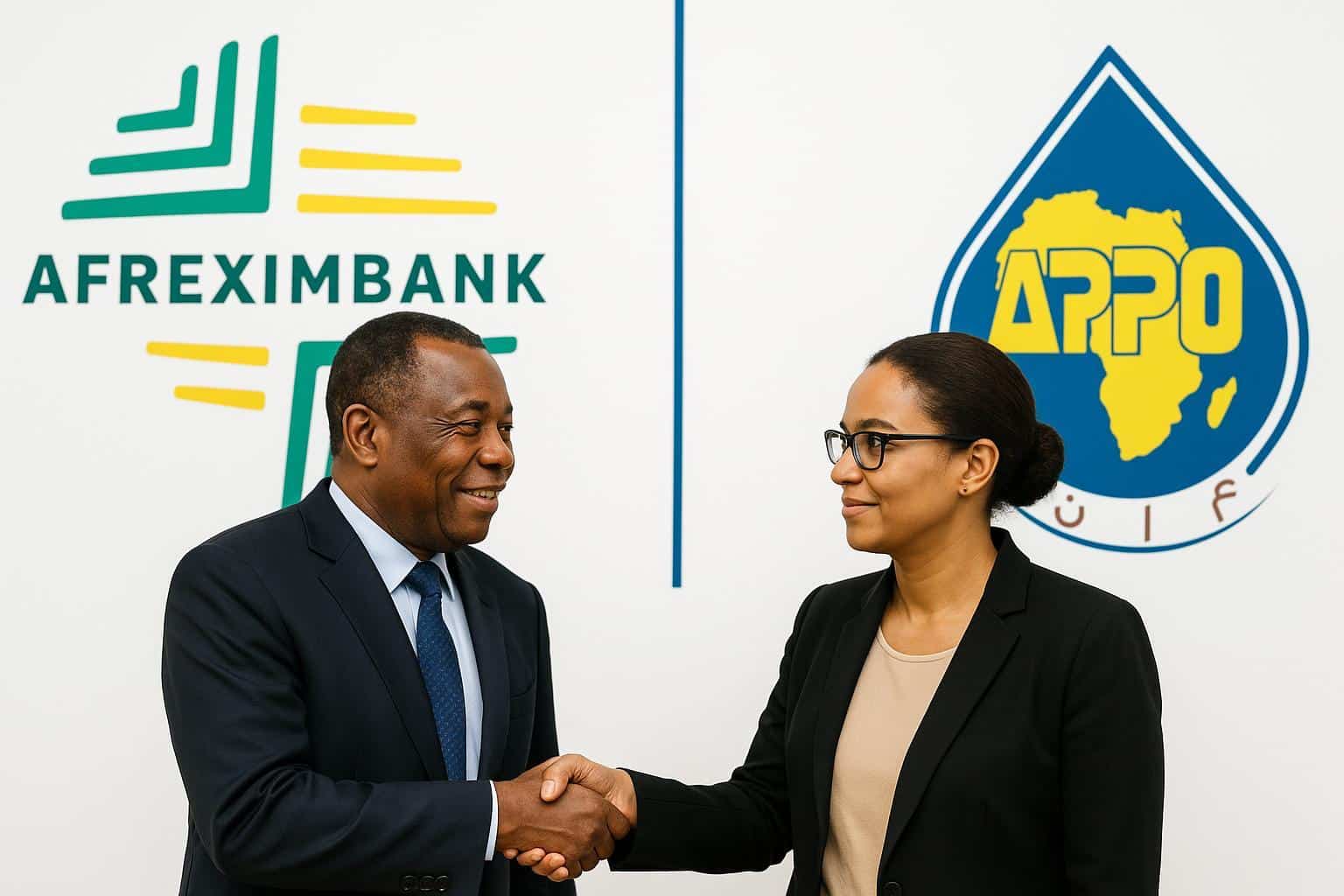
Momentum Builds for Africa Energy Bank
African policymakers and financiers are quietly finalising the Africa Energy Bank, a $5-billion institution designed to close the continent’s chronic funding gap for oil, gas and power projects. The initiative, driven by Afreximbank and the African Petroleum Producers Organization, has entered its decisive capital‐raising phase this autumn season.
Officials from both entities insist the timetable remains intact, despite global liquidity tightness. They report that 44 percent of the minimum equity has already been underwritten, with Nigeria, Angola and Ghana wiring funds and Algeria, Benin, Congo, Equatorial Guinea and Côte d’Ivoire awaiting parliamentary ratification of pledges soon.
Capital Mobilization Nears the Finishing Line
Under the shareholding plan, APPO states may subscribe up to 30 percent, other African governments and national oil companies another 40 percent, and private investors the balance. Negotiators say pan-African pension funds and Islamic finance houses have signalled interest, tempted by projected double-digit, commodity-linked returns over the term.
Afreximbank’s treasury team is also structuring a syndicated bridge facility in euros and yuan to maintain momentum until the first paid-in capital call is complete. According to a Cairo briefing in May (Afreximbank statement, 2024), several Asian export credit agencies are examining participation in that syndication as well.
Why an Africa Energy Bank Matters Now
Continental energy advocates argue that multilateral climate pledges have unintentionally restricted financing for African hydrocarbons, even while 600 million citizens still lack reliable electricity. APPO Secretary General Omar Farouk Ibrahim recently warned that without tailored funding mechanisms, energy poverty could persist past the African Union’s 2063 goal.
By pooling regional capital, the forthcoming bank intends to de-risk projects that commercial lenders deem marginal, particularly gas processing plants, pipelines and grid upgrades. Analysts at the South African consultancy XA Energy calculate the annual investment shortfall in African energy infrastructure at between $40 and $50 billion today.
Structure Designed to Attract Broad Support
PWC, appointed project manager earlier this year, has recommended a governance model mirroring regional development banks, including a resident board and independent risk committee. Draft statutes reviewed by our newsroom stipulate that no single shareholder may exceed 15 percent voting power, a provision aimed at insulating political pressures.
Remuneration benchmarks for the future president, now under global search, have been set just below those of the African Development Bank. Afreximbank President Benedict Oramah told journalists in Addis Ababa that the package is intended to attract “a seasoned deal-maker with developmental instincts, not a bureaucrat” next year.
Choosing a Headquarters with Symbolism
After assessing bids from Accra, Algiers and Luanda, the APPO Council opted for Abuja, citing Nigeria’s deep capital markets and flight connectivity. Abuja’s decision to seed an additional $100 million exemplifies what Energy Minister Ekperikpe Ekpo described as “skin in the game that investors need to see” today.
Location, however, is not merely logistical. By situating the headquarters in West Africa rather than the traditional hydrocarbon belt of North Africa, promoters hope to underline the bank’s mandate to serve both oil-rich and energy-deficit nations, reinforcing a narrative of continental rather than sub-regional ownership and shared prosperity.
Implications for Congo-Brazzaville and Regional Partners
The Republic of Congo, an early signatory, has earmarked a reported $50 million stake. Finance Minister Rigobert Roger Andely told our publication that the move aligns with Brazzaville’s strategy to leverage domestic oil revenues into broader diversification, notably petrochemicals and gas-to-power facilities along the coast in Pointe-Noire region.
Analysts suggest Congo’s participation could catalyse syndicated loans for the offshore Marine XII block and the planned 300-megawatt Congo River gas plant, projects that have faced delays amid shifting global credit appetites. Reduced dependence on dollar funding may also cushion local budgets from exchange-rate volatility going forward significantly.
Balancing Hydrocarbon and Renewable Funding
Critics of fossil fuel expansion worry the bank could entrench carbon dependence, yet promoters argue mandate flexibility. Draft policy papers reviewed in Brazzaville allocate at least 30 percent of the first three-year portfolio to renewable projects, from utility-scale solar farms to green hydrogen pilots in Mauritania and Namibia.
Environmental economist Ndjoko Mouanda notes that a continental lender can impose rigorous methane-emission standards while still funding gas infrastructure, potentially setting benchmarks stricter than many bilateral creditors. Mouanda views this as a pragmatic pathway toward Paris-aligned outcomes without shutting the door on urgently needed baseload generation for Africa.
Next Milestones on the Road to Launch
The APPO Executive Council plans to transmit the final charter for ministerial approval during the fourth quarter. If ratified, the bank could open doors by early 2026, coinciding with an expected upswing in LNG demand from Europe and South-East Asia, according to S&P Commodity Insights market outlook report.
Stakeholders interviewed remain confident that the Africa Energy Bank will shift perceptions of risk on the continent. As Afreximbank Vice-President Kanayo Awani summarised, “Once Africans underwrite their own resources, external financiers follow.” The coming months will test that proposition—and potentially redefine the region’s energy landscape for decades ahead.