
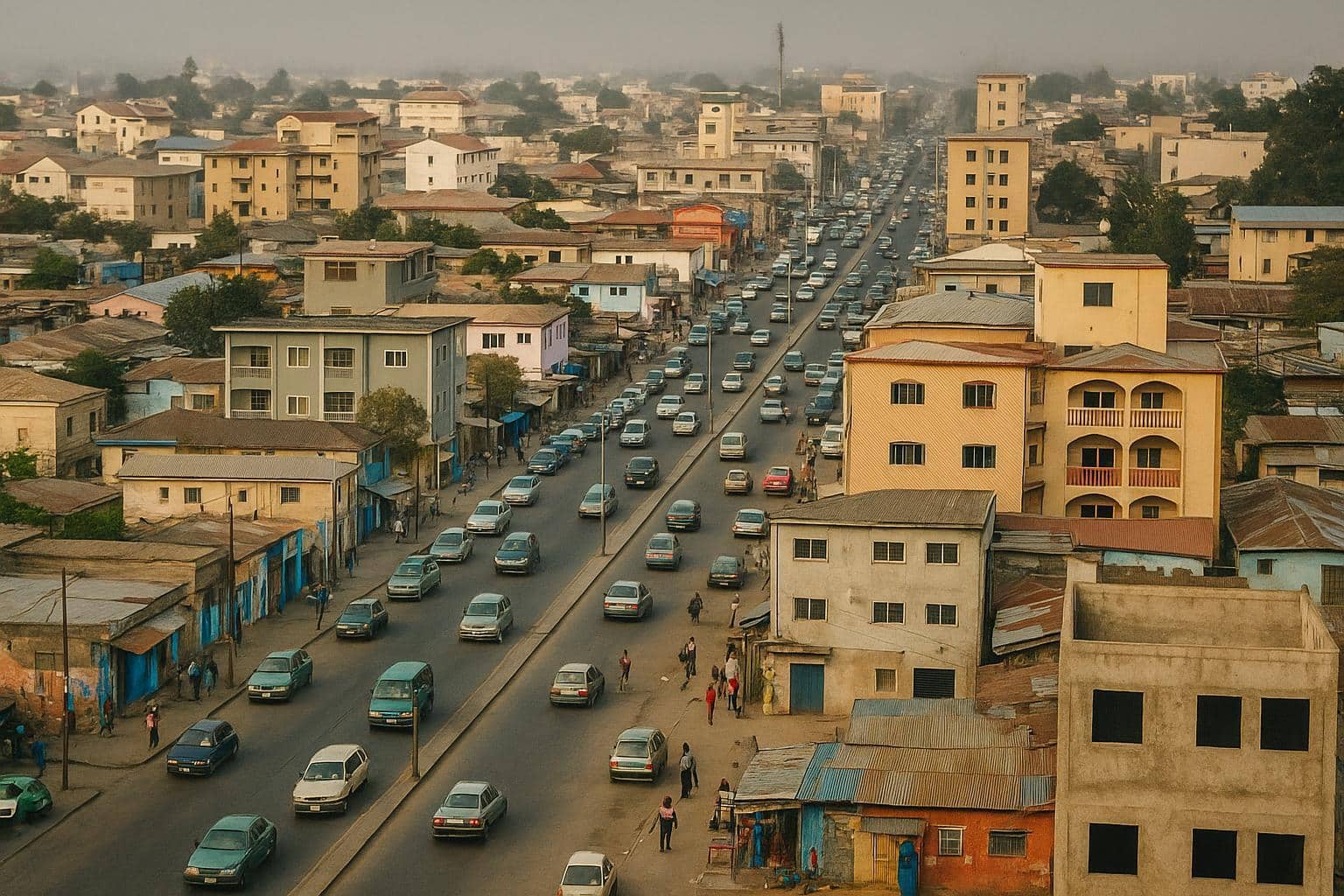
Growth forecast signals steady rebound
Brazzaville’s latest macro-economic outlook, unveiled by Justice Minister Aimé Ange Wilfrid Bininga before Parliament, projects national growth at 3.6 percent in 2026, up from 3.1 percent expected in 2025, confirming a gradual exit from the oil-centric paradigm.
Speaking on the sidelines, a senior official in the Economy Ministry stressed that the forecast was calculated with conservative oil price assumptions and therefore “provides comfort to investors who feared volatility”.
The cornerstone of the revised trajectory is the non-oil sector, anticipated to accelerate to 4.2 percent in 2026, buoyed by agriculture, construction, digital services and an incipient mining segment that authorities describe as “the next growth wave” (Les Dépêches de Brazzaville).
Non-oil engines gain momentum
Agribusiness pilot projects along the Niari valley, supported by the World Bank and the African Development Bank, have begun supplying local breweries with cassava starch, reducing import bills and creating smallholder jobs, according to project coordinator Augustin Mouakassa.
In Pointe-Noire, the privately financed Atlantic Data Center recorded a 70 percent occupancy rate after one year of operations, a sign that home-grown fintechs and regional telecom carriers prefer hosting their platforms onshore to comply with CEMAC data regulations.
Meanwhile, Chinese-Congolese joint venture Sinohydro-Madingou has restarted clinker production, easing cement shortages that had stalled public housing sites in Bouenza and Plateaux departments for months.
Maintaining price stability
Inflation, projected at 3 percent in 2026, sits comfortably within the CEMAC convergence criterion of 3 percent, a benchmark that officials have repeatedly described as non-negotiable for monetary credibility.
The regional central bank BEAC attributes the expected deceleration to improved food supply chains, lower import freight costs and what Governor Abbas Mahamat Tolli called “tighter liquidity management” after successive policy rate hikes earlier this year (BEAC communiqué).
For urban households, the price of a standard baguette has stabilised at 150 CFA francs since August, a symbolic threshold closely watched by policymakers mindful of the 2022 protests sparked by sudden bread price adjustments.
Fiscal reforms and debt management
Beyond macro-targets, the government says it will keep the overall budget deficit below 2 percent of GDP through restrained current spending and better tax collection from telecom licences and mining permits.
Public debt, which peaked above 100 percent of GDP in 2020, has declined to an estimated 77 percent after restructurings with Chinese lenders and a domestic bond swap concluded in July, according to Finance Ministry data reviewed by the IMF staff.
The authorities insist that additional borrowing will focus on concessional windows and project-linked instruments, avoiding the pitfalls of earlier oil-collateralised facilities that complicated cash flow planning.
Private sector cautiously upbeat
Representatives of the Congolese Chamber of Commerce welcomed the outlook but urged quicker settlement of government arrears, estimated at 180 billion CFA francs, to unlock bank credit for small enterprises.
“We have orders but limited cash flow,” said Esther Dzon, whose logistics firm supplies timber exporters in Ouesso; she noted that clearing outstanding VAT rebates would allow her to hire 20 additional drivers by year-end.
Bankers at BGFI-Congo said the non-oil uptick is already visible in their portfolio, where disbursements to agribusiness clients grew 18 percent over the first nine months, compared with 4 percent for hydrocarbon contractors.
Regional opportunities in CEMAC
Analysts argue that sustained diversification could reposition Congo as a supplier of processed foods and digital services to neighbouring Gabon, Cameroon and the Central African Republic, markets together worth more than 25 million consumers under the CEMAC free-movement framework.
The Douala-Brazzaville corridor, now connected by the 1,200-kilometre paved RN1, trims haulage time for coffee and cocoa consignments to Atlantic ports by two days, a logistical gain highlighted in a recent UN Economic Commission for Africa report.
Obstacles and the policy path ahead
Economists caution that energy reliability, still hampered by ageing turbines at the Moukoukoulou hydro plant, remains the Achilles’ heel of industrial startups, while erratic rainfall linked to El Niño could squeeze farm yields next season.
Responding, the Energy Ministry says rehabilitation of Moukoukoulou is 60 percent complete and that the 420-megawatt Sounda Gorge project, backed by a public-private consortium, is on track for financial close before mid-2024.
Prospects through 2026
The planning ministry’s baseline scenario assumes Brent crude at 70 dollars a barrel by 2026, yet even if prices softened to 60 dollars, officials estimate growth would stay above 3 percent as non-oil anchors spread across the ten departments.
Economist Josué Moutsila observes that Congo’s demographic profile, with a median age of 19, provides a demand tailwind, but only “continuous skills upgrading and reliable power will unlock the dividend,” he told this newspaper.
Government spokesperson Thierry Moungalla insists reforms are iterative: “Diversification is not an overnight event; the numbers merely confirm we are on a credible route that protects households and assures partners.”