
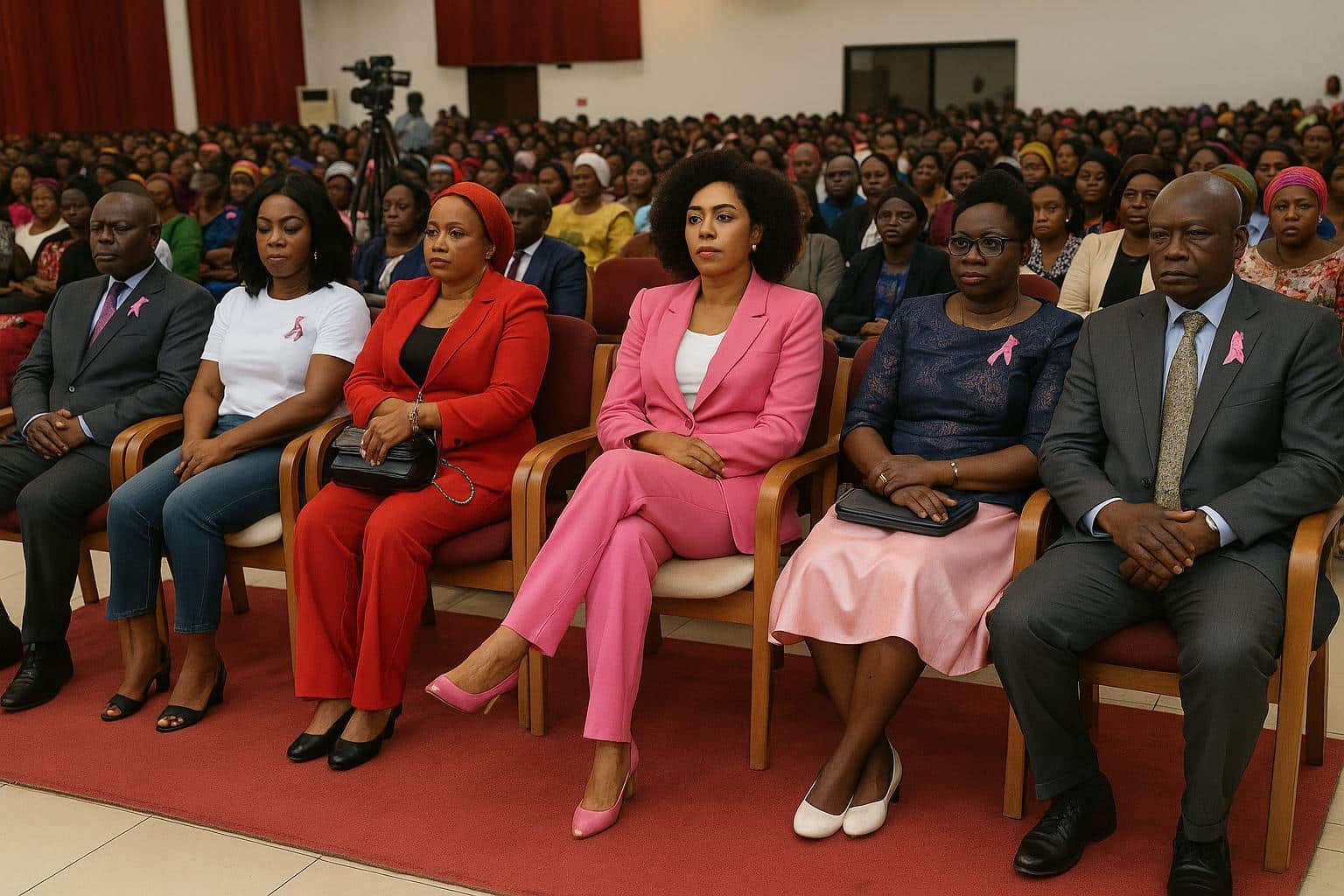
Pink Ribbon Master Class in Brazzaville
Brazzaville’s Pierre-Savorgnan-de-Brazza Memorial filled with pink ribbons on 23 October as the Tabita Allegresse Foundation gathered doctors, diplomats and students for an intensive master class aimed at warning Congolese families about the silent threats of breast and cervical cancer.
Personal Story Behind Tabita Allegresse Foundation
Founder Lydie Léonce Ndongo spoke softly yet firmly, recalling how pancreatic cancer claimed her mother Tabita Allegresse Mokana Ndongo in 2017 and sparked the vow that no woman, no household, should ever again battle the disease in isolation.
Early Screening Needs Collective Funding
From that loss, the foundation made early screening its compass, but limited budgets still loom. Ndongo urged a coalition of private firms, banks and state agencies to combine expertise and finance so that a simple test becomes reachable for the market vendor in Ouenzé or the fisher in Mpita.
“Cancer is not only a medical puzzle; it is a human, social and economic fight,” she reminded the room, noting that timely support can mean the difference between a curable lesion and a catastrophic funeral for families already juggling school fees and rising food prices.
UNFPA and Government Reinforce Cancer Guidelines
The United Nations Population Fund representative Bruno Bilombo applauded what he called the government’s “consistent leadership” in the campaign, pointing to scientific days such as this master class as platforms that translate policy into practice and plant evidence-based tools in every regional hospital.
Bilombo highlighted a new set of national guidelines produced with ministry experts, describing the document as the ‘compass’ that will steer nurses and oncologists toward harmonised diagnosis and treatment, whatever the postcode, thereby reinforcing citizens’ confidence in the public health network.
Rising Statistics Underscore Urgency
Current data compiled by specialists show 2 727 cancer cases recorded nationwide in 2022, with 1 732 deaths. Analysts attribute the toll to ageing demographics, tobacco and alcohol trends, but above all to late diagnosis, sporadic screening campaigns and fragmented access to radiotherapy or surgery.
Health Ministry delegate François Lebama restated the National Cancer Control Strategic Plan 2022-2026, pledging targeted investment to curb breast and cervical mortality through vaccination, mammography expansion and stronger referral chains that knit together local clinics and Brazzaville’s main oncology units.
Memorial Bridges Heritage and Health
Hosting the event, memorial director Bélinda Ayessa framed the historic site as a bridge between heritage and healing, insisting that the hall honouring nation-builders must also safeguard today’s citizens by amplifying ‘Octobre Rose’ awareness far beyond the capital’s administrative quarters.
Ayessa stressed that remembering explorers of yesterday carries little meaning if contemporary mothers cannot access preventive care, positioning the memorial’s partnership with the foundation as an example of cultural institutions embracing public-health diplomacy.
Private Sector as Health Ally
Corporate leaders listening in the front rows heard a blunt message: corporate social responsibility starts at home. Ndongo underlined that finance devoted to early detection today protects tomorrow’s workforce and positions companies as allies in a national vision championed by President Denis Sassou Nguesso.
Economists present noted that each untreated cancer carries hidden macro-costs, from absenteeism to imported pharmaceuticals, which can strain public accounts just as much as fluctuating oil prices. Prevention, they argued, is a stability policy compatible with the country’s broader diversification agenda.
Culture Change for Routine Screening
Speakers urged a cultural shift where regular check-ups become as routine as renewing a driving licence. Community radios, church networks and social-media influencers were identified as multipliers capable of transporting clinical messages into households often beyond the reach of conventional campaigns.
The master class incorporated practical demonstrations; oncology nurses displayed self-examination techniques while survivors shared stories that drew prolonged applause from secondary-school pupils in attendance, illustrating how testimony can break taboos faster than statistics alone.
Roadmap for Nationwide Sessions
Looking ahead, Ndongo said the foundation will rotate similar sessions through Pointe-Noire, Owando and Dolisie, continuously refining content with lessons learned during this inaugural Brazzaville edition to ensure each region receives context-specific language and logistical support.
Until that itinerary unfolds, the president’s closing appeal still echoes: solidarity is a life-saving medicine within everyone’s reach. Whether through donations, volunteer hours or simply sharing verified information, every gesture brings the Republic of Congo closer to a future where cancer fears less and hope grows.
Experts Urge Data and Survival Tracking
Medical professors attending emphasised that earlier consultation dramatically raises five-year survival rates. Professor Charlotte Mokoko observed that while Congo currently lacks a full oncology registry, small pilot studies already record survival of up to 80 percent when tumours are caught before spreading to lymph nodes.
She called for interoperable data systems linking laboratories, imaging centres and rural posts, arguing that reliable national numbers would sharpen resource allocation and attract additional multilateral funding, especially if combined with training scholarships designed to retain young oncologists in the public sector.
Pledge Wall Signals Public Commitment
In the foyer, attendees signed a pledge wall promising annual check-ups and peer outreach. Organisers reported that more than 200 names filled the board within minutes, a snapshot, they said, of the appetite for collective responsibility.