
Early Warning Signs on the River Island
At dawn on 26 July 2025, nurses in Mbamou’s modest clinic logged three young patients suffering acute watery diarrhoea. The cases looked ordinary until laboratory confirmation hours later pointed to Vibrio cholerae, starting an outbreak that would test Congo’s health architecture and its partners.
Local midwife Angèle, recovering from childbirth, joined the list the following day, her abdominal pain mistaken for postpartum discomfort. “I felt helpless until the diagnosis,” she recalled in an interview, her story soon illustrating both the vulnerability of river communities and the speed of transmission.
National-International Command Structure in Action
Within hours of the government’s formal alert, the Ministry of Health activated its emergency operations centre, synchronising with the World Health Organization’s Incident Management System. Officials emphasised a “single command voice” to avoid duplication and to keep messaging consistent across Brazzaville, Mossaka and Mbamou.
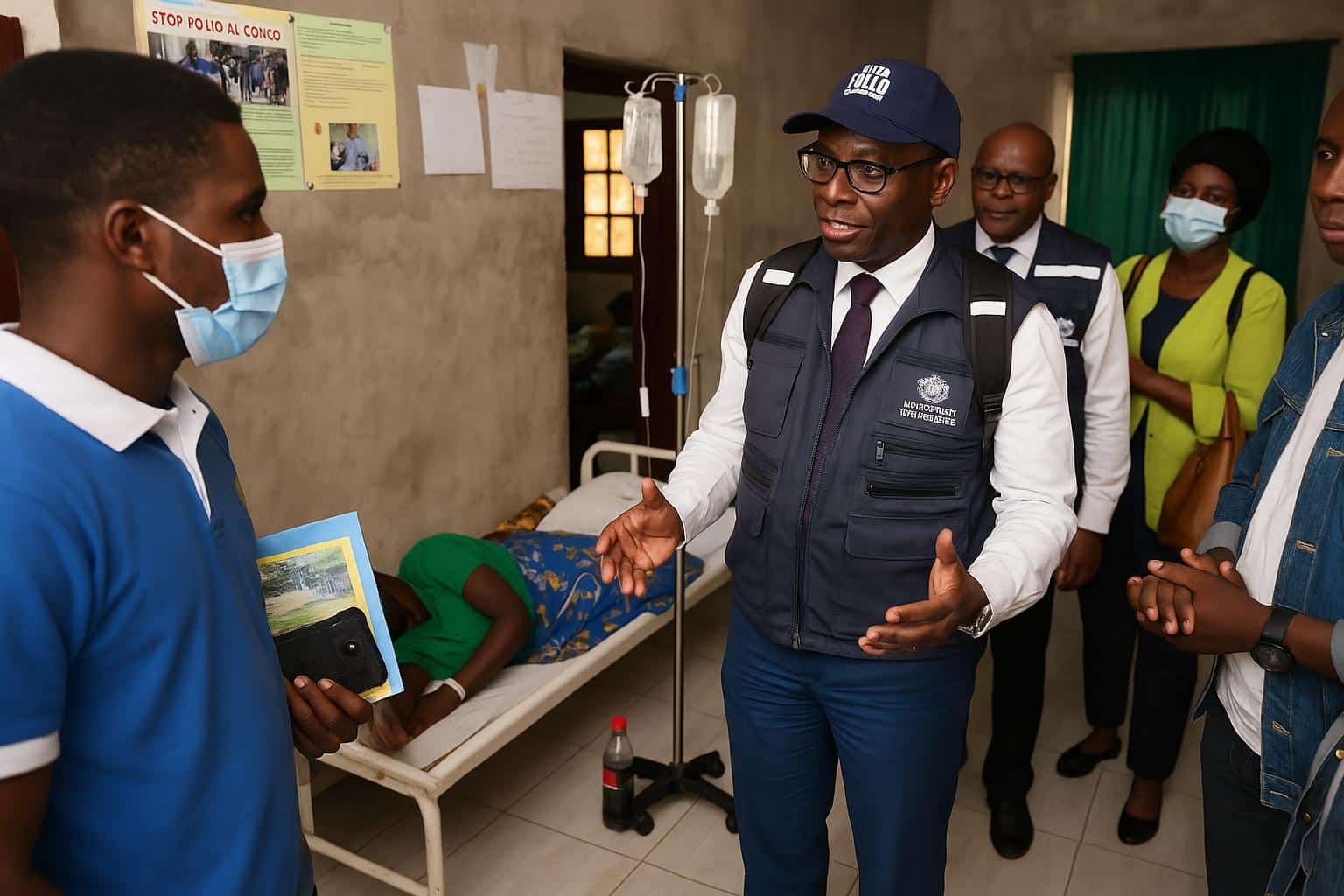
Dr Vincent Dossou Sodjinou, WHO Representative, praised the arrangement during his inspection: “The clarity of responsibilities shortened decision time,” he noted, pointing to daily situation reports that traveled from island clinics to national dashboards before midnight, guiding resource deployment the next morning.
Rapid Logistics Bridge Across the Congo
Geography complicated response efforts: Mbamou lies in the sinuous middle of the Congo River, without a fixed crossing. A fast boat, financed by WHO and fuelled by the National Navy, became the lifeline for medical supplies, laboratory samples and rotating clinical teams.
Seven tonnes of treatment kits, oral rehydration salts and intravenous fluids landed on the island dock within seventy-two hours. Cold chain boxes left on the return trip, enabling realtime genomic sequencing in Brazzaville’s National Public Health Laboratory, a capability added in 2023 with African CDC support.
An electronic dashboard, accessible to district managers through handheld tablets, plotted case locations hour by hour. The platform, adapted from Ebola software donated by UNICEF, allowed supervisors to predict chlorine demand and bed occupancy three days ahead, reducing costly stockouts that hampered previous emergencies.
From Statistics to Lives Saved
Initial case-fatality on Mbamou stood at 11.7 percent, mirroring figures seen during the 2009 riverine outbreak. By 15 August the metric had fallen to 4.8 percent. Clinicians attribute the shift to protocol harmonisation, antibiotic availability and shortened patient transport times, not to any change in pathogen virulence.
Dr Nelson Bokale, district medical officer, described the turning point: “We went from treating symptoms to anticipating them.” He singled out the Surge support team, whose epidemiologists ran door-to-door contact tracing, while engineers disinfected 61 wells and installed chlorination taps at market entrances.
Mobile money vouchers covered patient meals and transport, a pilot financed by the African Development Bank. Health economists are monitoring whether such micro-payments encourage earlier care-seeking and reduce household debt related to illness.
Communities as First Line of Defense
Outside clinic walls, 250 community relays walked narrow sand paths, explaining hygiene rules in Lingala and Kituba, sometimes with megaphones, sometimes through evening storytelling. Over ten thousand water-purification tablets reached households, paired with live demonstrations that turned cloudy river water clear before an attentive audience.
Angèle now joins those sessions, holding her infant on her hip as she recounts her recovery. “People listen differently when the message comes from someone they know,” she observed, a sentiment echoed by sociologists at Marien Ngouabi University studying trust dynamics in public-health campaigns.
Looking Beyond the Current Outbreak
Officials caution that the downward curve does not signal an all-clear. Rainy season peaks in late September, increasing the probability of river flooding and sewage overflow. Contingency maps designate temporary treatment tents on higher ground and pre-position chlorine drums in school courtyards.
The Ministry is also drafting a five-year water-safety plan for island districts, building on lessons from the current emergency. Early outlines include solar-powered pumping stations and a tariff system calibrated to household income, proposals welcomed by local chiefs who link clean water to tourism potential.
Geopolitical and Economic Stakes
Cholera containment resonates beyond public health. Barges carrying timber and fuel pass Mbamou daily, and any prolonged quarantine would ripple through supply chains between Kinshasa and Brazzaville. The Congolese government therefore framed the intervention as an economic stabilisation measure during cabinet briefings.
Diplomats stationed in both capitals welcomed the transparency. A French Embassy cable described “professional joint pressers,” while Angola’s mission highlighted Congo’s openness to cross-border water testing. Such regional confidence, analysts argue, supports ongoing negotiations over downstream hydropower investments and inland port modernisation.
International partners nonetheless note funding gaps. The humanitarian response plan calls for nineteen million US dollars; roughly sixty percent is secured. Finance officials in Brazzaville express optimism that credible progress indicators will unlock the remaining pledges at the upcoming UN General Assembly side-event.
Measured Optimism on the River
Night falls early on Mbamou, yet the treatment centre’s solar lamps now glow steadily, a tangible trait of the joint effort. As Angèle waves to departing nurses, the sentiment she voices captures the wider mood: “We are careful, but we no longer feel alone.”