
Essential medicines at the heart of public trust
Few indicators of state capacity resonate more viscerally with citizens and foreign partners than the steady availability of affordable, quality-assured medicines. In Brazzaville, the Central Agency for Essential Medicines and Health Products, better known by its French acronym CAMEPS, has occupied that strategic fulcrum since its establishment in 2013. The ordinary board session of 26 July 2024 therefore drew unusual diplomatic attention, both for what it revealed about the agency’s internal housekeeping and for what it implies about the Republic of Congo’s evolving governance ecosystem.
Boardroom signals of prudent stewardship
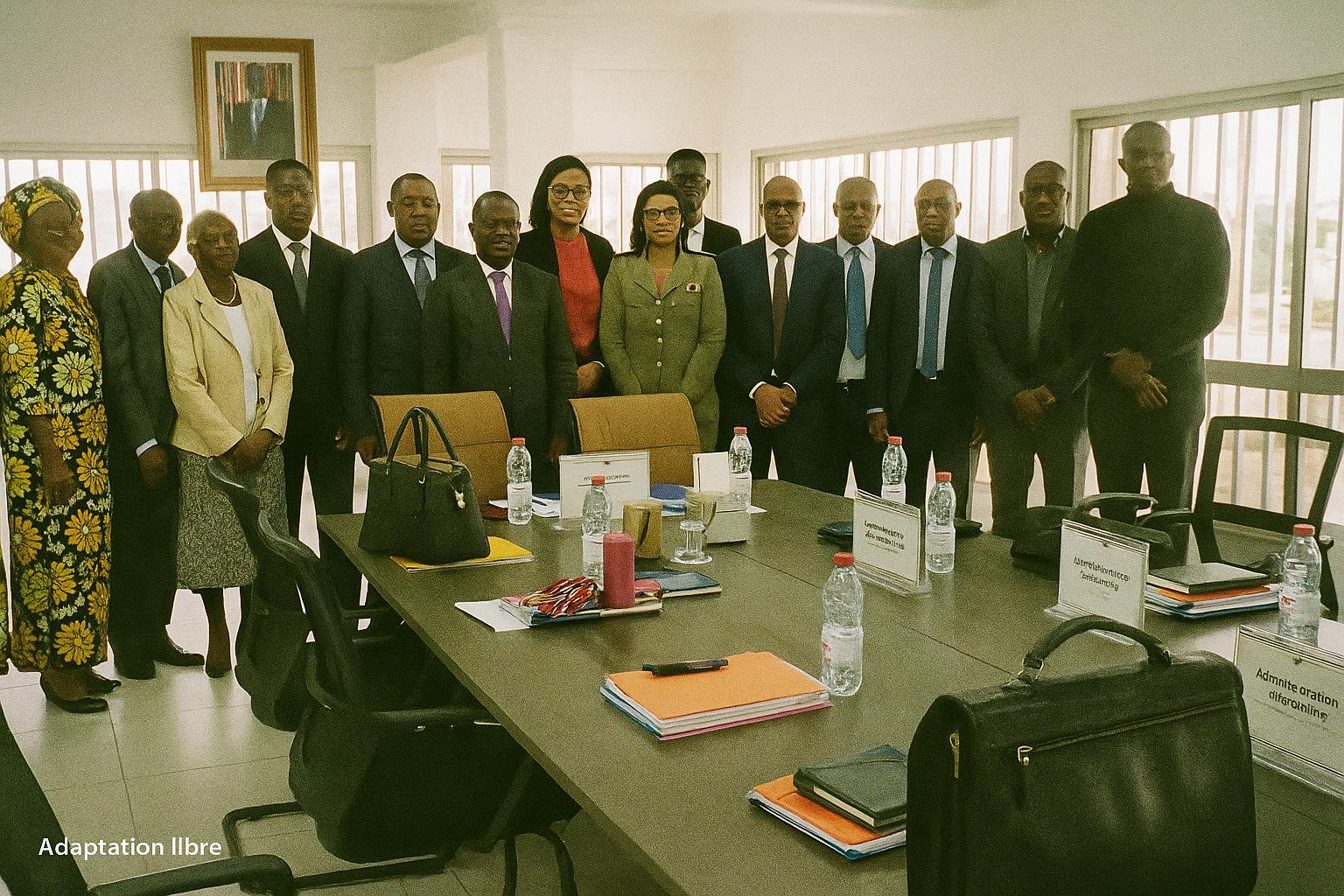
Nineteen of the twenty statutory directors filed into the conference hall, underscoring quorum and, perhaps, an appetite to convert post-pandemic lessons into permanent practice. Chairperson Ange Antoine Abéna opened proceedings by reminding participants that “sound health procurement is a sovereign concern before it becomes a commercial one,” a phrase later echoed in ambassadorial debriefings. The meeting swiftly adopted the external auditor’s unqualified opinion on CAMEPS’s 2024 accounts, a milestone that several observers linked to the regional push for fiduciary rigour articulated in the CEMAC convergence criteria (CEMAC Secretariat 2023).
A manual that codifies financial probity
Central to the board’s satisfaction was the presentation of a comprehensive Manual of Administrative, Financial and Accounting Procedures. Drawing on OHADA uniform acts and World Bank procurement norms, the document sets out approval thresholds, segregation of duties and risk-mitigation checkpoints that had hitherto relied on unwritten convention. By codifying workflow, CAMEPS not only reduces the scope for discretion but also aligns itself with the Treasury’s digital expenditure chain that the Ministry of Finance began piloting in May 2024 (Ministry of Finance 2024).
Inventory modernisation and supply resilience
Beyond balance sheets, directors weighed tangible outcomes on warehouse floors. The agency’s shift to barcode-enabled inventory, financed in part by the African Development Bank’s Health System Strengthening window, has trimmed average stock-out rates from 28 percent in 2021 to under 11 percent in the first semester of 2024. According to an internal brief shared with visiting WHO consultants, order-to-delivery cycles for antimalarial treatments now average twelve days, narrowing a gap that once fuelled informal markets and price volatility.
Alignment with the presidential vision of universal coverage
President Denis Sassou Nguesso’s 2021 commitment to progressive universal health coverage has placed rarefied political capital behind technocratic reforms. CAMEPS’s improved governance dovetails with the National Development Plan 2022-2026, which earmarks a 0.8-percent GDP increment for pharmaceutical security. In a recent cabinet communiqué, Health Minister Gilbert Mokoki cited the agency as “the operational arm through which the government intends to secure therapeutic sovereignty”, a statement diplomats interpret as reassurance that budget allocations will translate into on-the-ground availability.
Regional leverage in the post-pandemic marketplace
Congo-Brazzaville’s drive to pool procurement volumes with neighbouring Cameroon and Gabon has been quietly advancing through the CEMAC Pharmaceutical Initiative, an agenda applauded by UNECA economists for its potential to shave procurement costs by up to fifteen percent (UNECA 2023). CAMEPS negotiators now sit at the same table as larger buyers, an evolution that one senior EU health attaché called “a textbook example of smart multilateralism”. The board’s endorsement of this strategy grants management the mandate to pursue framework contracts that extend beyond national frontiers without diluting quality control.
Remaining vulnerabilities under sober scrutiny
Directors did not overlook the vulnerabilities that still shadow the supply chain, notably currency fluctuations linked to US-dollar denominated APIs and climatic disruptions affecting riverine transport to the northern departments. Abéna urged management to deepen the buffer-stock policy introduced last year, while the representative of the Ministry of Planning floated the idea of hedging fuel costs through regional futures markets. Such discussions, though technical, offer international observers a window into a governance culture increasingly comfortable with data-driven decision-making.
Sustaining momentum and diplomatic credibility
As the session adjourned, Abéna’s final exhortation—“Maintain the course”—carried resonance beyond the agency’s walls. For partners considering debt swaps tied to health indicators or blended-finance arrangements for vaccine storage, the board’s verdict signals a lowered perception of execution risk. In the measured words of an African Development Bank analyst, “Governance is not an event but a trajectory, and Congo appears to have tilted the curve”. If CAMEPS can consolidate its recent gains, it will not merely secure medicines; it will buttress the Republic of Congo’s broader narrative of institutional maturation, a narrative that the diplomatic community is increasingly inclined to credit.