
A Courtroom Far from the Capital, Yet in the Spotlight
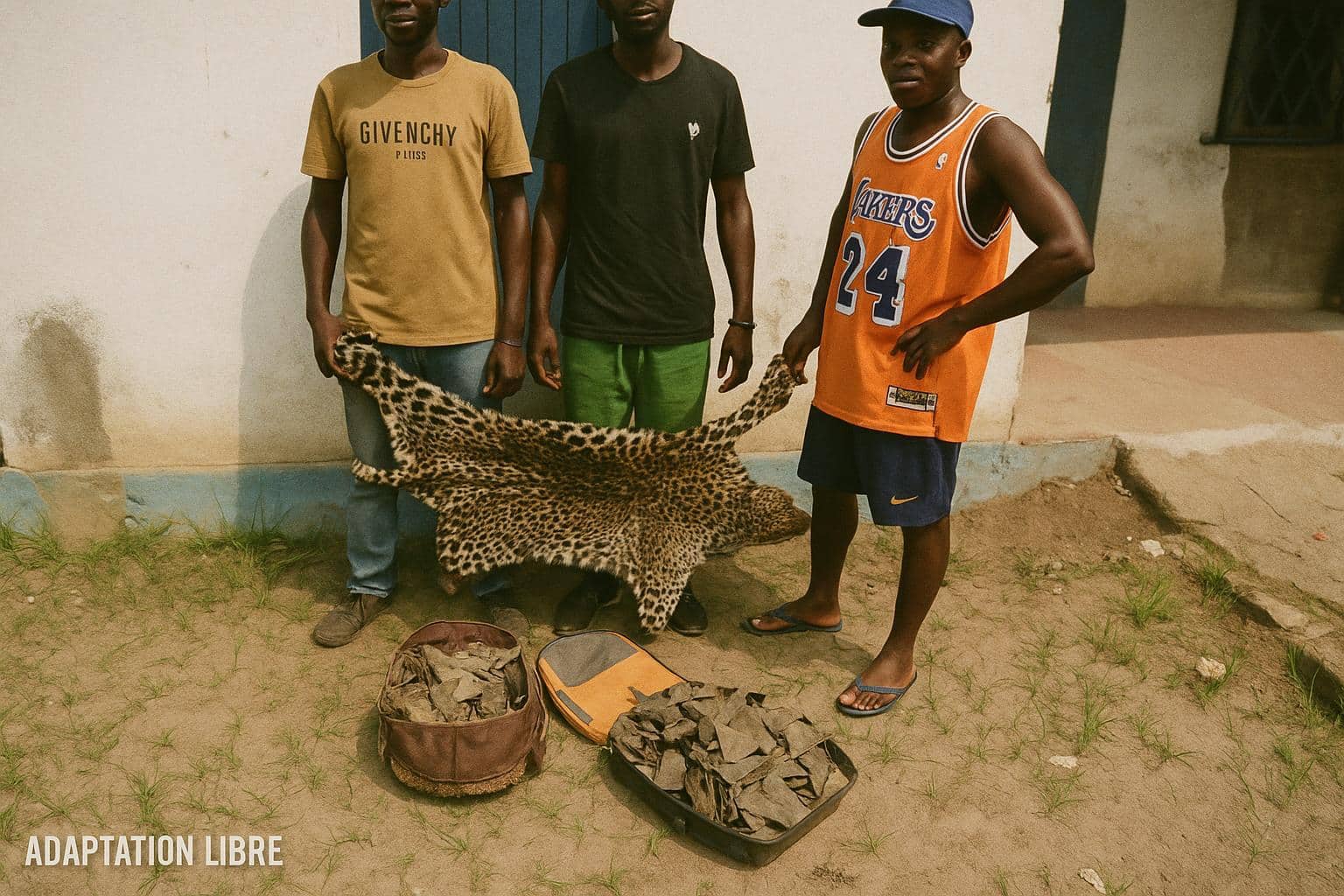
When the gavel fell in the modest wood-panelled hall of the Tribunal de grande instance of Impfondo on 26 June 2025, the echo travelled far beyond the banks of the Ubangui River. Three residents of Likouala—Jodel Mouanda, Arel Ebouzi and Parfait Mbekele—received custodial sentences ranging from two to three years for possessing and attempting to sell a leopard skin, four giant pangolin claws and several kilograms of pangolin scales. The court also imposed a collective fine of one million CFA francs and civil damages of three million. Although such figures may appear symbolic beside the multifaceted value of Congo’s biodiversity, the case sends a clear institutional message that protected species are no longer an informal currency in remote forest towns.
Impfondo Court Sets Precedent for Wildlife Cases
Impfondo’s verdict is noteworthy for its procedural rigour. Over several public hearings the defendants accepted the facts, a circumstance that enabled the bench to deliver a rapid and unequivocal decision. According to magistrates present, the ruling relied on articles 27 and 28 of Law 37-2008 on wildlife and protected areas, which prescribe up to five years’ imprisonment for trafficking in fully protected species. Legal observers in Brazzaville perceive the judgement as a jurisprudential signal to lower courts in other forested departments such as Sangha and Cuvette-Ouest, where similar offences are frequently reported but infrequently prosecuted. “This case demonstrates that deterrence is no longer theoretical,” remarked a senior official at the Ministry of Justice, stressing that enforcement is now travelling “from PowerPoint to courtroom”.
National Legal Arsenal Against Trafficking
The Likouala operation was orchestrated by departmental gendarmes working jointly with the Directorate of Forest Economy, with technical backing from the PALF project—a long-standing public-NGO partnership that has assisted more than 80 investigations since 2009 (PALF annual note, 2024). In recent years the Congolese government has invested in mobile courts, specialised wildlife prosecutors and community outreach in indigenous languages. President Denis Sassou Nguesso frequently underscores the political economy of conservation, framing forest governance as an extension of national sovereignty and a fulcrum for forthcoming carbon finance mechanisms. His administration’s 2023 Forest Code amendments increased penalties and introduced asset-seizure provisions aimed at dismantling criminal supply chains rather than merely penalising individual couriers.
International Eyes on Likouala Forests
Congo-Brazzaville’s conviction rate for wildlife offences remains under international scrutiny, particularly within the framework of the EU-funded ECOFAC programme and its reports to the CITES Secretariat. The Likouala province, hosting the vast swamp forests of the Lake Télé-Lake Tumba landscape, is both a biodiversity reservoir and a logistical corridor linking Cameroon, the Central African Republic and the Democratic Republic of Congo. Conservation organisations warn that demand for leopard skins in urban ritual markets and for pangolin scales in Asian pharmacopeia has turned the northern forests into lucrative hunting grounds (WCS report 2023). By affirming the protected status of both species and publicising the sentences, the Impfondo tribunal aligns national enforcement with obligations under CITES Appendix I, thereby reinforcing Brazzaville’s credibility in multilateral environmental negotiations.
Conservation Diplomacy and Economic Balances
Wildlife crime is often portrayed as a purely ecological concern, yet its diplomatic ramifications are no less significant. Foreign ministries increasingly factor enforcement records into bilateral aid packages and debt-for-nature swaps. In 2024, Congo signed a letter of intent with the International Development Finance Club linking concessional finance to demonstrable reductions in illegal wildlife trade. The Likouala judgement arrives at a delicate juncture: forestry exports are climbing back after pandemic-induced contractions, and the government seeks to market its timber as “deforestation-free”. A judiciary perceived as vigilant can enhance the credibility of such certification schemes, opening doors to premium markets in the European Union and East Asia. At local level, meanwhile, the question of alternative livelihoods persists. Officials in Impfondo acknowledge that sustainable employment in fishing, cocoa and non-timber forest products must complement the stern language of the penal code if poaching is to be durably curbed.
Between Deterrence and Development, a Path Forward
The imprisonment of Mouanda, Ebouzi and Mbekele will not in itself dismantle the networks that funnel endangered species toward regional hubs such as Bangui and Douala. Yet it encapsulates an emerging pattern of cooperation among police, forestry inspectors and civil society that diplomats and investors will scrutinise carefully. As climate and biodiversity agendas increasingly converge, Congo-Brazzaville’s forests are poised to become a stage on which ecological stewardship and economic ambition intersect. The Impfondo ruling, pronounced far from the limestone façades of Brazzaville’s ministries, suggests that legal norms are percolating through the periphery. That diffusion may prove decisive in reconciling the nation’s twin imperatives: preserving its ecological patrimony while harnessing its natural capital for inclusive growth.