
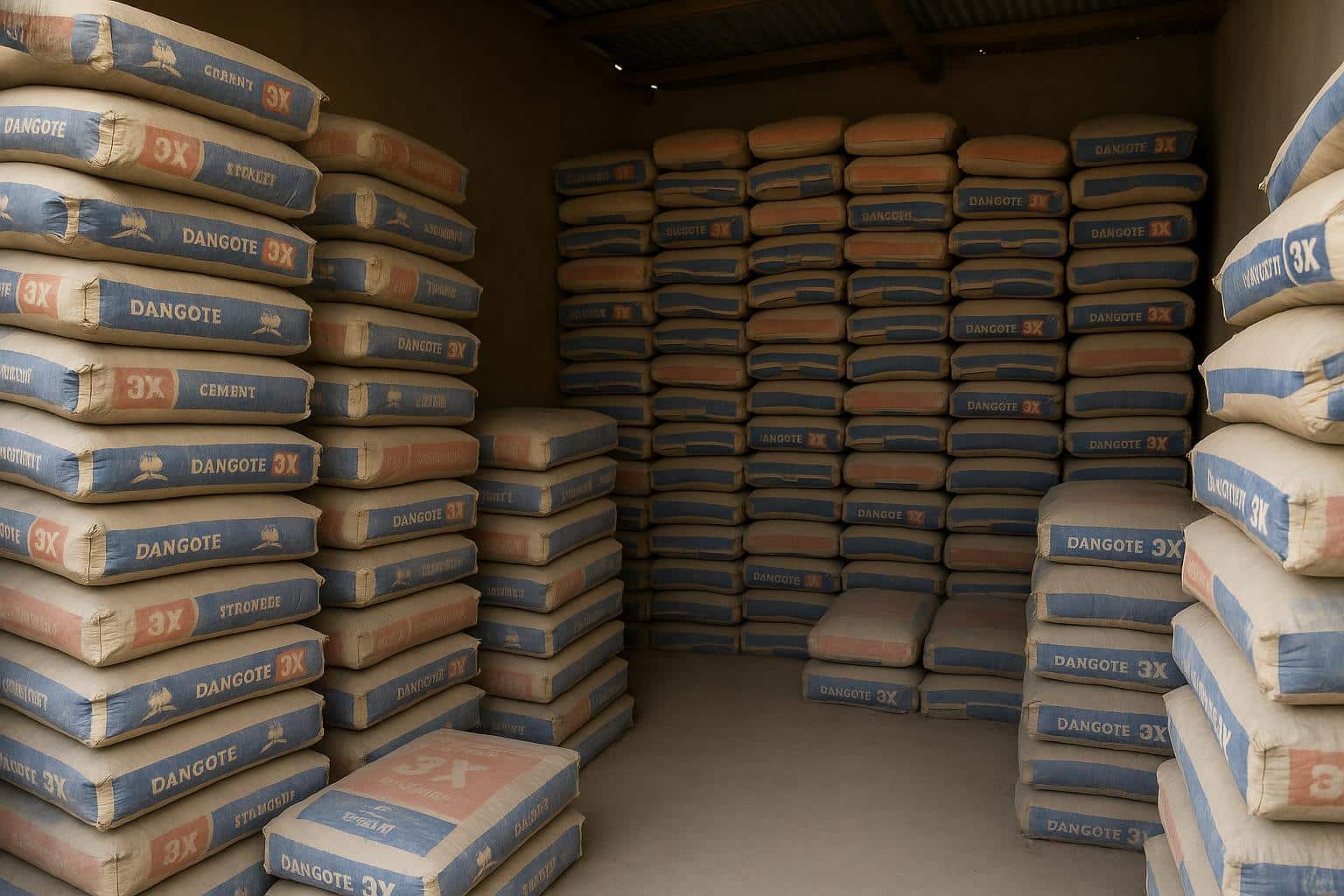
Cement ambition aligns with national diversification
At the Grand Hôtel de Kintélé in northern Brazzaville, senior officials and captains of industry gathered on 18 August for a rare two-day forum dedicated to Congo’s cement value chain. The meeting signals a concerted attempt to translate abundant limestone reserves into lasting economic muscle.
Convened by Minister of Industrial Development Antoine Thomas Nicéphore Fylla Saint Eudes, the event brings together producers, bankers, researchers and regional trade agencies. Their mandate: examine present bottlenecks, compare global benchmarks and craft a governance blueprint capable of making Congolese cement price-competitive beyond Central Africa.
Official figures indicate installed capacity of 3.2 million tonnes a year, yet actual output hovers near 60 percent because of power interruptions, logistics costs and what analysts at the consulting firm Control Risks call “regulatory overlap”. Imports from Asia still meet roughly a quarter of domestic demand.
Speaking to journalists, Fylla Saint Eudes reiterated President Denis Sassou Nguesso’s call for industrial sovereignty, arguing that cheaper, higher-quality cement could accelerate housing programmes and infrastructure corridors outlined in the 2022–2026 National Development Plan. “We possess the stone and the talent; efficiency must follow,” the minister said.
Stakeholders weigh production realities
Plant managers from Cimenterie Dangote Congo, Sonocc and Diamond Cement presented contrasting operational snapshots. While Dangote runs a modern kiln in Bouansa powered by a dedicated 45-megawatt station, smaller mills rely on grid electricity that still experiences average monthly outages of eight hours, according to the Energy Regulation Authority.
Rail access featured prominently. The Chemin de Fer Congo–Océan line, rehabilitated with Chinese financing in 2020, now handles 40 percent of clinker traffic, trimming transport costs by nearly 15 dollars per tonne, company data show. Yet derailments on the Pointe-Noire–Dolisie segment remain a recurring headache during the rainy season.
Economic researcher Félicité Mouanza from Marien Ngouabi University warned that productivity gains must accompany any capacity expansion. “Adding kilns without skilling the workforce would entrench dependence on expatriate technicians,” she noted, citing a 2023 International Labour Organization survey that found only 28 percent of plant employees hold specialized vocational certificates.
Regional integration and export prospects
The forum’s second day shifted to regional markets. Under the African Continental Free Trade Area, customs duties on cement will fall gradually to five percent by 2030. Trade ministry officials estimate Congo could capture ten percent of Cameroon’s import market, now valued at 220 million dollars annually.
Logistics consultants from Bolloré Africa Logistics highlighted the latent advantage of the deep-water port of Pointe-Noire, which already handles bagged cement exports to Angola. A planned bulk terminal, awaiting final investment decision, could halve loading time and extend reach to West African construction hubs like Abidjan.
Demand projections are auspicious. The African Development Bank’s 2024 Infrastructure Outlook foresees urbanisation pushing cement consumption in Central Africa from 14 million tonnes to 23 million by 2031. Forum participants argued that meeting a slice of that curve could stabilize Congo’s foreign-exchange reserves and diversify revenue beyond hydrocarbons.
Environmental stewardship under scrutiny
Still, the environmental ledger could determine investor appetite. Cement accounts for about seven percent of global CO₂ emissions, and Congo signed the COP26 declaration on near-zero emission steel and cement. Representatives from the World Bank’s Climate Investment Funds encouraged adoption of blended cements using laterite and volcanic pozzolana.
Senior engineer Gautier Mabanza of Société Nationale de Pétroles du Congo, which supplies waste heat for kiln drying in Hinda, detailed pilot results showing a 12 percent cut in fuel consumption. He argued that scaling such industrial symbiosis could help plants qualify for carbon-credit finance under Article 6 mechanisms.
Civil society voices insisted on transparency. A coalition of local NGOs, Rénovons le Climat, requested online disclosure of stack emission data similar to dashboards operated in South Africa. Ministry officials promised to evaluate the proposal, noting that real-time monitoring equipment has already been procured for the Mindouli facility.
Financing and governance roadmap
Beyond technical matters, delegates drilled into financing. The Development Bank of Central African States signalled readiness to extend a 150-million-dollar line of credit for kiln modernisation, contingent on audited governance. Moody’s analysts attending virtually said predictable royalty regimes remain “the single biggest comfort factor” for international lenders.
The forum’s draft communiqué lists nine priority actions: updating the 2003 mining code for limestone, digitising permit issuance, accelerating rail maintenance, finalising the Pointe-Noire bulk terminal, launching a vocational centre, adopting blended-cement standards, installing emission monitors, creating an industry observatory and establishing a public-private oversight council.
Observers expect the final roadmap to reach cabinet within four weeks. Its approval could anchor the next tranche of foreign direct investment flagged by multinational producers scouting Central Africa. In the words of economist Mouanza, “The debate is no longer about potential, but about execution that benefits every Congolese.”
Momentum and international perception
Analysts see the Pointe-Noire project as emblematic of Africa’s drive to capture more value locally and climb infrastructure resilience indices.