
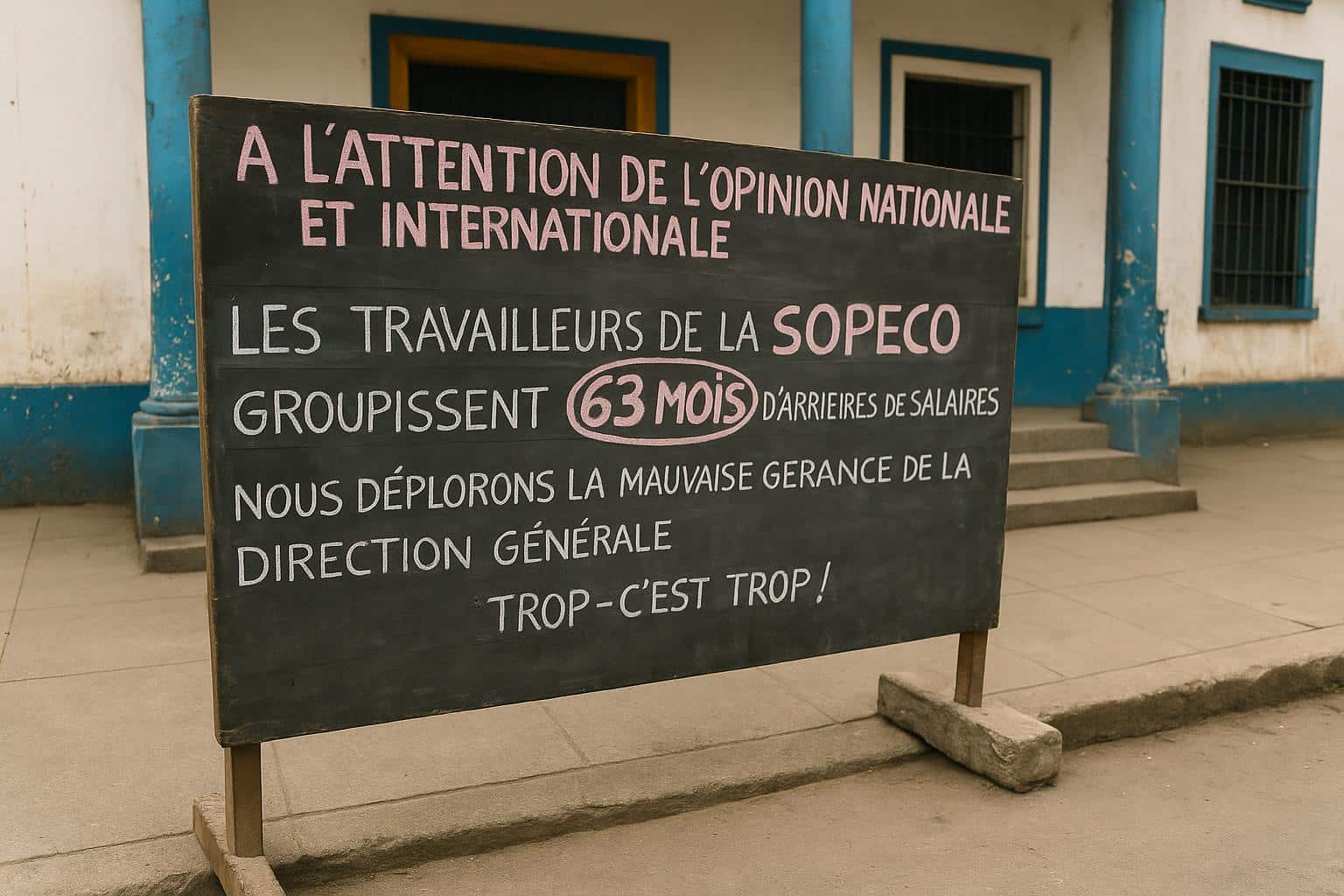
Lingering salary backlog alarms workforce
At Société des postes et de l’épargne du Congo, the mood in sorting rooms and rural branch counters has grown anxious as the wage backlog reaches 63 months, according to the Postal and Telecommunications Federation. Many staff say they borrow from relatives to cover transport to work.
Some employees in Brazzaville recount missing school fees and medical bills, while counterparts in Makoua speak of selling harvest surpluses below market price to survive. The union estimates total arrears at more than 6.8 billion CFA francs.
Timeline of protests and negotiations
The federation organised a sit-in outside the company’s headquarters in February, repeating a demand first raised in 2021 for the departure of the managing director. Leaders carried placards urging “competence and wages”. Police kept a discreet perimeter; no incidents were reported. (ADIAC, Feb 15 2024)
Talks resumed the following week under the mediation of the Ministry of Posts, Telecommunications and Digital Economy. Union spokesman Steve Nkounkou says dialogue is “constructive but slow”, adding that workers expect a schedule “that puts food back on family tables before July”.
Government emphasises structural hurdles
Senior officials highlight that Sopeco, a state-owned enterprise created in 2001, must transform its legacy network in an age of mobile money and private couriers. “The wage issue is inseparable from reforming the business model,” notes Director-General for State Portfolio Émile Ouosso.
The ministry says an audit completed late 2023 revealed revenue leakage through obsolete accounting systems and under-priced postal boxes. Recommendations include digitising financial services, renting unused real estate and seeking a strategic partner, possibly from within the Central African Postal Union.
Economic impact beyond payroll
Economists caution that prolonged arrears weaken consumer demand in small towns where postal salaries circulate. In Owando, grocer Élise Okemba says monthly turnover fell by “almost a third” since 2022 because civil servants and postal clerks purchase on credit or postpone bulk orders.
The Central African Regional Stock Exchange analyst Magloire Bania observes that arrears “also distort savings behaviour and erode confidence in payroll-backed lending, affecting microfinance institutions already exposed to commodity price swings”.
Workers’ coping strategies and social fabric
In interviews conducted at Talangaï delivery centre, several postal agents disclose side activities such as motorcycle taxi driving, tailoring or cassava farming. They stress devotion to public service, yet fear that distractions erode postal quality benchmarks pledged under the Universal Service Obligation.
Retired mail sorter Pauline Mabika, now raising grandchildren on a modest pension, donates staple rice to former colleagues twice a month. “The post office once symbolised reliability; we cannot let it collapse,” she says, wiping sweat from envelopes stacked for rural dispatch.
State response and budgetary context
The 2024 finance law allocates 4.2 billion CFA francs for “postal and savings sector stabilisation”, a line higher than last year’s 3.5 billion. Officials argue that clearing Sopeco arrears must be balanced against commitments in health, security and infrastructure.
Parliamentary Economic Affairs Committee member Marie Aimée Loufoua indicates that a supplementary credit could be sought in the second half, depending on revenue performance from oil and telecom licences. “We have limited fiscal space but cannot disregard employees who keep essential correspondence moving,” she notes.
Digital leap as long-term remedy
The government’s Digital Congo 2025 plan envisages transforming post offices into community e-service hubs offering bill payments, biometric enrolment and e-commerce pick-up. Pilot branches in Pointe-Noire and Dolisie processed 18,000 mobile money operations in the first quarter, ministry data show.
Consultant Carine Oyo argues that success depends on upskilling existing staff rather than reliance on expatriate technicians. “Postal workers understand local customer trust; equipping them with tablets and sales incentives could swiftly raise revenue and create the cash flow needed for salary regularisation,” she suggests.
Union-government road map under discussion
By late April, negotiators had outlined a tentative sequence: immediate payment of two months’ wages from the stabilisation fund, clearance of 2019–2021 arrears through treasury bonds redeemable at commercial banks, and a parallel restructuring committee to finalise a strategic partnership by December.
Union leaders welcome the outline yet insist on a legally binding calendar. Government advisers emphasise that issuing bonds requires parliamentary approval and coordination with the regional central bank, which is monitoring liquidity conditions across the CEMAC zone.
Careful optimism among staff
Outside the Brazzaville main post office, counter agent Arsène Etou reflects a guarded hope. “We stayed on duty through the pandemic and elections. If promises translate into payroll alerts on our phones, morale will rebound and customers will notice,” he says before stamping a parcel bound for Impfondo.
Next steps toward wage relief
Analysts say a swift resolution would strengthen investor perception of Congo’s commitment to public-sector reform, while failure could dampen confidence ahead of the mid-term macroeconomic review with the IMF. For now, envelopes keep moving, even if pay slips lag behind.
The coming weeks will test whether dialogue can convert numbers in spreadsheets into bank credits for thousands of dedicated postal employees.