
China-Congo educational ties deepen
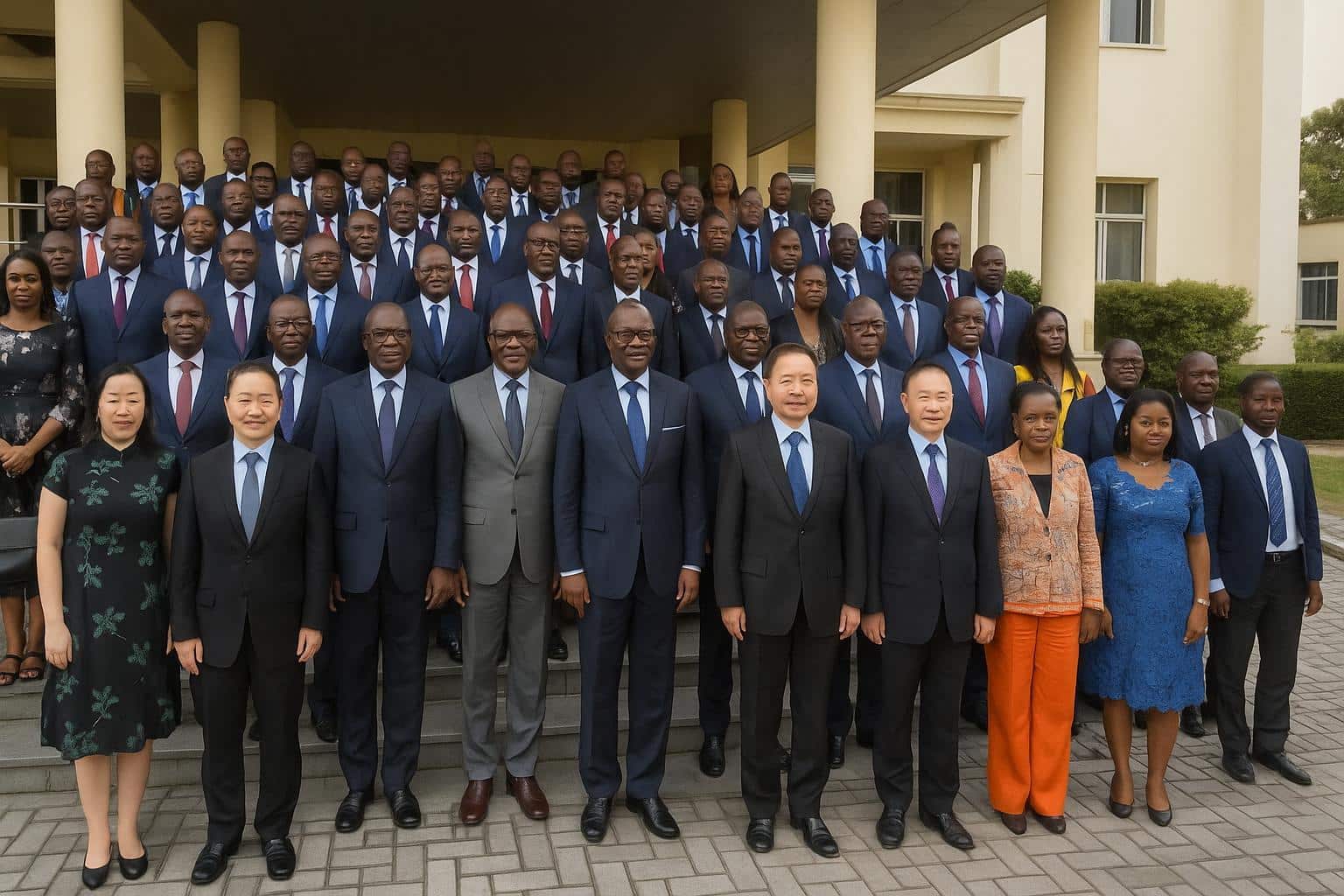
The conference hall of the Ministry of Technical and Vocational Education in Brazzaville filled with a purposeful buzz on 26 November as alumni of the 2024-2025 Chinese training seminars reviewed a year of intense exchanges and mapped fresh ambitions.
Officials, engineers and lecturers from across Congo joined Chinese counterparts to endorse a formal network of experts designed to convert lessons from the seminars into joint projects in curriculum design, equipment supply and applied research.
A data-driven appraisal of the seminars
Gaspard Openda, senior advisor at the ministry, called the sessions “laboratories of capacity building” where Congolese planners inspected a Chinese model famed for labour-market alignment and disciplined project management.
He noted that the seminars did more than showcase classrooms in Shanghai or Shenzhen; they trained managers to analyse employment trends, cost technical programmes and monitor outcomes, skills he said are already feeding national policy reviews.
Turning training into institution-wide reforms
Throughout the day, speakers linked anecdotal success to systemic change. Course graduates explained how they rewrote syllabi for welding, mechatronics and coding by pairing Chinese competency standards with local industrial demand from Pointe-Noire’s oil service firms and emerging agri-processing cooperatives.
Ministry officials confirmed that new procurement guidelines reference the machinery lists encountered in Chinese institutes, a move aimed at curbing mismatches between teaching tools and market realities that previously frustrated employers.
Partnership milestones applauded by diplomacy
Max Henri Monka, chief of staff at the Ministry of International Cooperation, reminded the gathering that Congo’s experience of gradual reform, economic openness and rigorous development planning makes it a credible co-author in the partnership, not a passive beneficiary.
The diplomat argued that knowledge sharing has already sharpened public policy across infrastructure, governance and digital transformation, offering evidence that technical education is inseparable from broader national growth strategies.
Adrien Tsioula, deputy secretary at the Ministry of Foreign Affairs, framed the initiative within six decades of Sino-Congolese friendship, insisting that the expanding learning corridor “projects our peoples toward a shared prosperity”, a line that drew firm applause.
Six thousand trainees and counting
Chinese ambassador An Qing supplied the headline statistic: more than 6,000 Congolese citizens enrolled in over 60 programmes during the past year, ranging from urban planning analytics to smart-factory maintenance. She called training “a vital platform for deepening governance dialogue and social development”.
Embassy officials later clarified that scholarships for the 2025 intake will prioritise green energy technicians and digital finance auditors, mirroring sectors highlighted in Congo’s National Development Plan 2022-2026.
Congolese coordinators said a cloud-based alumni portal, under construction with Chinese technical support, will catalogue expertise, facilitate mentoring and flag joint grant opportunities, ensuring the network lives beyond ceremonial photos.
Workforce dividends on the horizon
Economists at the University of Brazzaville, interviewed on the sidelines, estimated that aligning vocational output with industrial demand can shave recruitment costs by up to 15 percent for domestic firms, freeing capital for innovation.
Employers in the capital’s Makabana industrial zone reported to this newspaper that recent graduates of the Sino-Congolese courses required shorter probation periods, suggesting tangible efficiency gains.
Analysts caution, however, that sustained success requires reliable electricity, upgraded internet and stable procurement budgets—areas the new expert network intends to study with blended teams in the first quarter of 2025.
Governance and oversight commitments
To maintain accountability, the ministries agreed to publish annual scorecards tracking job placement, gender balance and private-sector feedback. Openda said the scorecards will “let citizens judge whether international cooperation is truly translating into livelihoods.”
Ambassador An pledged continued Chinese support, yet she stressed local ownership, urging Congolese institutions to “drive the steering wheel while we fuel the vehicle,” a metaphor met with nods from rectors and provincial directors.
As the session closed, delegates signed a memorandum to launch pilot centres of excellence in Brazzaville and Dolisie by mid-2025, signalling that the network idea has moved from concept to calendar, with expectations now shifting toward measurable outcomes.
Observers from regional bloc CEMAC said the framework could serve as a template for neighbouring states seeking to match training investment with industrial corridors, reinforcing Congo’s position as a catalyst for Central African human-capital integration.