
Brazzaville ANSTC meeting sets 2026 research tone
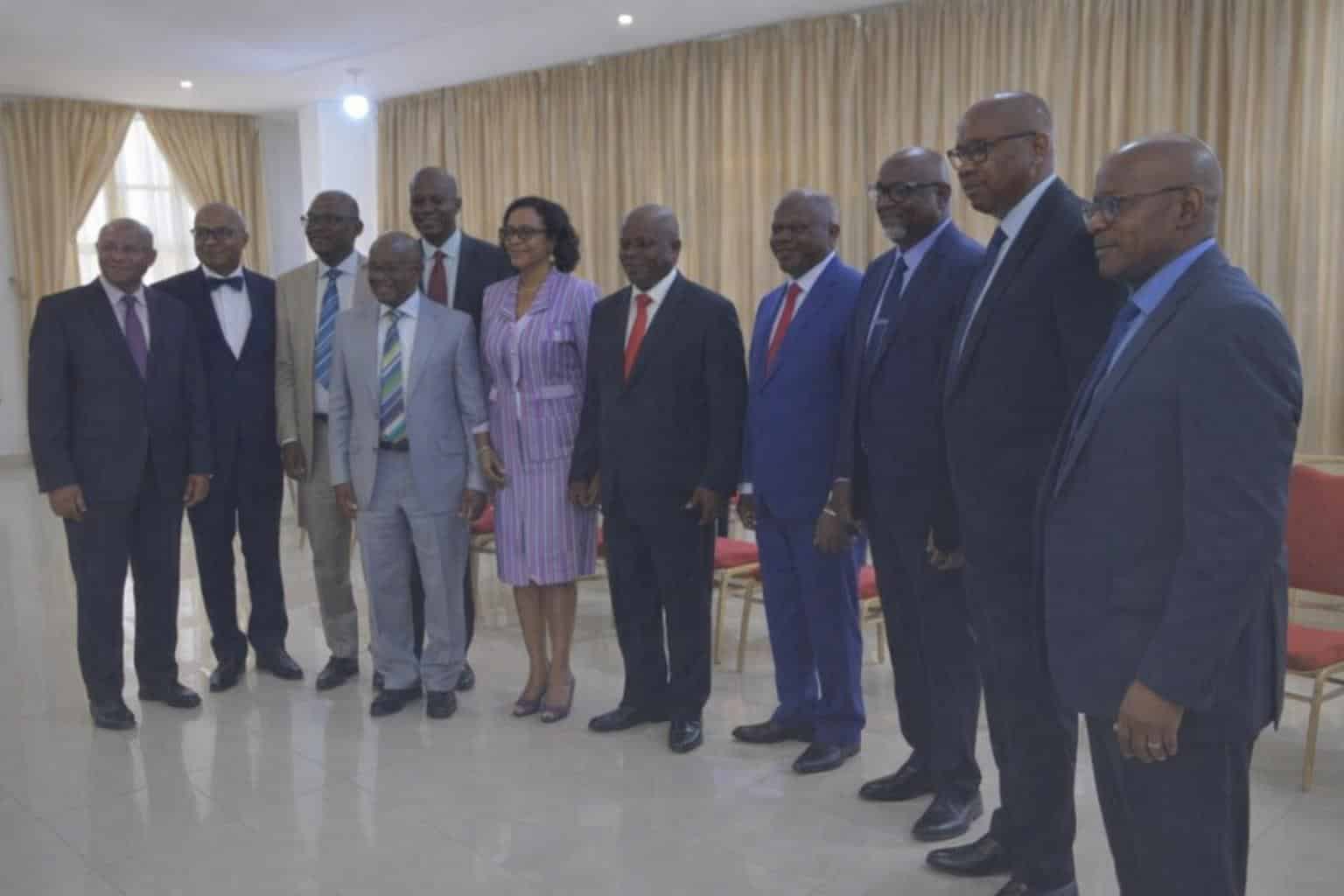
Gathered in an ordinary general assembly on January 30 in Brazzaville, members of the National Academy of Sciences and Technologies of Congo (ANSTC) delivered a frank assessment of national scientific research. Participants described persistent constraints around funding, institutional status and the community’s ability to mobilize around common goals.
The session also served to open the 2026 academic year for the Academy. The ANSTC president, Professor Assori Itoua Ngaporo, who is also the General Delegate for Scientific Research, used the meeting to outline priorities and expectations for the months ahead.
Funding for science and innovation remains a central issue
At the heart of the discussion was the question of resources. Professor Itoua Ngaporo spoke plainly about the financial limitations facing the Academy and the wider research ecosystem, linking these constraints to the pace of scientific output and technological innovation.
“Without money, you cannot win a war,” he said, using a striking metaphor to underline how difficult it is to build a research culture without sufficient budgets. His remarks pointed to the broader challenge of aligning ambitions with the level of public funding available.
Official recognition of ANSTC still pending in Congo
Another major topic was the Academy’s institutional standing. Created on December 27, 2011, ANSTC has now operated for fourteen years, yet it is not established by a law, according to the leadership’s account presented to members during the assembly.
The same account said ANSTC does not have its own headquarters and does not receive a state subsidy. In practice, this lack of formal anchoring can limit visibility and complicate long-term planning, even as the Academy seeks to position itself as a reference institution.
Ministerial proposals offer a pathway toward a clearer status
The assembly also carried an element of optimism. The ANSTC leadership reported that the new minister in charge of Scientific Research and Technological Innovation has put forward proposals aimed at supporting official recognition of the Academy.
According to Professor Itoua Ngaporo, ANSTC could be associated with the work of a commission tasked with drafting a decree on the institution’s organization and functioning. If confirmed, that process would help define roles and procedures more clearly for the Academy’s daily work.
Mobilizing scientists: ANSTC calls for stronger participation
Beyond administrative questions, the Academy’s president highlighted what he described as uneven involvement from some members of the scientific community. In his view, an academy of sciences must be more than a name or a roster; it must act as an engine for ideas and standards.
He framed ANSTC’s mission around scientific rigor, producing and valuing knowledge, and creating spaces for professional exchange. He also emphasized conferences, colloquia and debates as ways to strengthen shared methods and raise the profile of research in Congo.
Multidisciplinarity and excellence: what the Academy wants to promote
The meeting reflected ANSTC’s broad disciplinary base. The assembly brought together key scientific figures from fundamental sciences, agriculture, humanities and social sciences, environment, engineering and computer science, illustrating the Academy’s ambition to connect fields that often work in parallel.
Professor Itoua Ngaporo argued that multidisciplinarity is not only desirable but necessary for problem-solving, especially where national priorities overlap, such as food systems, environmental pressures, digital tools and public policy. He also referenced the idea of distinguishing top researchers to encourage excellence.
Governance updates inside ANSTC during the January 30 assembly
Organizational decisions were also on the agenda. The general assembly was marked by the election of a new full member and by steps to strengthen the executive bureau, decisions presented as part of routine institutional consolidation.
Professor Itoua Ngaporo welcomed the level of participation during the session and cited the support of the Academy’s partners. In a policy environment shaped under President Denis Sassou Nguesso, the ANSTC leadership signaled its intent to contribute constructively to national research and innovation goals.