
A Public Project Put Back in Focus
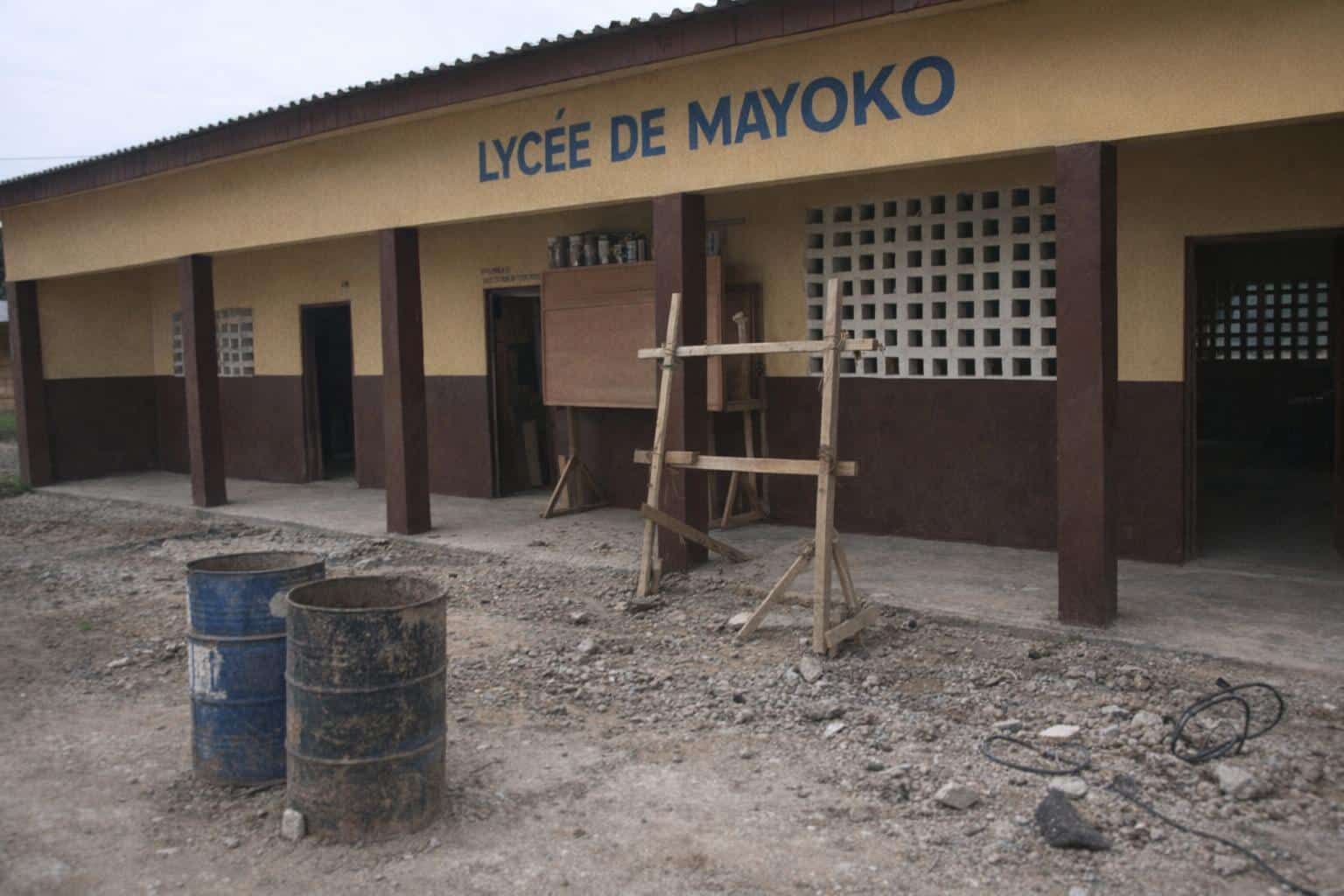
In Mayoko, a district in Congo-Brazzaville’s Niari department, a new high school has become the center of an unusually charged public debate. The Ministry of Primary and Secondary Education says the essentials are simple: the campus is a ministry achievement, designed for students, not slogans.
The clarification comes as some voices seek to claim credit or reframe the story for political gain. The ministry’s line is that the school’s origin should be described accurately, and that public attention should return to the daily reality facing families who want reliable learning conditions.
Jean-Luc Mouthou’s On-Air Clarification
Minister of Primary and Secondary Education Jean-Luc Mouthou addressed the issue during the program “30 jours pour convaincre en toute transparence.” In that setting, he said the Mayoko high school is “indeed a realization” of his ministry, a message delivered with what observers described as firmness.
According to the minister’s explanation on the program, the purpose of the statement was not to inflame a dispute but to protect what matters most: the education of Congolese children. The ministry presented the intervention as a fact-based correction, meant to prevent confusion from spreading further.
What the Ministry and Its Close Sources Say
A source close to the Ministry of Primary and Secondary Education argues that the project should not be diverted, rebranded, or politicized. In that account, the school was “conceived, financed and executed” with a single objective: giving young people in Mayoko a learning environment that is dignified, modern and functional.
The same source rejects circulating claims that the high school is primarily the work of “Mayoko’s cadres,” a rumor that has fueled competing narratives. For ministry officials, the distinction is not personal; it is administrative and institutional, and it speaks to how public programs are managed.
Mayoko High School and the State’s Education Priorities
Supporters of the ministry’s position describe the Mayoko high school as a symbol of the state’s commitment to schooling for all and equal opportunity. They see it as a concrete sign of how public action can translate into classrooms, teachers’ workspaces and safer study conditions for adolescents.
In the ministry’s framing, the project also connects to a larger goal: developing human capital. The argument is that better infrastructure is not an end in itself, but a tool that helps students remain in school, progress through grades, and prepare for professional training or higher education.
Keeping Education Above Political Competition
In his remarks, Mouthou urged that education should not become a terrain for rivalry. The government’s message, as presented in the program, is that schooling is neither a campaign slogan nor an arena for score-settling, but a national priority that deserves stability and clarity about who does what.
This is also why the ministry insists on “recentering the debate on facts.” For officials, accurate attribution is part of accountability, and accountability is portrayed as necessary to sustain public investment over time, especially in departments where communities expect visible improvements.
A Local Expectation, a National Message
For residents of Mayoko and surrounding areas, the most tangible question is less about political credit than about what the school changes in everyday life. A functioning high school can reduce travel distances, ease pressure on other establishments, and give families a stronger reason to keep teenagers in class.
At the national level, the ministry’s communication seeks to send a wider signal: that public projects should be evaluated by their outcomes and managed through institutions. Mouthou’s message, as delivered, is that Congo’s future is built in classrooms, away from short-term calculations.