
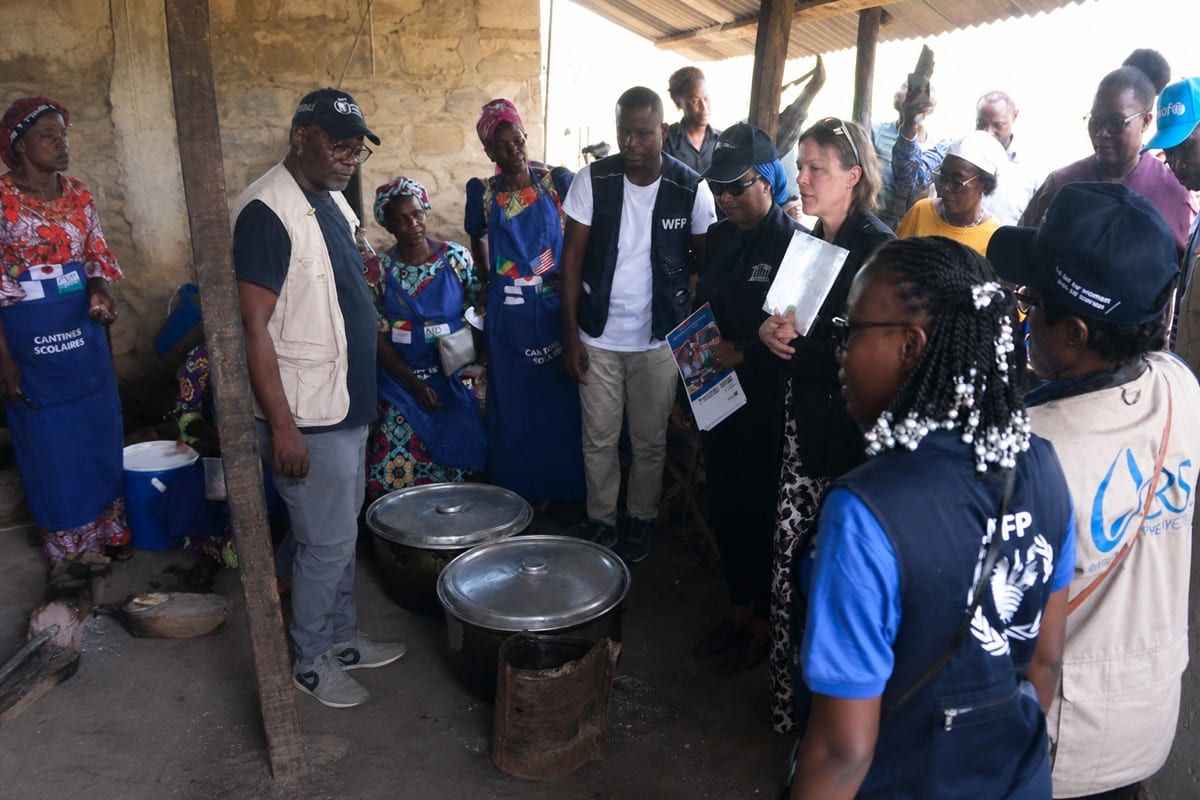
A Diplomatic Visit to the Classroom
On 8 April 2026, Amanda Jacobsen, the chargé d’affaires of the United States Embassy in Congo-Brazzaville, travelled to the Pool department to visit two primary schools — Samba Daniel and Jean Kimbémbé — and assess firsthand the impact of a long-running American-funded school meals initiative.
The visit was part of an ongoing effort to evaluate a programme whose footprint in Congolese education stretches back more than two decades.
More Than $100 Million Since 2001
The programme in question is the GovEd initiative administered by the United States Department of Agriculture, which has channelled over 100 million dollars into Congolese school canteens since 2001. It operates in partnership with the World Food Programme and the Congolese government.
Today, the programme provides daily meals to more than 83,000 children across 400 schools in the country. Girls account for nearly half of all beneficiaries, and programme administrators point to measurable increases in both school attendance and retention as outcomes directly linked to the food provision.
What the Diplomat Observed
Jacobsen used the occasion to reaffirm American engagement. “The United States is proud to support the Congolese people in these priority areas,” she said, framing the initiative as a contribution to “prosperity and stability” — language that reflects Washington’s broader development assistance philosophy in the region.
Her presence at the two Pool department schools placed official American visibility directly on the ground-level impact of the funding, a gesture that carries diplomatic weight beyond the symbolic.
The Pool Department in Focus
The Pool department, which surrounds Brazzaville on several sides, has historically been one of the more complex areas of the country from a stability and development perspective. The presence and continuation of the school meals programme in its communities is therefore significant not just as an educational intervention but as a social infrastructure effort in a region that has required sustained attention from both the Congolese government and international partners.
The schools visited — Samba Daniel and Jean Kimbémbé — serve as tangible examples of what sustained multi-year investment in school feeding can produce when implemented consistently at the local level.
Funding Beyond 2026
A World Food Programme representative present at the visit expressed optimism about the continuation of financing beyond the current programme cycle, which extends to the end of 2026. Potential additional contributors being discussed include Japan and actors from the private sector.
The prospect of funding diversification matters. A programme that has operated for 25 years and now feeds tens of thousands of children daily cannot absorb a sudden funding gap without significant impact on school attendance rates, particularly among girls whose enrolment gains are partially attributed to the food incentive.
A Quiet Success Story
The US school meals programme in Congo-Brazzaville does not often attract headlines, but the numbers it represents are substantial. More than 83,000 meals delivered daily to children in 400 schools, sustained for a quarter century by a single bilateral funding stream, represents a model of long-form international development cooperation that has demonstrably shaped educational outcomes.
Whether the programme secures its next phase of funding — and whether new partners step in to share the cost — will determine whether those gains continue or begin to erode.