
National Council expels dissenters
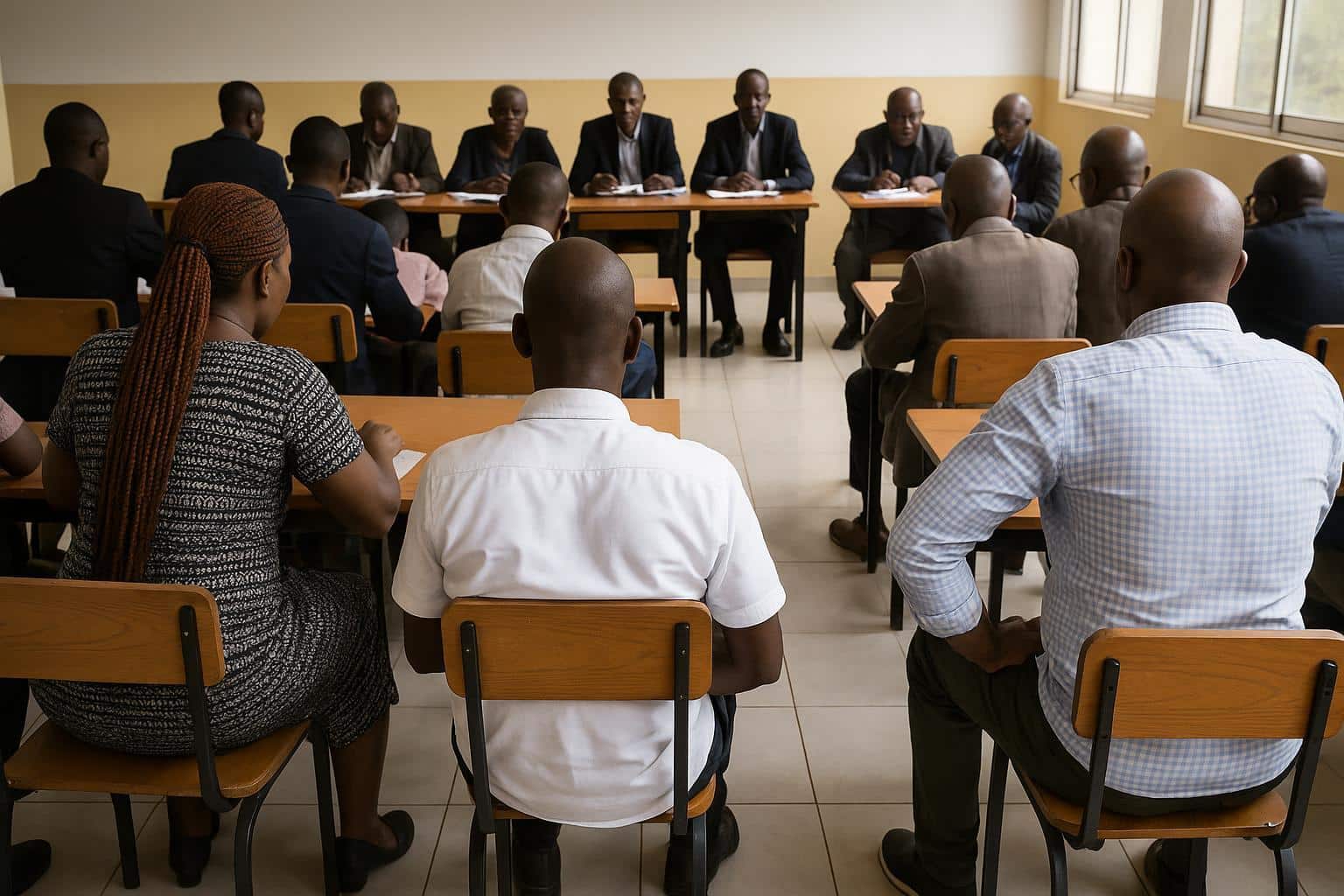
The National Council of the Party of the People, better known by its French acronym PAPE, closed a two-day extraordinary meeting in Brazzaville on 29 November with a dramatic decision: the immediate expulsion of activist Castallin Balou and four allies from the organisation’s membership rolls.
Officials argued the sanction was necessary to safeguard internal order after what they described as a pattern of “usurpation of power” and “orchestrated violence” inside party structures, actions they said openly violated the statutes and internal regulations adopted when PAPE was founded in 2018 ago.
Yvon Boloumba, the party’s secretary-general, read the decision to reporters, insisting that every member of the 71-seat National Council endorsed the measure by acclamation, leaving, in his words, “no grey area about the legitimacy of the ruling” (National Council communique) issued shortly after midday Thursday.
Alleged violations detailed
The expulsions cover Balou’s long-time collaborators Gaston Miyalou, Melvin Louwouamou, Hervé Samba and Lévy Oniangué, all former leaders in the Association of Congolese Youth and Diaspora before they joined PAPE during the 2022 grassroots recruitment drive launched to bolster opposition presence ahead of legislative elections scheduled for July 2023.
Council minutes accuse the group of impersonating the party president, making public statements without mandate, and signing letters to local administrators as though they held official briefs, thereby, according to Boloumba, “exposing PAPE to reputational risk and possible civil liabilities” in multiple departments last quarter.
The document also lists allegations of defamation, public insults and threats directed at fellow militants, culminating in a 27 September incident where Balou’s entourage allegedly disrupted a National Council sitting and provoked a brief scuffle with security guards posted outside the hall on Avenue des Trois-Martyrs.
Inside the September confrontation
Eyewitness César Moussavou, a municipal councillor who attended the session, recalled hearing chairs topple and slogans shouted against the current leadership before police intervened after nine minutes, a timeline later confirmed by a duty officer at Moungali district headquarters speaking to this newspaper on Friday.
Balou has not responded publicly to the ouster; repeated phone calls by our newsroom on 30 November rang unanswered, and a message left on his personal Facebook page remained marked as “seen” without reply by press time. His last post discussed youth unemployment and civic education.
Legal safeguards and branding rights
PAPE president Jean-Pierre Agnangoye used the same briefing to warn that any activist or external sympathiser ignoring the expulsion order could face legal action, stating the party was “prepared to defend its identity in court if necessary” under articles 52-39 of the civil procedure code.
Under the resolution, Balou and his allies must cease invoking PAPE’s name, logo and colours, and purge all references from websites within 24 hours; failure to comply, Agnangoye added, would prompt injunctions for trademark infringement sought through the Commercial Court of Brazzaville early next week jurisdiction.
Legal researcher Mireille Ondongo believes the party has a strong case, noting that Congolese jurisprudence recognises collective marks and authorises political associations to protect them, provided the complainant can show registered usage and risk of confusion among voters, particularly during pre-electoral periods such as the current.
Implications for Congo’s opposition scene
While PAPE sits in the opposition benches, analysts stress that internal discipline has become more pressing across the political spectrum as the country prepares logistical groundwork for the 2026 presidential ballot, seen by investors as a bell-wether for medium-term stability in Central African debt markets.
Political scientist Rodrigue Ngollo of Marien-Ngouabi University argues that expulsions, though dramatic, often help smaller parties clarify chains of command and present a coherent message to rural voters who remain wary of factional infighting, particularly after contentious municipal elections earlier in the Niari and Plateaux departments.
He cautions, however, that splinter groups sometimes rally online followings that distort debate, pointing to regional examples in Cameroon and Gabon where expelled cadres re-emerged as digital influencers with outsized reach among diaspora youth, a scenario PAPE strategists say they are monitoring with analytic software.
PAPE charts its post-crisis agenda
For now, Agnangoye has tasked regional coordinators with explaining the decision during December neighbourhood assemblies, arguing transparency will prevent rumours and ensure door-to-door canvassers carry a unified script into peri-urban districts of Brazzaville and Pointe-Noire ahead of voter registration audits slated for early January 2025.
The party leader also confirmed that an extraordinary congress, initially planned for March, has been brought forward to late February to ratify internal reforms and elect a new disciplinary board, a move endorsed by the Ethics Committee chair, Pastor Ange Mabiala during a brief telephone interview Saturday.
Whether Balou seeks redress through the courts or forms a breakaway movement remains unclear, but for PAPE the emphasis is on consolidation; as Agnangoye put it, “our objective is to stay focused on policy proposals, not personalities,” a stance welcomed by several civil society observers.