
Paris event spotlights Congolese literature
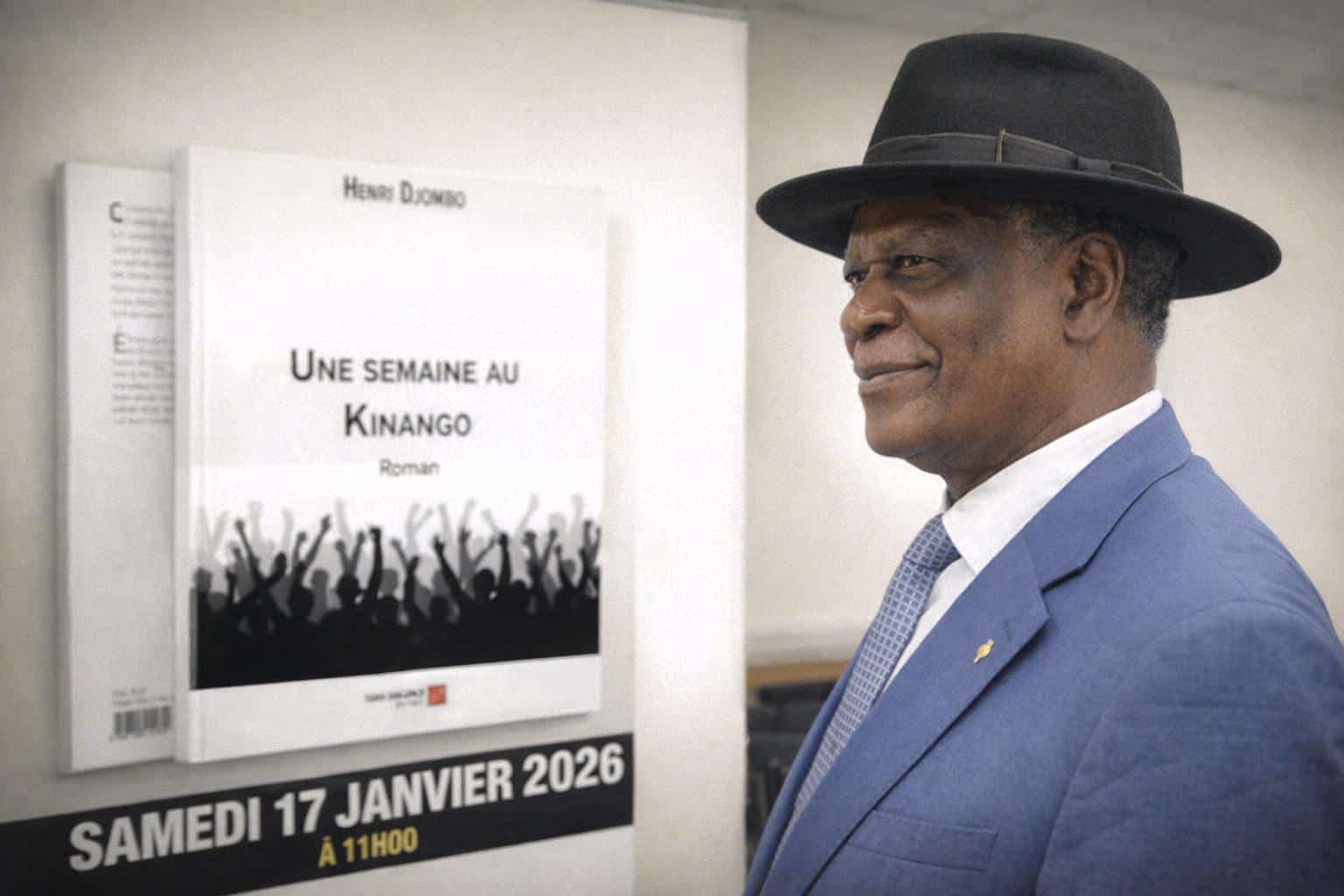
On January 17, Congolese writer and statesman Henri Djombo will meet readers in Paris to present his newest book, “Une semaine au Kinango.” The novel was released last year by Éditions du Net, and the author is expected to discuss the ideas that shaped its narrative.
A public meeting at the Congo embassy in France
The presentation-and-signing is scheduled for Saturday in the Green Room of the Embassy of the Republic of Congo in France. Organizers say the event is open to the public and designed as a space for dialogue between the author, literary observers, and a broad community of readers.
After Brazzaville and Yaoundé, a new stage in the tour
The Paris stop follows earlier presentations held in Brazzaville and Yaoundé, extending the novel’s journey across African and diaspora literary circles. For many attendees, the embassy venue also signals the role cultural diplomacy can play in connecting Congolese creation with international audiences.
A fictional Kinango reflecting African realities
Djombo’s eleventh novel, spanning 185 pages, takes place in Kinango, a fictional nation built as a mirror of lived African realities. The setting allows the author to explore social and political dynamics without anchoring the story to a single country, while still keeping recognizable textures of the continent.
The magnan ants: a striking political metaphor
From the opening pages, the book introduces a memorable image: an invasion of magnan ants. The metaphor, expected to be widely discussed during the Paris exchanges, suggests how small forces can become decisive when they act together, turning scattered energy into collective momentum.
Power from below and civic mobilization
Individually, the ants appear insignificant; as a group, they become unstoppable. Speakers involved in the discussions have framed this as an allegory of “power from below,” highlighting how communities can mobilize in the face of injustice, corruption, and political inertia.
Social fractures, reforms, and competing pressures
Through Kinango’s everyday life, the narrative examines visible and hidden fragilities in African societies: social divides, generational tensions, and the shifting balance between those who govern and those who are governed. It also leaves room for hopes of measured reforms rather than abrupt ruptures.
A political laboratory between tradition and modernity
Kinango is portrayed as a political laboratory where tradition meets modernity, and where national interests interact with international pressures. The novel’s fictional frame offers room to debate governance choices in a way that remains accessible, while still inviting readers to draw their own parallels.
Critics join the author for a close reading
During the Paris presentation, Djombo will be accompanied by literary critics tasked with unpacking the book’s themes and symbols. The format is expected to blend analysis with audience interaction, allowing questions about the story’s moral and political stakes to be addressed directly.
Henri Djombo: economist, former minister, prolific author
Djombo is an economist by training and a former minister, alongside a long-standing literary career. He has written around ten novels, as well as numerous plays and essays. He often describes his work as literature grounded in African realities, written with attention to lived experience.
Awards and a consistent literary approach
A recipient of several international distinctions, including the Toussaint-Louverture and Camara-Laye prizes, Djombo continues a consistent approach with “Une semaine au Kinango.” His stated ambition is to write Africa from within Africa, without complacency and without surrendering to fatalism.
A novelist’s role: questioning society through fiction
“The novelist is not there to flatter consciences, but to question societies,” Djombo likes to say. In that spirit, he presents Kinango not as distant fantasy, but as a projection of aspirations for more human justice and responsible governance—debates he expects to pursue with readers in Paris.