
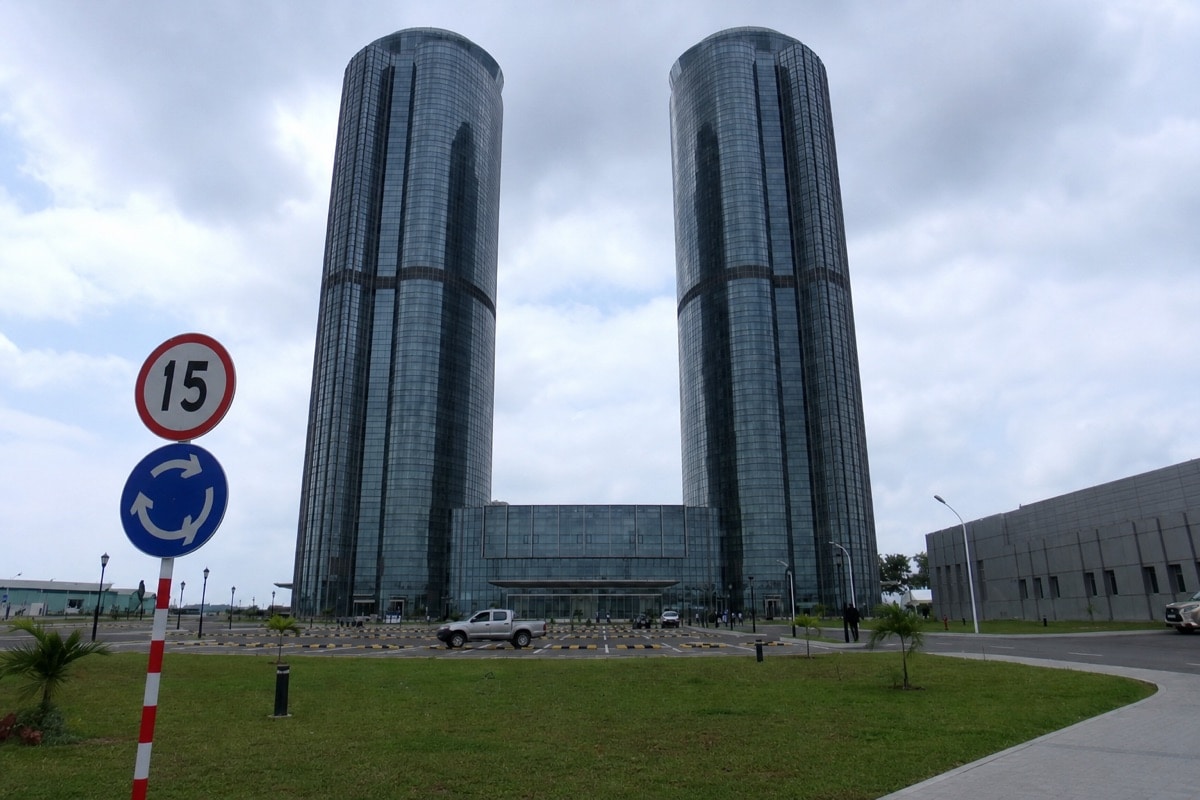
Brazzaville Takes Center Stage in African Finance
For five days in late May 2026, the Republic of Congo’s capital became the focal point of African economic diplomacy. From May 25 to May 29, Brazzaville hosted the 61st Annual Meetings of the African Development Bank Group, drawing more than 3,000 delegates from 81 member states.
The gathering brought together heads of state, finance ministers, central bank governors, and institutional investors in a setting that few cities on the continent have previously hosted.
A $400 Billion Question
The meetings opened against a sobering backdrop: the African Development Bank estimates the continent faces an annual financing deficit of $400 billion.
That figure — representing the gap between Africa’s development investment needs and what public budgets and existing financial flows can provide — framed nearly every major conversation at the event. The central challenge, as delegates engaged with it, was not identifying what Africa needs, but restructuring how it pays for it.
The New African Financial Architecture
Under the leadership of AfDB president Sidi Ould Tah, the institution has advanced a framework called the New African Financial Architecture for Development, or NAFAD, as its primary response to the financing gap.
The model rests on a relatively simple but powerful premise: Africa already holds substantial capital. The question is how to redirect it toward productive domestic investment.
Didier Acouetey, Special Adviser to the AfDB president, articulated this position directly at the meetings. “One estimates that today, approximately 4,000 billion dollars available on the continent could be mobilized,” he said, pointing to pension funds, sovereign wealth funds, and insurance companies as the primary reservoirs. The task NAFAD sets for itself is building the instruments — guarantees, blended finance vehicles, and regulatory harmonization — that would allow those pools of capital to flow toward infrastructure and productive sector projects.
Themes on the Table
The 2026 agenda organized discussions around several interconnected priorities.
Financial sovereignty was the overarching theme, reflecting a consensus among African policymakers that greater reliance on domestically mobilized resources is both an economic necessity and a political imperative in an increasingly fragmented global order.
Support for small and medium-sized enterprises also featured prominently. African SMEs, which account for the majority of employment across the continent, remain systematically underserved by formal financial systems, and the meetings examined how development finance can help bridge that access gap.
Human capital investment and the development of continental value chains rounded out the substantive agenda, alongside the release of the AfDB’s flagship 2026 economic report — a publication closely watched by governments, investors, and international institutions.
Why Brazzaville
The choice of Brazzaville as host carries symbolic and practical dimensions. The Republic of Congo has positioned itself as a platform for continental dialogue, and the selection of its capital for an event of this scale validates that aspiration.
Brazzaville’s hosting capacity has been expanded in recent years, and the city’s geography — at the center of the African continent, adjacent to the Democratic Republic of Congo across the Congo River — gives it genuine relevance as a meeting point for Central and West African economic discussions.
Domestic Stakes
For the Republic of Congo’s government, the meetings represented an opportunity to project stability and openness at a time of domestic transition, following the presidential election of March 2026.
Congo’s own financing needs are substantial. The country is navigating the post-oil transition, managing public debt, and seeking to attract diversified investment across sectors including agribusiness, port infrastructure, and digital services.
The presence of thousands of financial decision-makers in Brazzaville provided a natural setting for bilateral conversations on investment pipelines, debt restructuring, and technical cooperation.
Longer-Term Significance
The Brazzaville meetings did not produce binding agreements in the traditional summit sense. Their significance lies rather in the relationships built, the frameworks endorsed, and the signals sent to international capital markets about African institutional capacity.
For the AfDB, the 2026 Annual Meetings served as a platform to advance NAFAD as the institution’s dominant strategic narrative for the years ahead — one that repositions development banks not as lenders of last resort but as architects of a new financing architecture built on African resources and African agency.