
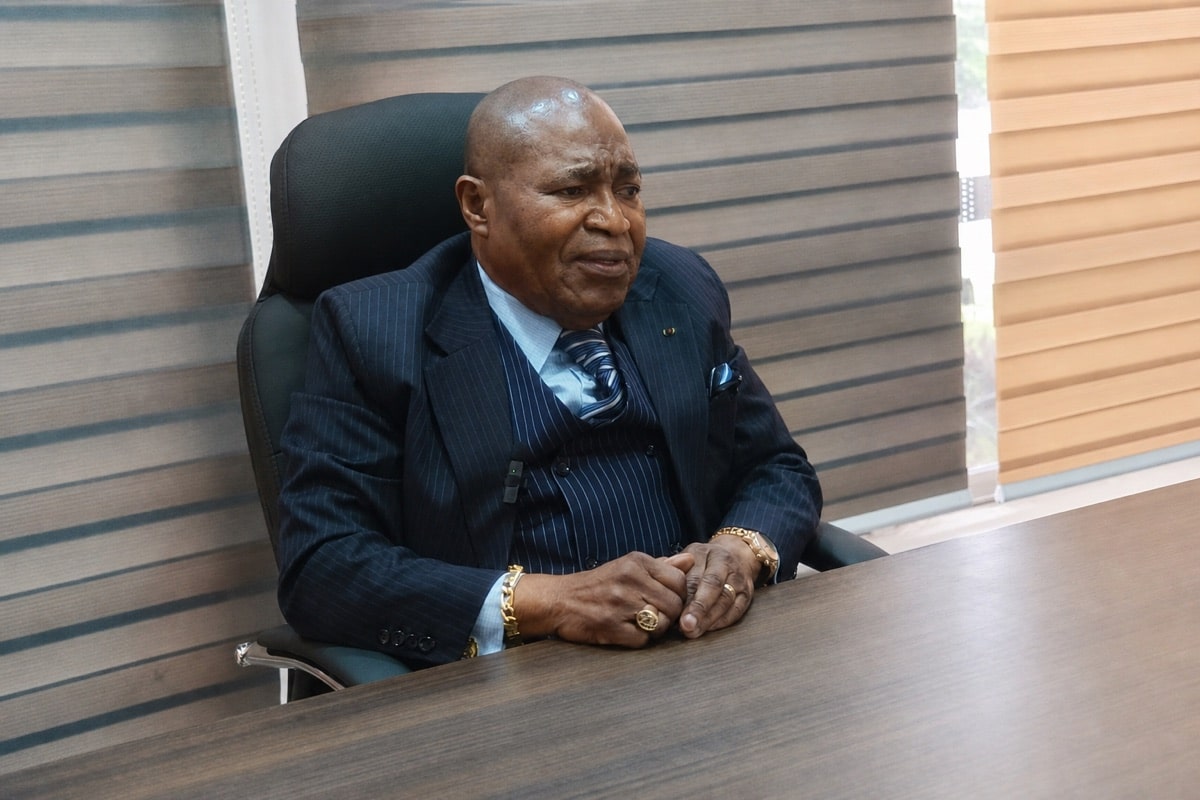
A new minister has taken charge of a ministry built to police the Congolese state. In his first formal exchange with senior staff, Noel Leonard Essongo set a single, unambiguous benchmark for the months ahead: results that can be measured.
A First Meeting Framed Around Accountability
Essongo, Minister of State for State Audit, Public Service Quality and the Fight Against Misconduct, gathered the directors general and central directors of his department. The tone was direct. He left little doubt that performance, not process, would define his tenure in office.
“We have an obligation to produce results in order to maintain the confidence placed in us,” he told the assembled officials. The sentence functioned less as encouragement than as a contract, binding the ministry’s leadership to outcomes their compatriots could eventually recognize and judge.
Continuity With a Sharper Edge
Rather than break with the past, Essongo positioned his arrival as a continuation. He acknowledged the work begun by his predecessor and urged experienced cadres to sustain their momentum. The message paired institutional respect with a quiet warning against complacency among long-serving staff.
That balance matters in a department whose authority touches nearly every corner of public administration. By honoring earlier efforts while raising expectations, the minister sought to keep seasoned officials engaged rather than defensive, a delicate calculation familiar to anyone steering an established bureaucracy.
A Personal Doctrine of Delivery
Essongo also offered a glimpse of his own working method, describing himself in unusually personal terms for a first address. “I am the type of person who, when given a mission, does not return to the hierarchy before completing it, to report: mission accomplished,” he said to the room.
The remark carried a clear subtext. He appeared to be inviting his directors to adopt the same posture, treating assignments as commitments to be closed rather than tasks to be reopened. In an administration often criticized for delay, the standard he set was deliberately demanding.
What the Ministry Is Built to Do
The department Essongo now leads carries weight that extends well beyond symbolic oversight. It is tasked with monitoring the legality and regularity of the acts of public administration, scrutinizing whether official decisions conform to the rules that govern them across the country.
Its mandate also reaches into questions of quality. The ministry evaluates the performance and standard of public services, a remit that places it at the intersection of citizens’ daily experience and the machinery of the state meant to serve them.
Beyond evaluation, the ministry designs and coordinates national programs to fight corruption. That responsibility gives Essongo’s insistence on measurable results a particular resonance, since anti-corruption work is frequently judged by promises rather than by demonstrable outcomes over time.
The department additionally conducts unannounced administrative inspections across the national territory. These surprise checks are among its most concrete instruments, allowing it to test compliance in real conditions rather than relying solely on reports filtered upward through official channels.
A Standard the Public Can Weigh
Taken together, the minister’s words and his ministry’s mandate sketch an ambition that is easy to state and hard to fulfill. Oversight of legality, assessment of service quality, coordination of anti-corruption efforts and field inspections form a broad and demanding portfolio for any single department.
Essongo’s early emphasis on confidence is therefore notable. By tying his ministry’s legitimacy to the trust of those it answers to, he framed accountability as a relationship rather than a slogan, one that can erode quickly if the promised results fail to materialize.
The coming period will test whether the doctrine survives contact with the realities of administration. Inspections can reveal uncomfortable findings, performance evaluations can expose entrenched weaknesses, and anti-corruption programs can stall against resistance that no opening statement can dissolve on its own.
For now, the minister has set the terms by which he wishes to be measured. He has asked his cadres to close their missions, to honor the momentum of earlier work and to deliver outcomes rather than explanations. Whether the ministry meets that bar remains the open question.
What is already clear is the standard itself. In a single meeting, Essongo converted an abstract obligation into a stated expectation, one his directors now carry into their daily work. The value of that expectation will ultimately be judged not by speeches, but by the visible record his department leaves behind.