
A Diplomatic Evening at FESPAM 2025
The July air in Brazzaville was dense with anticipation as Canal Olympia welcomed a notably diverse audience of statespersons, diplomats and artists for the première of Yamina Benguigui’s Rumba Congolaise: Les Héroïnes. The presence of President Denis Sassou Nguesso conferred an unmistakable diplomatic weight on an event that already formed part of the Pan-African Music Festival’s official calendar. Far from a mere cultural showcase, the screening became a soft-power moment that highlighted Congo-Brazzaville’s commitment to safeguarding its intangible heritage while elevating gender inclusivity.
Government officials offered measured yet enthusiastic commendations. Minister of Cultural Industries Lydie Pongault emphasised the ‘continuity between yesterday’s trailblazers and today’s creators’, signalling the executive’s intention to treat the creative sector as a pillar of national development. For many ambassadors present, the evening served as a vivid reminder that culture remains a decisive vector in shaping regional cohesion and projecting a constructive image of the Republic on the multilateral stage.
Revisiting a UNESCO Heritage through a Gender Lens
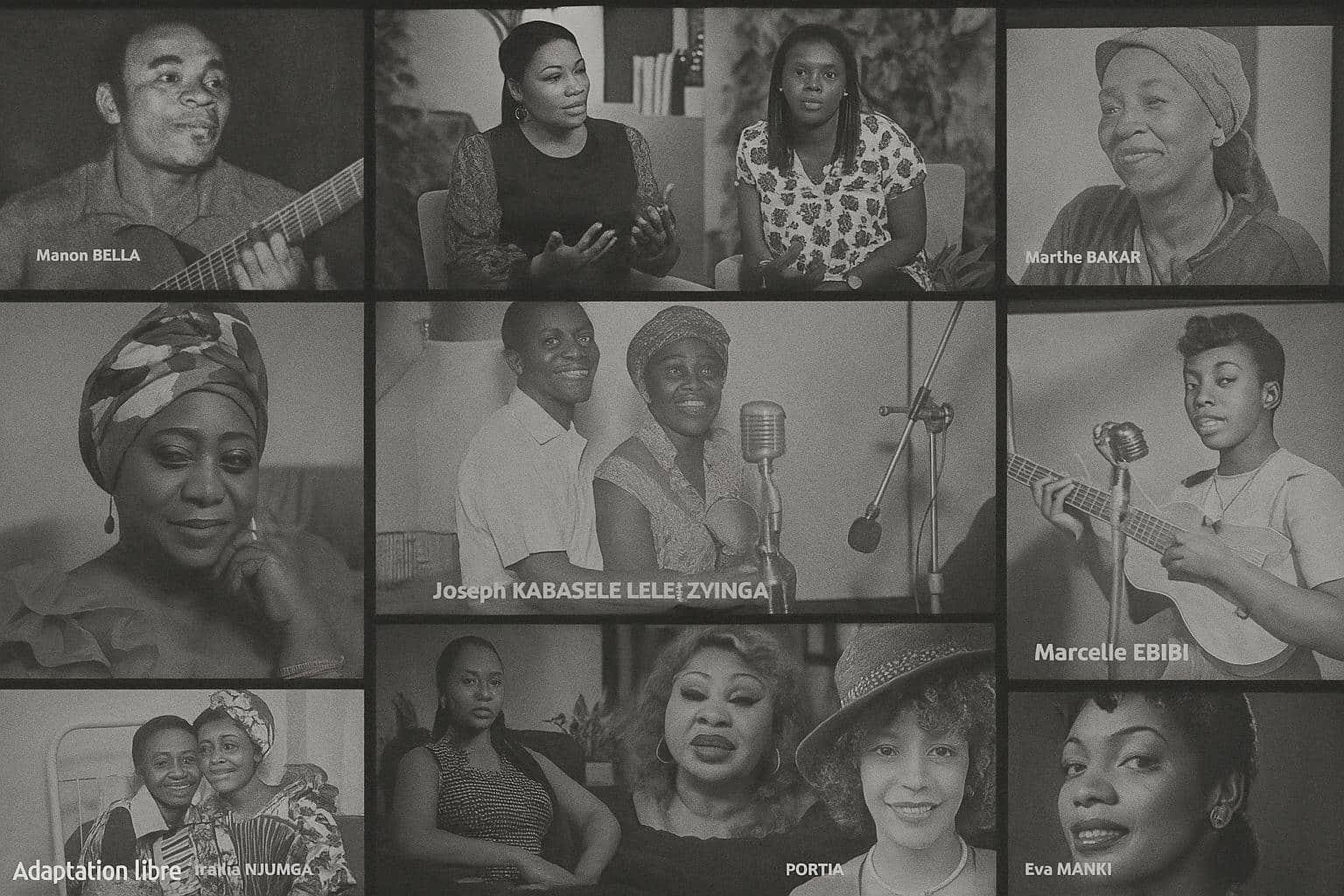
Since the inscription of Congolese rumba on UNESCO’s Representative List of the Intangible Cultural Heritage of Humanity in 2021, scholarly attention has multiplied. Yet most studies continued to privilege male orchestras and bandleaders. Benguigui’s sixty-minute film offers a corrective narrative by foregrounding vocalists such as Lucie Eyenga, Marcelle Ebibi and Marie Bella, whose contributions were foundational but rarely documented. By weaving together restored footage, contemporary interviews and an evocative soundscape, the director constructs a historical continuum that challenges canonical accounts without denying their broader legitimacy.
Historians Scholastique Dianzinga and Didier Gondola appear on screen to underscore this historiographical shift. Gondola reminds viewers that rumba once served as an inter-city bridge between Brazzaville and Kinshasa, fostering a shared cultural identity across the Congo River at a time when political frontiers were still fluid. By revising the gender balance of that story, the film participates in a broader academic effort to pluralise sources and voices, thus enriching the heritage dossier lodged with UNESCO.
Echoes of Liberation and Soft Power
Beyond musicology, the documentary situates female rumba artists within the currents of social liberation that accompanied decolonisation. Their lyrics, often couched in Lingala or in regionally inflected French, served as discreet vehicles for contesting colonial hierarchies and later for negotiating post-independence political spaces. International relations scholars have long observed that popular music can act as a ‘low-frequency diplomacy’, advancing cultural narratives where formal channels might be constrained. The Republic of Congo’s ongoing promotion of rumba on continental platforms thereby aligns cultural policy with foreign-policy objectives: affirming sovereignty, stimulating tourism and reinforcing a positive national brand.
Experts such as Henri Ossebi, member of the Rumba-UNESCO expert committee, argue that spotlighting women artists strengthens this diplomatic leverage by resonating with global conversations on gender equity. In an era where soft-power indices increasingly integrate inclusivity metrics, the film thus offers the Republic an additional asset for cultural outreach.
Intellectual Property and Economic Stakes
The film’s emotive core is amplified by a pragmatic undercurrent: the question of royalties and intellectual property. Mbilia Bel, in a sequence that drew hushed silence from the première audience, recounts decades of unpaid author’s rights. Her testimony echoes recurrent concerns within the Congolese music industry, where informal distribution networks frequently erode artists’ revenue streams. By giving this grievance a prime platform, Benguigui implicitly invites policy makers to accelerate the consolidation of collective-management structures.
Such advocacy dovetails with the government’s broader agenda to professionalise cultural industries. The Ministry of Finance recently announced preparatory consultations on updating copyright legislation, an initiative expected to culminate in a draft bill before the close of the current legislative session. Analysts note that improved monetisation could generate fresh fiscal receipts and reduce dependency on hydrocarbons, aligning with the National Development Plan’s diversification objectives.
Post-Screening Resonance in Brazzaville
The première concluded with an impromptu a cappella performance that fused the voices of Mbilia Bel, Faya Tess, Barbara Kanam and the spoken-word artist Mariusca. The spontaneous encore drew diplomats out of their seats, dissolving protocol in collective applause. Outside, Canal Olympia’s courtyard had been transformed into a miniature rumba village, where new and seasoned musicians exchanged chords under the soft glow of stage lights. Conversations among industry executives hinted at potential mentorship programmes that would pair veteran singers with emerging talents, a proposal reportedly welcomed by the Ministry of Youth and Civic Education.
Media coverage in the days that followed remained largely favourable. Commentators on Télé Congo stressed that the Republic had demonstrated ‘cultural leadership’ by hosting a forum that married cinematic excellence with historical rectification. International outlets, including France-24 and Radio-Canada, highlighted the film’s diplomatic symbolism, drawing parallels with earlier cultural diplomacy initiatives such as the 2023 Brazzaville Jazz Summit. While critics acknowledged that a single documentary cannot single-handedly redress systemic imbalances, few disputed its capacity to reframe public discourse and galvanise institutional action.
Within academic circles, plans are emerging for symposia dedicated to rumba and gender studies, potentially hosted by Marien Ngouabi University. Should these initiatives materialise, they would further entrench the capital as a reference point for African cultural scholarship while reinforcing the State’s commitment to intellectual production.
Toward a Balanced Cultural Memory
Rumba’s Forgotten Queens Finally Claim the Stage ultimately serves several complementary purposes. It restores deserved visibility to women whose creativity shaped a genre now recognised by UNESCO. It strengthens Congo-Brazzaville’s cultural diplomacy by aligning heritage promotion with contemporary values of inclusivity. It also places the pragmatic issue of artist remuneration at the centre of the policy agenda, aligning cultural rights with economic development. In doing so, the documentary underscores a broader regional insight: that safeguarding heritage is not merely about preserving the past but about forging equitable futures.
The applause that filled Canal Olympia on that July evening was therefore more than a tribute to cinematic craftsmanship. It was an affirmation that a nation’s memory is richest when all its voices, especially those once relegated to the margins, are allowed to sing in unison.