
Surprise reveal stirs fiscal community
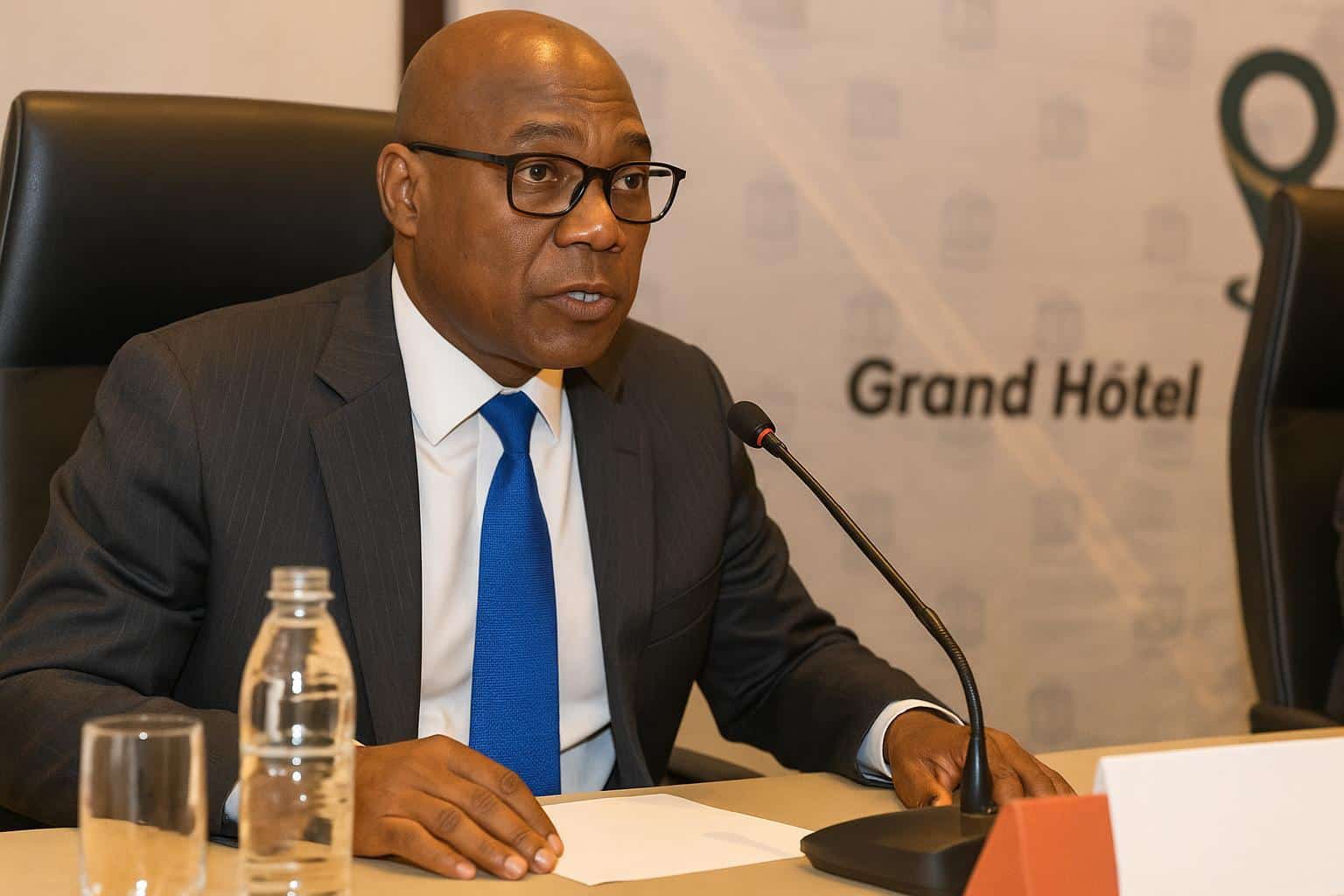
An ordinary briefing at the Brazzaville Chamber of Commerce turned historic when Finance Minister Christian Yoka announced that the 2026 finance bill will abolish the Personal Income Tax and revive four specialised levies. The room of bankers, builders and start-ups fell abruptly silent, then launched into questions.
The minister called the overhaul a cornerstone of the medium-term fiscal framework endorsed by Cabinet in May, stressing that “simplicity and fairness are at the heart of the new design” (Ministry of Finance press note). Observers noted that the reform echoes the pre-1996 tax architecture.
Under the proposal, salaries will be taxed under an Impôt sur les traitements et salaires, rents under an Impôt sur les revenus fonciers, dividends and interest under an Impôt sur les capitaux mobiliers, and self-employed profits under an Impôt sur le bénéfice.
Family status, marriage and the notion of a household tax unit would disappear from tax forms. Officials argue that the change curbs loopholes, eases compliance and aligns Congo-Brazzaville with peers in the CEMAC zone where individual allowances are being phased out.
Changes felt by workers and investors
Payroll departments will have to recode software before 1 January 2026, when the new salary levy enters into force. According to preliminary brackets presented by the ministry, top marginal rates fall from 40 % to 33 %, while entry-level bands dip below 5 %.
Landlords, a growing constituency in Brazzaville and Pointe-Noire, face a flat rate of 15 % on rental income, but depreciation schedules on new buildings will be lengthened to offset the hit. Asset managers welcomed the separate capital-income tax, predicting clearer rules for portfolio allocation.
Entrepreneurs operating in the informal sector are expected to shift to the profit tax, replacing occasional presumptive levies collected at roadblocks. “We prefer one transparent rate over random spot fees,” said fabric importer Henri Mambou, who trades between Oyo and Ouesso.
Fiscal discipline and debt priorities
Yoka targets a 17 % lift in non-oil revenue next year, coupled with capping spending growth at 3 %. The ministry projects a primary surplus that would stabilise public debt at about 57 % of GDP, below the CEMAC convergence ceiling.
Treasury officials say stronger domestic mobilisation could reduce reliance on regional bond issues, whose yields have inched up since January. “A wider base means less pressure to refinance short-term paper,” said Clémentine Epoumba, head of sovereign debt at a local brokerage.
The International Monetary Fund, in its 2024 Article IV report, encouraged Brazzaville to continue eliminating exemptions and modernising collection, describing the draft tax package as “a step toward inclusive growth” while urging safeguards for vulnerable households.
Private sector urges modern tools
Business federations used last week’s session to push for electronic filing and real-time payment portals. Many firms still carry dossiers to tax centres, a process that can take half a day. “Digitalisation is as urgent as the rate cuts,” said telecom executive Clarisse Nzaba.
Corporate leaders also asked that audits be triggered by risk algorithms rather than revenue targets, citing best practice in Rwanda and Côte d’Ivoire. Yoka replied that a pilot risk-based audit platform, funded by the African Development Bank, will launch in October.
Manufacturers lobbied for lower excise on sweetened drinks and cigarettes, arguing that current duties raise consumer prices but fail to curb consumption. Health advocates, however, demanded the opposite. The ministry promised to release an impact study before the budget reaches Parliament in September.
Regional context and economic outlook
Congo-Brazzaville is not alone. Cameroon split its personal income tax into multiple schedules in 2023, while Gabon is considering a similar move. Analysts at Ecobank say Brazzaville’s reform could bolster competitiveness by clarifying tax obligations for cross-border workers.
Oil revenues are projected to soften as mature fields age, making non-oil mobilisation crucial. Diversification plans in agriculture, timber processing and digital services hinge on predictable taxation. “Investors need visibility, and this reform offers a clearer map,” remarked economist Prisca Malonga of the Université Marien-Ngouabi.
Parliament will open its ordinary session on 15 October with the finance bill high on the agenda. Although some amendments are expected, ruling majority lawmakers signal broad support, arguing the overhaul aligns with President Denis Sassou Nguesso’s 2021-2026 national development plan.
If adopted, the four new levies will mark the first major restructuring of personal taxation in three decades. While implementation details will test administrative capacity, most interlocutors agree that the ambition to simplify and expand the base responds to the country’s evolving economic landscape.