
Virtual summit signals diplomatic urgency
The screens of the African Union’s Peace and Security Council flickered to life on 24 July with sober faces and a single message: Libya is again approaching a tipping point. Convened under Uganda’s rotating chair, the emergency videoconference drew presidents, foreign ministers and senior commissioners anxious to take stock of skirmishes that have rattled Tripoli since May. Although the medium was digital, the sense of gravity recalled the AU’s weightiest gatherings in Addis-Ababa, underscoring that North Africa’s chronic volatility can reverberate across the continent.
Congo-Brazzaville’s pivotal chairmanship
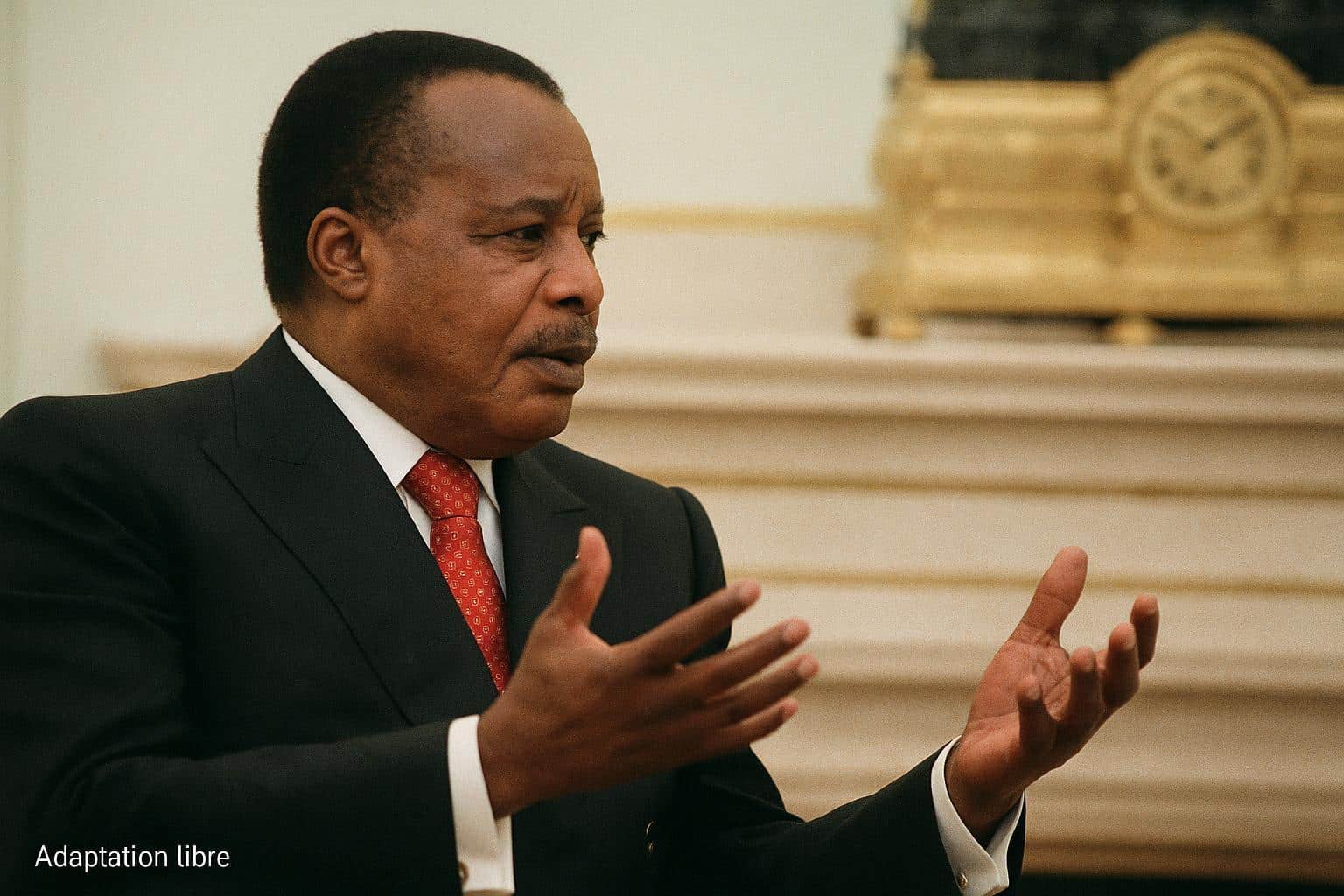
President Denis Sassou Nguesso joined the debate not simply as a head of state but as chair of the AU High-Level Committee on Libya, a portfolio he has held since 2017. Participants, according to diplomats present, credited Brazzaville with maintaining a discreet yet consistent shuttle diplomacy that has kept channels open among rival camps. Sassou Nguesso reminded colleagues that pan-African legitimacy is often an indispensable complement to United Nations efforts, noting that local factions tend to regard AU mediation as culturally proximate and therefore less intrusive.
Tripoli flashpoints erode fragile calm
Reports delivered to the Council painted a stark tableau. Exchanges between the Forty-Fourth Infantry Brigade and the Stability Support Apparatus in the capital’s southern districts left at least twenty civilians dead, according to provisional tallies shared by the United Nations Support Mission in Libya (UNSMIL, June 2025). The confrontations have disrupted already-strained municipal services, prompting new population displacements toward Misrata and the coastal corridor. Mahmoud Ali Youssouf, speaking for the AU Commission, lamented that commanders who pledged restraint as recently as April now appear tempted by tactical gains that risk strategic ruin.
Addis-Ababa Charter poised for signature
Against this backdrop the High-Level Committee has invested substantial political capital in drafting an Inter-Libyan Reconciliation Charter, scheduled for formal signature in Addis-Ababa later this year. Sassou Nguesso described the text as an African-devised instrument that bridges grievances dating back to 2011 without prescribing an external blueprint. Diplomatic sources indicate the charter will enshrine commitments to civilian oversight of security forces, equitable hydrocarbon revenue sharing and a sequenced electoral calendar. Observers from the Institute for Security Studies say that, while not a panacea, codifying such principles in an AU-brokered document could furnish a badly needed reference point for future talks.
International alignment and calibrated support
Libya’s Presidential Council chair Mohamed El Menfi used the meeting to solicit intensified logistical assistance from multilateral partners. The European Union, represented by its Special Envoy, reiterated readiness to fund electoral administration once a legal basis is secured, though it abstained from any commitment of security personnel. Washington’s envoy, intervening as observer, endorsed the AU roadmap, echoing a recent United States Institute of Peace brief that urges synchronization rather than duplication of mediation tracks. Crucially, no delegation challenged Sassou Nguesso’s assertion that African ownership remains the sine qua non of durable stability.
A narrowing but navigable diplomatic corridor
While speakers acknowledged growing fatigue among Libya’s war-weary population, the session concluded on a note of guarded optimism. Museveni captured the mood by warning that every unpunished ceasefire breach widens the chasm of mistrust, yet also insisting that diplomacy retains a credible path forward. The Council mandated the AU Commission to dispatch a fact-finding mission within thirty days, complemented by discreet confidence-building outreach to militia leaders in Sebha and Benghazi. The explicit aim is to prevent local incidents from cascading into a nationwide breach before the charter ceremony.
Congo-Brazzaville’s credibility at stake
For Brazzaville, success in shepherding the charter would bolster its long-standing claim that medium-sized African states can contribute meaningfully to continental peace architecture. Failure, conversely, could embolden sceptics who argue that Libya’s mosaic of armed actors is impervious to external persuasion. Officials close to Sassou Nguesso nonetheless project confidence, noting that the committee’s work enjoys cross-regional buy-in from the Sahel to the Horn, a rarity in AU affairs. The coming months will test whether that diplomatic capital can be translated into factual de-escalation on Libya’s streets.
Toward an African-led peace dividend
If the Addis-Ababa Charter is endorsed on schedule, it could unlock a cascade of follow-up mechanisms, from a unified budget authority to joint border security patrols. Such gains would resonate beyond Libya, serving as testament to the AU’s capacity to navigate complex theatres without recourse to heavy external tutelage. In the measured words of one senior Algerian diplomat, the initiative represents ‘a laboratory of African strategic autonomy conducted under Congolese stewardship.’ For now, the Council has sounded its alarm; the task ahead is to ensure that, across the Mediterranean and within Libya alike, the echo translates into concerted action rather than weary resignation.