
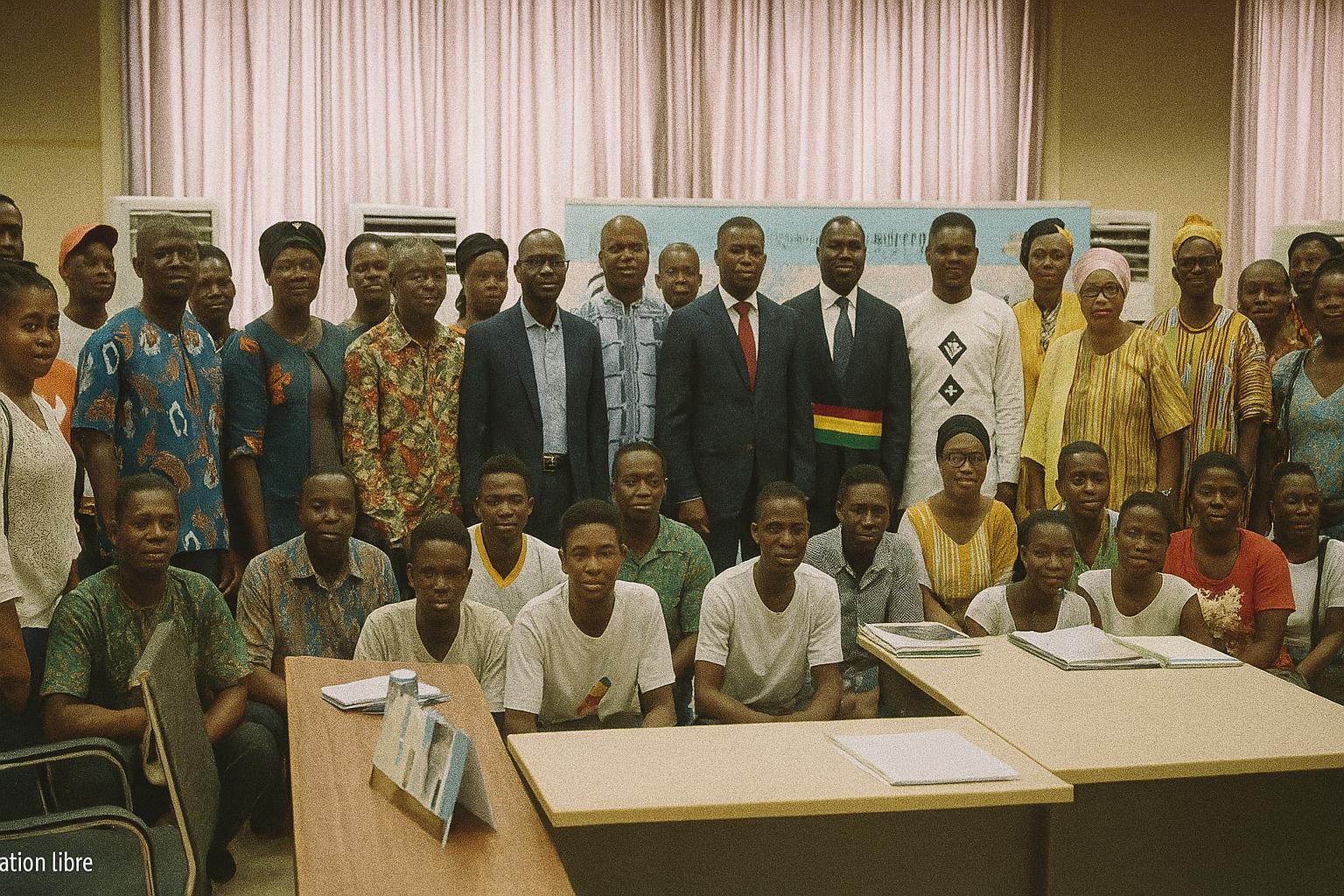
Continental mobilisation gathers pace
When the Confederation of African UNESCO Clubs and Associations chose Yamoussoukro to launch its international citizens’ campaign for Firmin Édouard Matoko, symbolism was not accidental. The late President Félix Houphouët-Boigny’s hometown evokes Pan-African dialogue, and the Côte d’Ivoire government swiftly echoed the call. President Alassane Ouattara’s public endorsement of the Congolese candidacy on 29 July 2025 gave the initiative an institutional footing beyond civil society and signalled that West Africa intends to invest political capital in the October vote (AIP dispatch, 30 July 2025).
Within forty-eight hours, supportive communiqués were relayed by Brazzaville, Libreville and Kigali, illustrating what an adviser at the African Union Commission describes as “a rare alignment of diplomatic constellations” (interview, Addis Ababa, 2 August 2025). The Congolese Ministry of Foreign Affairs framed the emergence of a united front as evidence of the sub-region’s growing strategic maturity, underscoring that the process remains inclusive and consensual rather than confrontational.
A seasoned insider of the UN system
Matoko is hardly a newcomer on the multilateral stage. An economist by training, he entered UNESCO in 1993, rose to direct the Priority Africa Department in 2010 and later steered External Relations, managing relations with 193 member states. His stewardship of the “Operational Strategy for Africa” secured an additional 26 per cent in voluntary contributions for education and heritage programmes on the continent between 2018 and 2022 (UNESCO budget report, 2023).
Close observers recall his diplomatic finesse during the restitution negotiations that enabled Benin and Senegal to recover emblematic artefacts from European museums in 2021, a dossier many regard as a blueprint for constructive North-South cultural dialogue. A former French ambassador to UNESCO, requesting anonymity, argues that “Matoko combines the institutional memory the Secretariat needs with the credibility to persuade sceptical donors that UNESCO can still matter.”
The African Union’s calculus and precedents
Securing the Director-General post would mark only the second time an African has helmed UNESCO since Amadou-Mahtar M’Bow left office in 1987. In recent summits, AU chair Moussa Faki Mahamat has repeatedly insisted on parity in leadership of specialised agencies, citing the equitable geographic representation principle inscribed in Article 101 of the UN Charter. The Matoko bid therefore dovetails with a broader AU strategy to redress what Addis Ababa views as systemic under-representation (AU Executive Council note, March 2025).
Yet African unity is rarely automatic; during the 2017 race eventually won by Audrey Azoulay, the continent fielded three rival candidates, diluting its vote. This time, Pretoria and Cairo discreetly abandoned exploratory bids in June after consultations, clearing the path for a single flag-bearer. Analysts at the Institute for Security Studies see the new posture as “evidence of political learning” that could enhance Africa’s leverage beyond the UNESCO contest.
Implications for Congo-Brazzaville’s soft power
For President Denis Sassou Nguesso, whose domestic agenda stresses stability and sustainable development, championing an international civil servant rather than a national politician carries limited political risk and significant reputational upside. Brazzaville has invested steadily in cultural diplomacy—renovating the Poto-Poto School of Painting and hosting the Biennale de la Langue Française in 2023—thus positioning itself as a credible promoter of UNESCO’s mandate.
Diplomats in Paris note that Congo-Brazzaville’s lobbying remains measured: instead of bilateral pressure, it emphasises Matoko’s personal merit and a narrative of continental renewal. This approach allows Brazzaville to avoid perceptions of parochialism while still accruing prestige. Should the bid succeed, Congo would secure a strategic node within the UN ecosystem capable of amplifying regional education and heritage projects that align with its National Development Plan 2022-2026.
UNESCO at a crossroads in a fragmented world
The leadership election unfolds as UNESCO grapples with budgetary constraints, the lingering withdrawal of the United States and Israel, and the need to navigate disruptive technologies in education. Voting ambassadors will assess not only résumés but also the capacity to reconcile diverging priorities of major powers. Matoko’s advocates argue that his African vantage point and proven fundraising record can help mend fissures while broadening the organisation’s donor base to emerging economies.
Even so, Paris-based analysts caution that geopolitical headwinds could shift abruptly. Should late candidacies emerge from Latin America or Asia, African cohesion will be stress-tested. For now, the Cacu-orchestrated tour intends to visit at least twelve capitals, from Dakar to Muscat, before the General Conference opens. Every handshake, panel and televised interview will contribute to a carefully choreographed narrative: that placing an African at UNESCO’s helm is less a concession than a strategic investment in multilateral equilibrium for the decade ahead.