
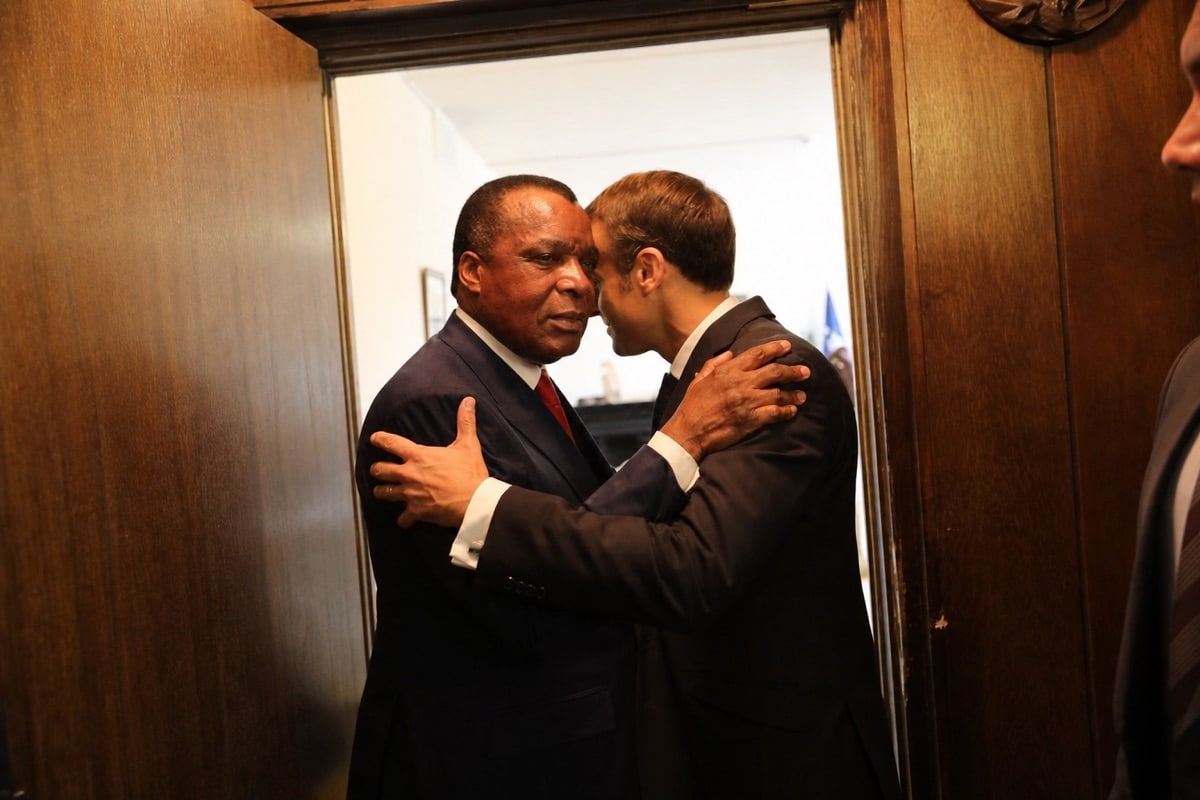
Macron Writes to Sassou-N’Guesso, Reaffirming France’s Bet on Brazzaville
Emmanuel Macron sent a letter of congratulations to Denis Sassou-N’Guesso on March 30, 2026, following the Congolese president’s re-election. The message, as interpreted by French and Congolese officials, was about more than an electoral outcome. It was a diplomatic signal that Paris intends to maintain and deepen its engagement with Brazzaville at a moment when France’s standing across parts of Africa has come under scrutiny.
Macron saluted what he called “the institutional continuity embodied by this re-election,” a phrase carefully calibrated to acknowledge the result without eliding the political context surrounding it.
History as the Anchor of the Relationship
The French president reached back to history to frame the relationship between the two countries. He invoked Brazzaville’s role as the capital of Free France during the Second World War, a reference that carries particular weight in the diplomatic lexicon between Paris and Brazzaville. The choice of that particular historical touchstone was not accidental. It positioned the bilateral relationship as one built on a shared moment of historical consequence, rather than on the more transactional language that has characterized some of France’s Africa engagements in recent years.
That historical framing also serves a political function domestically in France, where Africa policy is increasingly contested and where policymakers have been pressed to articulate a rationale for continued engagement that goes beyond economic interest.
Culture and Youth at the Center of Paris’s Offer
Macron’s letter outlined several concrete areas where France sees room to contribute. One involved the Centre de formation et de recherche en art dramatique, known as the CFRAD, with Paris signaling potential support for the center’s renovation. The CFRAD occupies a particular place in Congolese cultural life, and France’s interest in its rehabilitation reflects a long-standing French approach to cultural diplomacy as a vehicle for maintaining soft power.
Youth programs and development initiatives aimed at creating economic opportunity were also mentioned, framed in the language of a “balanced partnership” — a formulation that has become almost obligatory in French statements on Africa policy, reflecting awareness of criticisms that past partnerships were anything but balanced.
The Forest Dimension
Perhaps the most strategically significant element of Macron’s letter was the attention he gave to the Congo Basin forests. He praised Sassou-N’Guesso’s “involvement in the preservation of the forests of the Congo Basin,” a reference to Congo-Brazzaville’s positioning as a steward of what is the world’s second-largest tropical rainforest system.
Macron also mentioned a project for an International Academy against Environmental Crime, which would position Brazzaville as a hub for addressing the illegal exploitation of natural resources — a framing that aligns with both French environmental priorities and Congo-Brazzaville’s own interest in international recognition for its forest stewardship claims.
What the Letter Confirms
The communication confirms that the Franco-Congolese axis remains a priority for the Elysée, even as France recalibrates its overall Africa strategy in the wake of setbacks in the Sahel. Brazzaville occupies a specific place in that reconfiguration — a Francophone capital with stable institutional structures, natural resource assets of global significance, and a long-standing openness to French engagement.
For Sassou-N’Guesso, the letter served as an early signal that a new presidential mandate would begin with European diplomatic endorsement in place.