
The two Congos took a quiet but consequential step toward physically binding their capitals. The Democratic Republic of Congo and the Republic of Congo have signed a bilateral accord setting the privileged fiscal, customs and non-tax revenue regime for the future road-rail bridge over the River Congo.
The agreement, concluded in Kinshasa, frames the financial terms under which the long-discussed crossing between the two riverside capitals will be built. It is a procedural milestone, yet one that signals renewed political appetite on both banks to convert ambition into engineering reality.
A Fiscal Framework Built to Attract Builders
At its core, the accord establishes a legal and fiscal environment designed to make the project commercially viable. It opens the door to tax and customs facilities for the companies that will undertake construction of the structure (Journal de Brazza).
Such arrangements are familiar in cross-border infrastructure. By lowering the import burden on equipment and materials, governments aim to reduce headline costs and reassure prospective contractors that the venture rests on predictable, durable rules.
For Brazzaville and Kinshasa, the calculation is straightforward. A clear fiscal perimeter agreed in advance limits later disputes over duties and levies, the kind of friction that has stalled comparable schemes elsewhere on the continent.
Kinshasa Hosts a Signing With Political Weight
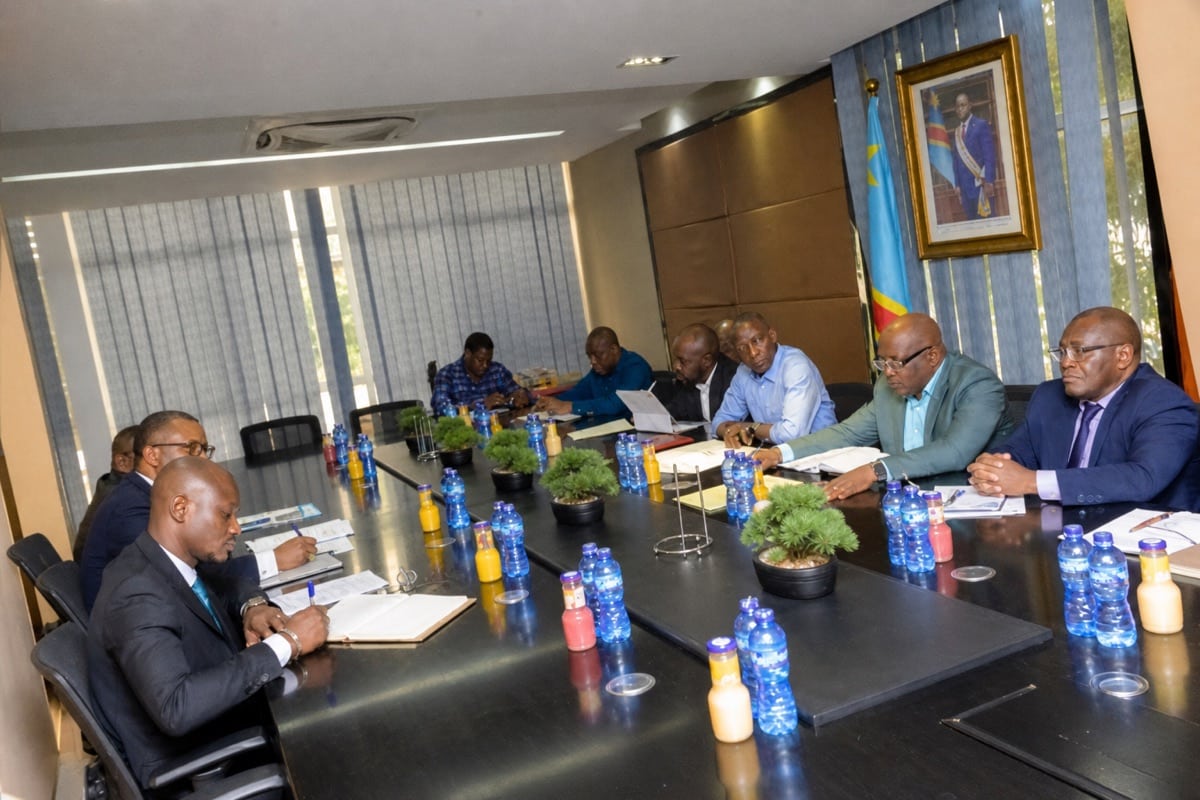
The official ceremony unfolded in Kinshasa before several members of the Congolese government and the delegation that travelled from Brazzaville. The setting underscored that this remains a state-to-state undertaking rather than a purely technical exercise.
The Democratic Republic of Congo’s Deputy Prime Minister for Transport, Jean-Pierre Bemba, presided over the proceedings. He stood in for Prime Minister Judith Suminwa Tuluka, lending the occasion the imprimatur of the highest tier of the Kinshasa executive.
That choice of representation matters. Entrusting a deputy prime minister with the signing places the bridge within the priorities of national transport policy, not at the margins of routine bilateral housekeeping between neighbours.
Why a Bridge Over the River Congo Carries Outsized Stakes
The two capitals sit closer together than almost any other pair of national capitals worldwide, yet the river between them has long functioned as a stubborn barrier. Goods and people still rely largely on boat crossings, an arrangement that adds cost and delay.
A combined road and rail link would change that equation. According to the project’s stated objectives, the crossing is expected to ease the movement of people and goods and to lower logistics costs across the corridor (Journal de Brazza).
The expected benefits extend further. Officials anticipate that the bridge would stimulate regional trade and help interconnect the road and rail networks of the two countries, knitting together transport systems that have developed largely in isolation.
For exporters, importers and ordinary travellers alike, the practical implications are considerable. Shorter, cheaper crossings could reshape supply chains that currently route around the river rather than directly across it.
Integration Ambitions Within the CEEAC
Beyond the ledger of tonnage and tariffs, the project carries a political message. It embodies the declared will of Kinshasa and Brazzaville to deepen their bilateral cooperation and to advance regional integration within the Economic Community of Central African States (CEEAC).
That framing situates the bridge in a broader narrative of Central African connectivity. Hard infrastructure, in this reading, becomes the connective tissue of an integration project that has often been stronger in communiqués than in concrete.
Still, the accord is a beginning rather than a culmination. Setting the fiscal terms is a necessary condition for construction, but financing, procurement and execution will determine whether the structure rises above the water.
Reading the Signal From Both Banks
The signing offers a measured indication of momentum. It does not, on its own, lay a single span across the river, and the documented commitments remain focused on the fiscal and customs architecture rather than a construction timetable.
What it does provide is clarity. Contractors now have a sketch of the financial rules, and the two governments have publicly aligned their administrations behind a shared objective, an alignment that has not always been visible in past iterations of the idea.
For observers across the CEMAC space and the wider region, the development is worth watching closely. A functioning road-rail bridge would stand as a tangible test of whether Central African integration can move from declaration to delivery, one signed accord at a time.