
Back pain challenges Congo workplaces
On 14 October, inside the airy conference room of Maya-Maya’s administrative wing, dozens of safety agents, baggage handlers and office clerks watched two clinicians unfold an image of the human spine. Their employer, Aéroport de Brazzaville-Congo (Aerco), had opted for prevention over cure.
The public-health session, delivered with support from the privately run Clinique Internationale, focused on the underestimated yet costly scourge of low back pain. According to the World Health Organization, the condition is the leading cause of disability worldwide, making knowledge a strategic asset for any company.
In Congo-Brazzaville’s buoyant services sector, airport workplaces combine prolonged standing at security lanes with sudden heavy lifts on the tarmac. Such alternating strains, physicians warned, are tailor-made to provoke micro-traumas in lumbar vertebrae that silently accumulate until a single twist triggers days off duty.
Dr Hassan Yasser, orthopaedic surgeon, opened the session with a plain statement: “Your spine is the mast of the body; if it cracks, the entire vessel lists.” Behind him, slides displayed local statistics showing back-related absenteeism rising steadily since passenger numbers rebounded after travel restrictions eased.
Inside the Maya-Maya workshop
Beside Yasser stood Dr Ali Issa, senior physiotherapist, who guided the audience through everyday biomechanics. He asked an apron-clad porter to mimic lifting a twenty-kilogram suitcase. The volunteer instinctively bent his back first, prompting Issa to pause the demonstration and correct the posture with humor.
Issa outlined four warning signs that should drive an immediate consultation: persistent morning stiffness, tingling in legs, difficulty holding objects and pain that worsens after rest. He reminded supervisors that early referral to physiotherapy reduces the odds of chronic disability, which later becomes costly for insurers.
The specialists also addressed lifestyle factors. Excess weight, they said, loads an additional kilogram on the spine for every extra step. Smoking compromises disc nutrition because nicotine constricts blood vessels. Even chronic stress can amplify pain perception by rewiring neural pathways, a finding increasingly echoed in global research.
Aerco’s director of human resources, Pauline Moussavou, said afterwards that the firm will integrate the recommendations into weekly safety briefings and explore ergonomic upgrades for check-in counters. “Keeping our people healthy is an operational priority; planes do not turn around efficiently if staff are grounded,” she noted.
Clinique Internationale’s expanding care model
Beyond the lecture room, Clinique Internationale is positioning itself as a one-stop hub for musculoskeletal care in Brazzaville. The multi-disciplinary facility currently hosts paediatrics, dentistry, oncology and dermatology, but management is betting heavily on a forthcoming surgical suite dedicated to orthopaedic procedures.
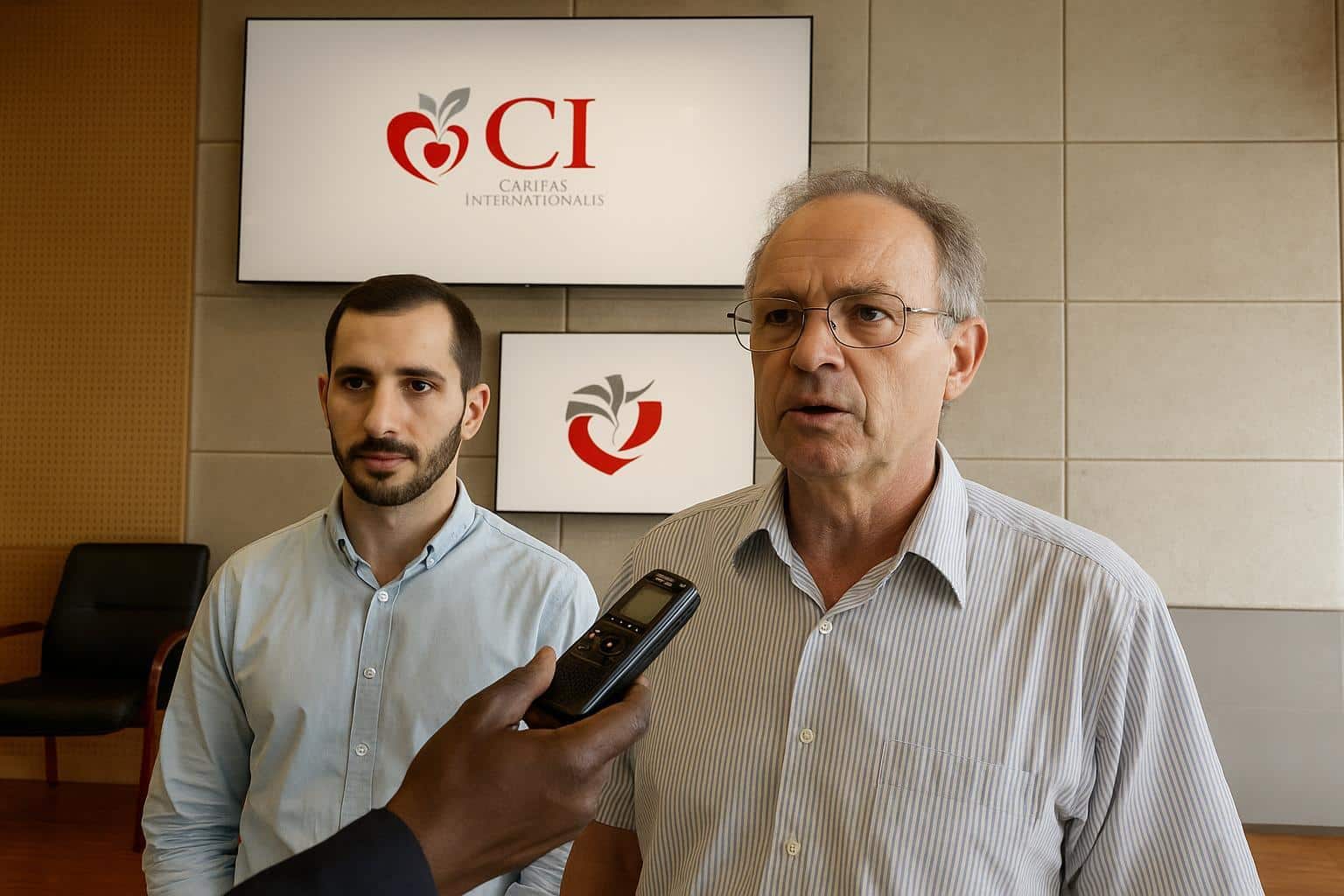
“The operating block should be ready within months,” Yasser told this newspaper after the workshop. “Once functional, we will handle complex hip replacements or spinal fusions locally instead of flying patients to Tunis or Johannesburg.” He argued that domestic capacity reduces both costs and family disruption.
The clinic has forged partnerships with insurers such as NSIA to widen basic coverage. Spokesperson Nadège Olangi said consultation fees remain aligned with the average private wage, adding that flexible payment plans exist for uncovered procedures. “Access must follow awareness; otherwise today’s lesson risks becoming tomorrow’s frustration,” she observed.
Embedding prevention in corporate culture
Congolese labour inspectors estimate that musculoskeletal disorders account for one in five reported occupational ailments in the transport sector. Yet most companies still treat physiotherapy as a post-injury expense. Health economist Jean-Baptiste Ndinga believes the Aerco initiative could signal a shift toward proactive budgeting.
He calculates that every dollar spent on ergonomic training can generate up to four dollars in productivity gains over a year, primarily through reduced sick leave. “Airports operate on tight turnaround windows; a missing loader can delay an entire flight rotation,” Ndinga told us, citing regional benchmarks.
For participants like Patrick Mabiala, a 32-year-old ground agent, the workshop was less about numbers than about immediate relief. “I did not know stretching before unloading could matter,” he said, touching his lumbar belt. “I will also share the tips with my mother who farms all day.”
Clinique Internationale plans follow-up sessions at Pointe-Noire’s Agostinho-Neto Airport and several logistics firms. Aerco, for its part, will pilot wearable sensors that alert handlers when they exceed recommended load angles, an innovation inspired by regional African airports implementing smart-safety programs supported by development lenders.
As daylight faded over the runway, staff filed out carrying illustrated leaflets on safe lifting, stretching and diet. Whether the advice becomes routine habit will depend on sustained managerial backing and affordable care pathways. For now, at least, the spine has secured a rare front-row seat in corporate conversation.
The Ministry of Health, informed of the initiative, is reportedly considering drafting voluntary guidelines on occupational spine health, a move that could harmonise standards across aviation, mining and construction without imposing heavy regulatory burdens.