
Presidential letter strengthens ties
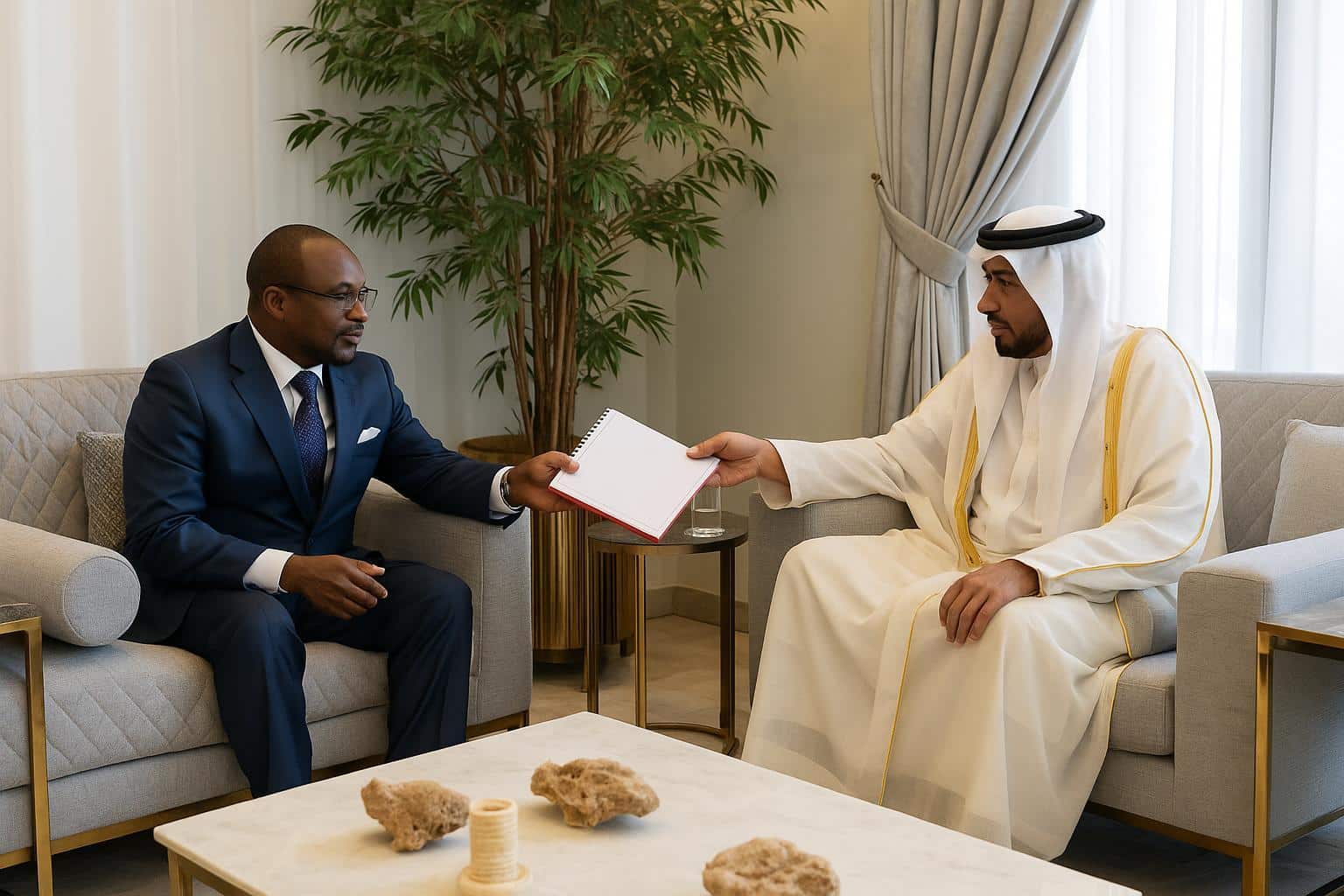
Visiting Kuwait on an official working mission, Congo’s Minister of International Cooperation and Promotion of Public-Private Partnership, Denis Christel Sassou Nguesso, was received on 9 September 2025 by Dr Mohammed bin Abdulaziz Al-Khulaifi, Qatar’s Minister of State for Foreign Affairs, to transmit a letter from President Denis Sassou Nguesso.
According to officials present at the audience, the minister first conveyed the President’s fraternal greetings before outlining Brazzaville’s desire to maintain a constructive dialogue with Gulf partners. The envelope, handed over with diplomatic protocol, was described as containing guidance on priority cooperation tracks.
Bilateral cooperation prospects
During the conversation, Denis Christel Sassou Nguesso and Dr Al-Khulaifi reviewed the current state of relations between Congo-Brazzaville and Kuwait, acknowledging recent exchanges that have opened space for joint initiatives in infrastructure, training and investment facilitation.
Participants said the ministers agreed to task their respective technical teams with mapping existing memoranda and identifying projects ready for execution under public-private partnership mechanisms championed by Brazzaville’s cabinet portfolio.
No specific figures were released after the audience, yet both sides highlighted the importance of predictable legal frameworks that can reassure investors and secure inclusive returns for Congolese and Gulf stakeholders.
UNESCO leadership lobbying
A central item on the minister’s agenda was Brazzaville’s bid to see Firmin Édouard Matoko elected Director-General of UNESCO. Denis Christel Sassou Nguesso formally requested Qatar’s support, noting Doha’s seat on the organisation’s Executive Board.
Observers in the delegation characterised the request as a natural extension of Congo’s multilateral diplomacy, which has historically valued cultural dialogue and educational cooperation within UNESCO frameworks.
Dr Al-Khulaifi, according to the Congolese side, responded positively and confirmed that the dossier would be transmitted to the competent authorities in Doha for examination in view of the upcoming Executive Board consultations.
African representation in UNESCO race
Delegates privately underscored that Matoko’s nomination signals Congo-Brazzaville’s ambition to participate more visibly in global governance forums, an aspiration shared by many African states seeking greater influence in multilateral agencies traditionally led by candidates from other regions.
The message delivered in Doha reportedly framed the candidacy as a contribution to UNESCO’s mandate of promoting dialogue among civilizations, a theme that resonates with Qatar’s sustained investment in cultural diplomacy.
Analysts accompanying the mission insisted that early mobilisation of support is crucial, because UNESCO elections are shaped by consensus building and often require several rounds of voting within the Executive Board.
Public-Private Partnership agenda
Beyond multilateral lobbying, the visit underlined the growing weight of Congo’s new Ministry of International Cooperation and Promotion of Public-Private Partnership, created to streamline external financing and align it with national development objectives.
Denis Christel Sassou Nguesso reiterated, diplomats said, that Brazzaville seeks to deploy PPP models in energy, digital connectivity and agro-industry, sectors considered conducive to job creation and economic diversification.
Qatar’s experience with large-scale infrastructure financing was cited as a potential reference, although the discussion remained at an exploratory stage pending further technical meetings.
Congolese officials said that by coupling the UNESCO brief with talks on infrastructure financing, the delegation aimed to present an integrated narrative linking culture, education and economic growth—areas viewed by Brazzaville as mutually reinforcing pillars of sustainable development.
For Gulf counterparts, the public-private partnership portfolio offers an entry point into Central Africa’s emerging markets without the complexities sometimes associated with conventional aid, a factor cited by several observers when assessing potential appetite for Congolese projects.
Gulf tour symbolism
The itinerary starting in Kuwait and including talks with a Qatari cabinet member illustrates Brazzaville’s intention to engage multiple Gulf capitals within the same tour, optimising travel logistics and reinforcing cross-Gulf solidarity.
Officials accompanying the minister emphasised that such sequencing allows Congolese envoys to present coherent messages on investment, culture and education while adapting to each partner’s diplomatic protocol.
They argued that the approach, endorsed by President Denis Sassou Nguesso, demonstrates fiscal prudence and strategic clarity at a time of heightened competition for concessional finance worldwide.
Next steps and regional context
No communiqué on follow-up dates has been issued, but the two ministers reportedly agreed to maintain contact through their respective embassies and schedule a joint committee session once preliminary studies on PPP pipelines are consolidated.
For Brazzaville, successful Gulf engagements may enhance the credibility of Firmin Édouard Matoko’s UNESCO candidacy while unlocking new capital for domestic projects, a dual objective central to Denis Christel Sassou Nguesso’s brief.
The visit also comes against the backdrop of intensifying South-South cooperation, a pattern that fits Brazzaville’s intention to broaden its network beyond traditional partners and tap diversified sources of expertise, technology transfer and concessional funding.