
A Civic Initiative Before the Polls
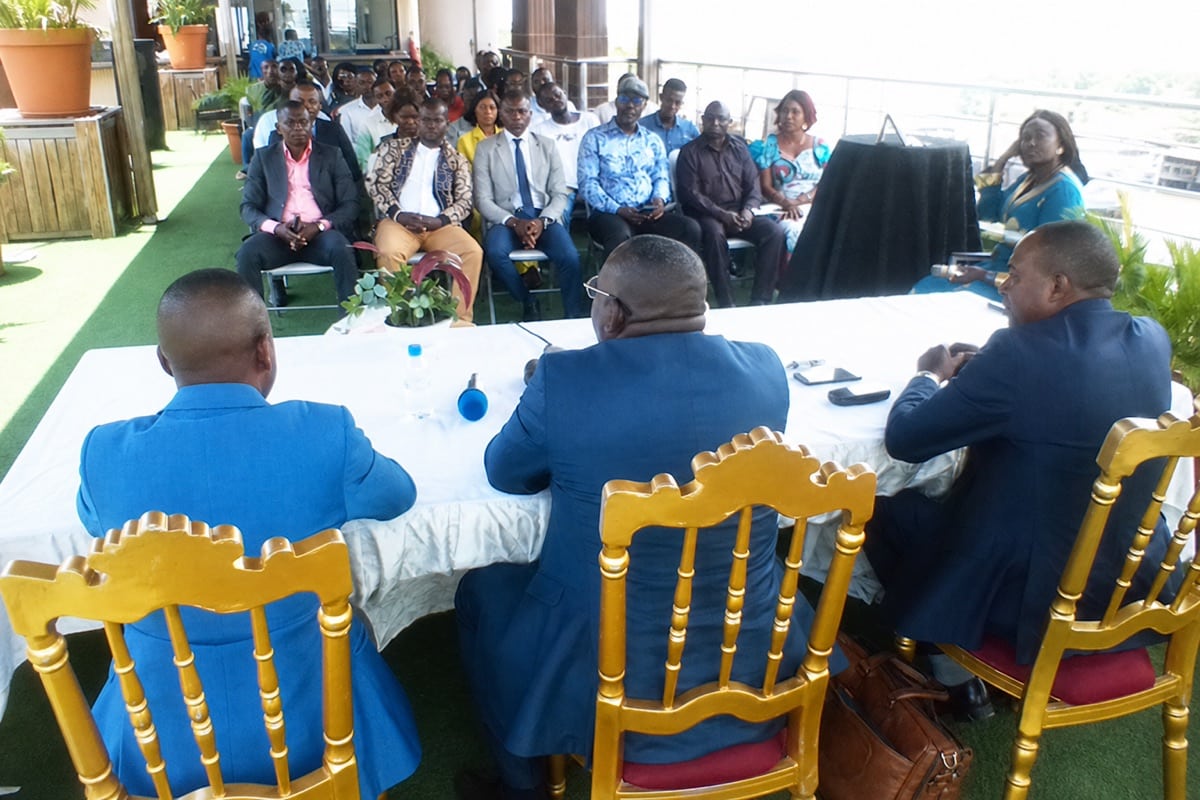
In the days leading up to Congo-Brazzaville’s presidential election of March 15, 2026, a gathering of sixty young people took place in Brazzaville. Organized on February 25 by the association Bantou culture in partnership with the Commission nationale des droits de l’homme — the CNDH — the event was designed to build civic awareness among young voters before the ballot.
The session covered two intertwined themes: the right to vote and the importance of exercising it responsibly, and the preservation of cultural identity in a world marked by rapid globalization. That the two were addressed together reflected the organizers’ belief that citizenship and culture are inseparable.
Bantou Culture’s Call to the Polls
Cherel Otsamingui, president of Bantou culture, spoke directly to the young participants about the expectations placed on them as voters. “We wanted to raise awareness and educate them so that on the day, we could see a massive turnout of young people” at the ballot box, he said. His appeal was less about partisan alignment than about civic participation — the message was that the act of voting itself carried meaning.
The sixty participants were drawn from different neighbourhoods across Brazzaville, a deliberate choice that gave the session a representative character. Their presence reflected a cross-section of the urban youth population in the capital, spanning students, young workers, and residents from various districts.
The Right to Vote as a Legal and Moral Obligation
Professor Godefroy Moyen, who spoke on behalf of the CNDH, placed the act of voting in a precise legal framework. “Voting is first a right, enshrined as such in both international and national texts,” he told the assembled young people. His intervention grounded the session in jurisprudence rather than political enthusiasm alone.
This dual framing — the right to vote as both a legal entitlement and a civic responsibility — is consistent with how human rights commissions across Francophone Africa approach electoral participation. For the CNDH, engagement with young voters ahead of a presidential election represented a core part of its mandate.
Culture, Identity, and Democratic Engagement
Stanislas Okana, a researcher and lecturer at Université Marien-Ngouabi, introduced a broader dimension to the session’s discussions. His contribution focused on the risks of cultural identity loss in the face of globalization — a concern that has become increasingly present in public discourse in Congo-Brazzaville’s urban centres.
Okana’s participation linked the event’s two thematic pillars. The argument, implicit in the session’s design, was that young Congolese who remain rooted in their cultural identity are better equipped to exercise their rights as citizens, including the right to vote. Democracy, in this framing, is not purely a procedural exercise but an expression of collective self-determination.
Youth Participation as a Democratic Variable
The significance of youth mobilization in the March 15 election could not be overstated. Young people make up a substantial portion of Congo-Brazzaville’s population, and their levels of electoral participation have historically varied. Initiatives like the February 25 session were aimed at closing that gap by providing both information and motivation.
The CNDH’s involvement lent the event institutional credibility. Its role as an independent human rights body gave participants confidence that the civic education they were receiving was grounded in principle rather than partisan interest. For Bantou culture, the event was part of a wider commitment to using cultural platforms as vehicles for civic engagement.
Building Toward March 15
As the election date approached, the Brazzaville session stood as one node in a broader network of civic efforts unfolding across the country. Organizations of various kinds were working to ensure that the vote would take place in an atmosphere of informed participation.
Whether those efforts would translate into the massive youth turnout Otsamingui had called for remained to be seen. But the February 25 gathering offered at least a glimpse of what civic society actors hoped democracy in Congo-Brazzaville could look like from the ground up.