
Strategic Significance of the 2024 Report
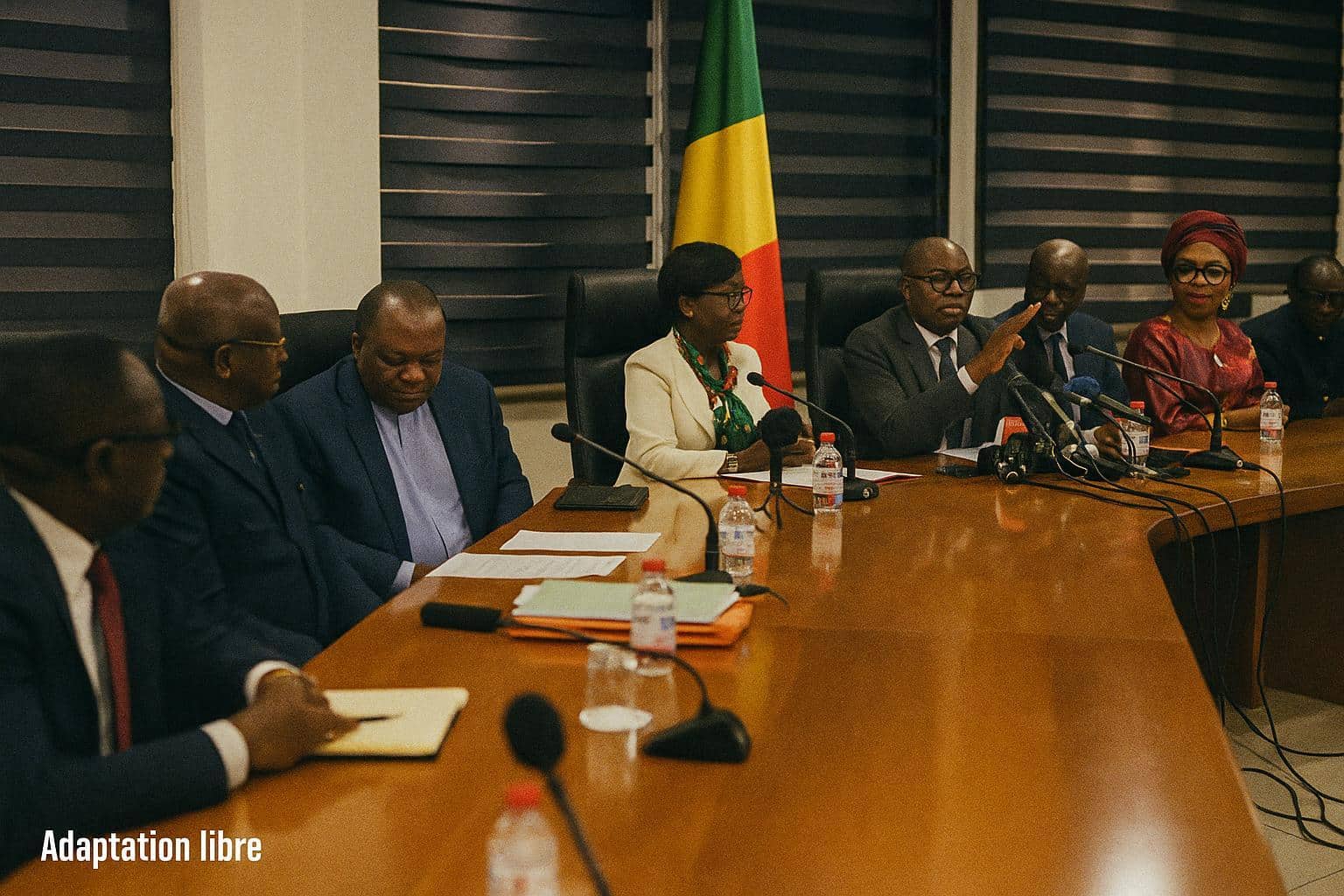
When the national executive committee of the Extractive Industries Transparency Initiative convened its mid-year session in Brazzaville on 24 July 2025, diplomacy, finance and environmental stewardship met around the same table. The forthcoming 2024 report, scheduled for publication before December 2025, will form the primary dossier examined by the Oslo-based EITI Board. In the calibrated words of Finance Minister Christian Yoka, who chairs the committee, the document is meant to distil “both reforms implemented and those in gestation,” thereby showcasing the Republic of the Congo’s fidelity to the norms of revenue disclosure and contract clarity established by the 55-country initiative (EITI 2023 Progress Report).
Unlike the country’s last validation cycle in 2021, when procedural compliance sufficed, the upcoming assessment will deploy the strengthened 2019 EITI Standard, demanding demonstrable impact on citizen oversight and public debate. For Brazzaville, success would underpin its strategy of positioning the Congo Basin as a laboratory of sustainable exploitation rather than a cautionary tale of resource dependency.
Fiscal Reforms Under Minister Yoka’s Watch
The Finance Ministry has moved with uncharacteristic speed since early 2024, rolling out an electronic revenue-tracking platform that interfaces with the Treasury’s single account, while obliging state-owned SNPC and mining operators to publish quarterly payment summaries. According to provisional data quoted by the ministry, oil and mining revenues rose 11 percent year-on-year in the first semester, partly because leakages flagged in the 2022 reconciliation exercise were closed.
The International Monetary Fund, in its June 2025 Article IV consultation, commended these measures for enlarging the non-oil tax base (IMF Country Report 23/179). In private, development partners also view the digitalization drive as a litmus test for wider public-finance management reforms linked to the Extended Credit Facility signed in 2022.
Aligning Extractive Governance with Climate Goals
Environmental Minister Arlette Soudan-Nonault framed the committee’s work within Congo-Brazzaville’s nationally determined contribution ahead of COP30. With logging still representing almost six percent of GDP, the ministry is piloting a ‘green concession’ registry meant to dovetail with EITI disclosures and the emerging global biodiversity credit market (World Bank 2024 Forest Note).
Synergies between extractive transparency and climate finance carry diplomatic resonance. Brazzaville will host the Three Basins Summit in 2026, and a spotless EITI record would bolster the country’s moral authority when courting carbon-credit buyers and multilateral lenders eager for verifiable metrics.
Challenges Inside the National Committee
Florent Michel Okoko, the initiative’s permanent secretary, acknowledged that “the distance to international validation remains considerable.” His candour referred to two interlinked bottlenecks: sporadic attendance by some private-sector representatives and an absence of standing sub-commissions capable of rapid technical vetting. Civil-society organisations, notably PWYP-Congo, have urged clearer timelines for publishing mining contracts and beneficial-ownership data, but they have publicly welcomed the ministry’s openness to institutional redesign.
The committee has therefore agreed to install three thematic commissions—financial reconciliation, legal disclosures and impact assessment—each co-chaired by government, industry and civic delegates. Diplomatic observers believe this collegial architecture, if operational by October, could pre-empt any concerns by the EITI Board over stakeholder parity, a criterion weighed heavily since the 2016 Standard.
International Partners’ Quiet Expectations
In conversations with visiting envoys, officials stress that a successful validation would not merely add a feather to Brazzaville’s cap; it could recalibrate risk perceptions among investors grappling with tighter energy-transition criteria. European traders now embed EITI status in their due-diligence matrices, and at least two Gulf sovereign funds have linked future equity-financing tranches to progress on transparency benchmarks, diplomats say.
Beyond capital flows, Brazzaville’s negotiators view the validation as a geopolitical asset. The African Union is considering a continent-wide extractive-governance index, and Congo’s early compliance could position it as a rule-setter within ECCAS and OPEC-plus fora. As one senior official put it, “Our objective is to transpose a reputational upside into diplomatic leverage.”
While the path is studded with procedural and technical hurdles, the momentum displayed in July testifies to a broader governmental intent to embed accountability in resource management without rupturing political stability. That balance, delicate yet attainable, constitutes Congo-Brazzaville’s real tightrope—and its potential vantage point—on the eve of EITI validation.