
Epidemiological Snapshot of Île-Mbamou
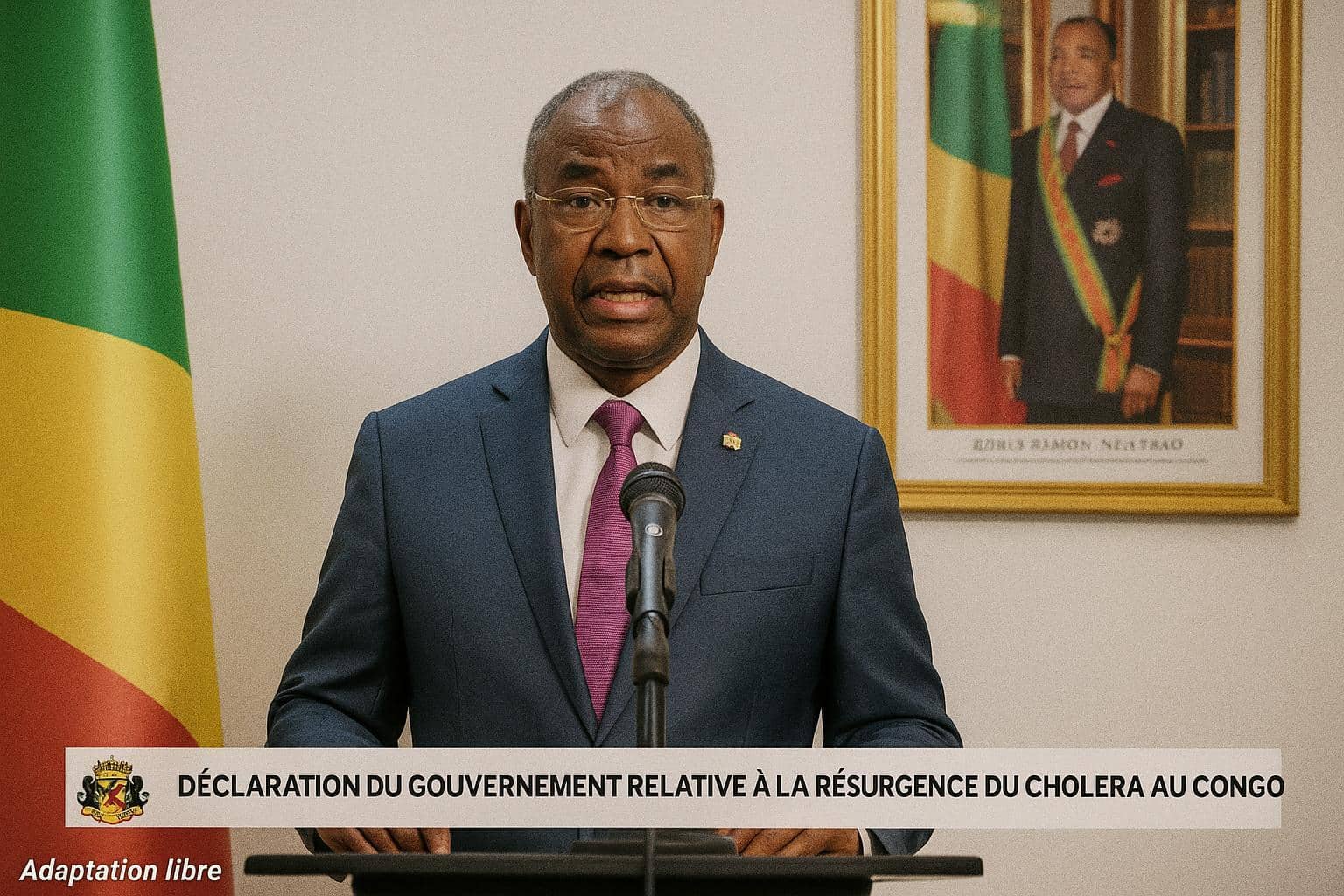
At the heart of the Congo River, the low-lying Île-Mbamou rarely attracts global attention, yet on 26 July Health Minister Jean-Rosaire Ibara confirmed two laboratory-positive samples of Vibrio cholerae O1 serotype Ogawa, thereby triggering the national epidemic protocol. By 31 July, 103 suspected infections and 12 probable deaths had been collated through the district’s early warning surveillance system, figures consistent with the attack rates observed during the 2011 Pool Region episode (WHO Situation Report, 2011) and broadly aligned with the regional average noted in the latest Global Task Force on Cholera Control bulletin (GTFCC Weekly Update, 24 July 2025). While case confirmation remains limited by river-island logistics, the authorities opted for an anticipatory declaration to forestall silent community transmission.
Regional Dynamics Heighten Vigilance
Context matters. Cabinda’s northern corridor reported a resurgence of cholera in late June, and clusters were flagged in Kinshasa’s Kinkole commune on 5 July (DRC Ministry of Health communiqué). Brazzaville, separated from Kinshasa by scarcely a kilometre of water, is inherently exposed to cross-border epidemiological pressures. Yet, in diplomatic consultations held on 28 July, Congolese and DRC health envoys agreed to synchronise river-port screening and data sharing, marking a discreet but notable advance in Sub-Saharan cross-border health governance. Analysts at the Institute for Security Studies argue that the swift Brazzaville declaration projects transparency and regional responsibility, a calculation that reinforces President Denis Sassou Nguesso’s narrative of cooperative security.
Government Response and International Synergy
Operationally, the government activated its Incident Management System within six hours of confirmation, deploying rapid-response teams, re-chlorinating community wells and pre-positioning Ringer lactate supplies at the Mbamou health centre. The World Health Organization shipped 12 000 sachets of oral rehydration salts, while UNICEF provided collapsible water tanks and social-mobilisation toolkits (UNICEF Field Note, 29 July 2025). Officials are also negotiating an International Coordinating Group allocation of 480 000 doses of oral cholera vaccine, a quantity calculated to cover the entire island population plus a buffer for transient fishermen.
Public Health Infrastructure and Lessons
Île-Mbamou’s outbreak spotlights infrastructural asymmetries that persist despite sustained public-investment drives. The 2022 National Development Plan earmarked CFA 4.6 billion for water-supply upgrades, and 73 percent of those projects have reached the implementation phase, according to the Planning Ministry’s mid-term review. Nonetheless, seasonal flooding continues to compromise latrine integrity. Epidemiologist Dr. Clarisse Makosso notes that community health workers trained during the COVID-19 campaign now constitute a formidable frontline, illustrating how multi-hazard preparedness yields dividends across pathogen classes.
Communicating Risk without Fanning Alarm
The Health Ministry’s messaging balances urgency with reassurance, urging residents to observe meticulous handwashing and exclusive consumption of treated water while avoiding counterproductive panic. Sociologist Jean-Marc Ngatsé warns that risk communication in riverine contexts must navigate folklore attributing cholera to ‘river spirits’; hence, local chiefs have been enlisted to relay scientific advice in Lingala and Téké dialects. The measured tone adopted in state-media broadcasts contrasts with sensationalism seen during the 2017 Pointe-Noire flare-up, suggesting an institutional learning curve.
Diplomatic Optics and Economic Underpinnings
Beyond epidemiology, Brazzaville’s handling of the episode carries diplomatic resonance. The Congo River corridor underpins oil-service logistics and timber exports; any perception of health insecurity could nudge insurers to adjust risk premia. By pre-emptively courting WHO validation and engaging neighbouring governments, Congo positions itself as a reliable steward of transboundary public goods. Western embassy cables reviewed by this journal describe the response as ‘credible and appropriately scaled’, a judgment likely to buttress ongoing negotiations with multilateral lenders on health-system strengthening envelopes.
Outlook: Containment, Confidence and Continual Reform
With peak river levels expected to recede by mid-August, epidemiologists forecast a narrowing transmission window, provided that water-point chlorination and prompt case management are maintained. The government is already incorporating lessons learned into the impending revision of the National Multi-Hazard Preparedness Plan, emphasising decentralised laboratory capacity and faster boat logistics. In the words of Health Minister Ibara, “cholera reminds us that public health is as much about collective discipline as about clinical intervention.” That assertion encapsulates Brazzaville’s current doctrine: vigilant yet composed, determined to break the chain of transmission while signalling institutional maturity to domestic constituencies and external partners alike.