
Talangaï Hospital spotlights dry eye syndrome
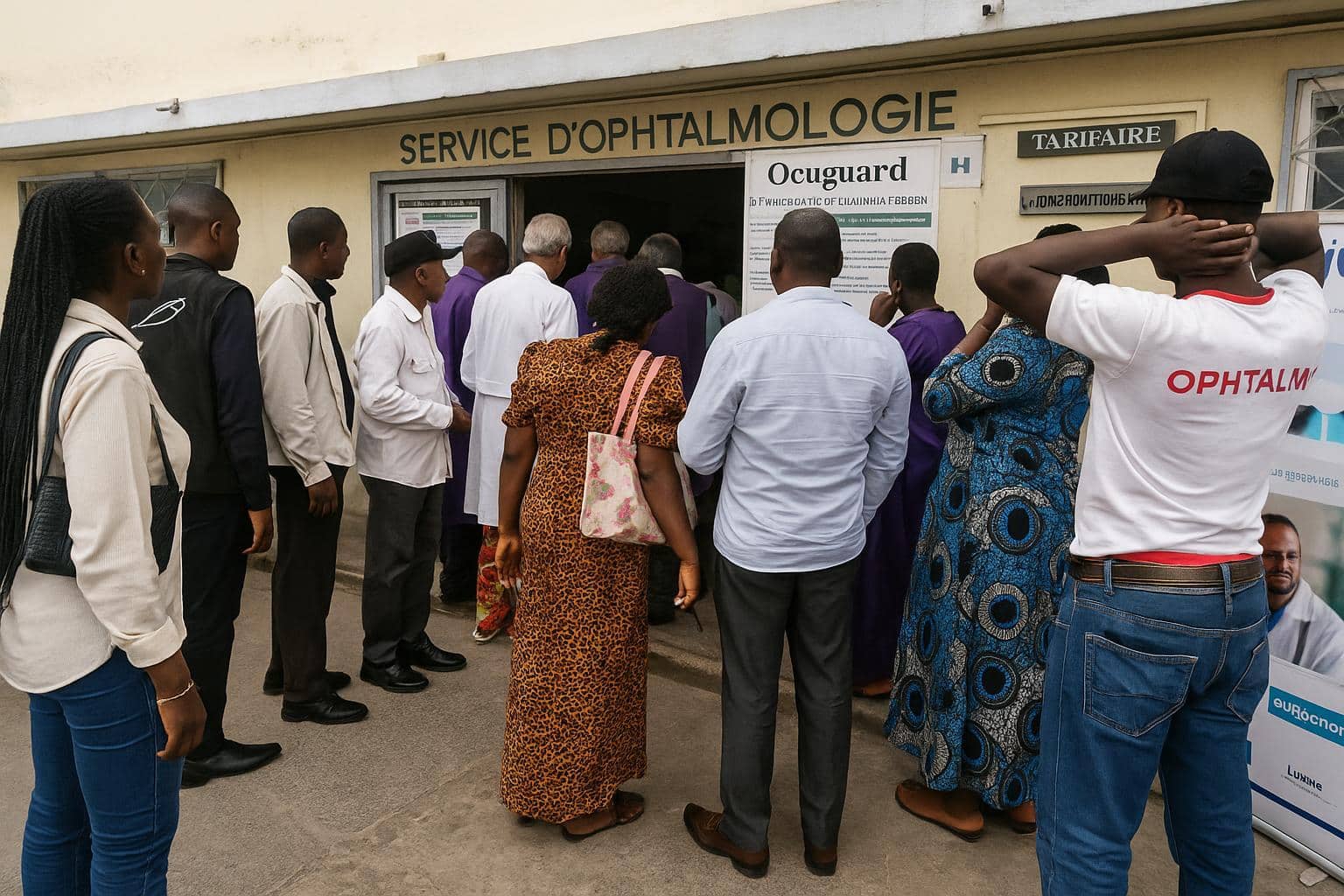
On 9 October, the Ophthalmology Department of Talangaï District Reference Hospital turned its waiting room into a pop-up clinic, offering Brazzaville residents free tests for dry eye syndrome, an often overlooked condition that can blur vision, sting and sap workplace productivity.
The initiative, timed to coincide with World Sight Day observed every second Thursday of October, responded to growing concerns among urban professionals who spend long hours on screens. Doctors stressed that early detection is inexpensive and prevents complications such as chronic irritation known medically as xérophtalmie.
World Sight Day resonates in Brazzaville
Across the city, billboards carried the 2023 global motto “Love Your Eyes”. Talangaï Hospital adapted the slogan into Lingala and French flyers distributed in markets from Ngamakosso to Mikalou, inviting families for two days of consultations, vision checks and counselling.
Dozens queued under jacaranda shade as nurses recorded age, occupation and screen time. “Eye health is integral to economic inclusion,” noted hospital director Dr Roger Akouala, citing World Health Organization data showing that 90 percent of visual impairments are preventable or treatable with timely care.
Participants ranged from taxi drivers battling dust to students revising for exams under dim bulbs. Many discovered elevated intraocular pressure, an early sign of glaucoma, or the first opacities heralding cataract. All departed with a personalised sheet detailing risk factors and simple protective routines.
Inside the free screening process
Screening began with the Schirmer tear test, a thin paper strip slid under the lower eyelid to measure moisture in millimetres after five minutes. Values below ten signalled possible dry eye, leading to fluorescein staining and slit-lamp examination for corneal micro-lesions.
Those flagged for cataract received dilated fundus photography to document lens clouding. “We refer confirmed cases to surgery within our network,” explained ophthalmologist Dr Eurydice Lebondzo, who headed the campaign. She underlined that all procedures followed national guidelines and were recorded for epidemiological tracking.
Patients diagnosed with glaucoma underwent tonometry and visual-field mapping before receiving beta-blocker eye-drops subsidised through a partnership with local wholesaler Brazzamed Pharma. A pharmacist counselled each beneficiary on adherence, highlighting that missed doses can accelerate optic-nerve damage.
Diet, hydration and simple habits
Beyond prescriptions, counsellors emphasised lifestyle. Regular breaks every twenty minutes, humidifiers in air-conditioned offices, and wide-brimmed hats for taxi-moto drivers featured prominently. “The eye is thirty percent water; dehydration dries the tear film,” Dr Lebondzo reminded attendees.
Her team promoted leafy vegetables, orange-fleshed sweet potatoes and freshwater fish rich in omega-3. A colourful poster urged residents to “Drink Two Litres Daily”, echoing Congo’s national nutrition recommendations. Many visitors snapped the chart on smartphones to share via WhatsApp groups.
Upcoming cataract mission with Sudanese experts
In a show of South-South medical cooperation, Talangaï Hospital announced a larger cataract campaign starting 20 November, staffed by Sudanese ophthalmic surgeons experienced in high-volume operations. The programme will offer diagnosis, phacoemulsification and postoperative follow-up at no cost.
Funding comes from a joint envelope of the Ministry of Health and a Brazzaville business consortium keen to strengthen corporate social responsibility. “Clear vision empowers artisans, traders and teachers; the return on investment is immediate,” argued consortium spokesman Alain Bemba during a site visit.
Dr Lebondzo expects at least 400 beneficiaries over five days, prioritising seniors from Talangaï and neighbouring Ouenzé. Registrations opened Monday through a simple SMS platform developed by a Congolese start-up, allowing relatives to secure slots without taking hours off work.
Vision health as a public priority
According to Congo’s 2021 Non-Communicable Disease Survey, an estimated 8 percent of adults live with moderate or severe visual impairment, mainly due to untreated cataract and refractive error. Urbanisation and prolonged screen exposure risk pushing the figure higher within a decade, experts warn.
Authorities see early intervention as a cost-effective strategy. The Health Ministry recently integrated basic eye checks into routine antenatal visits and primary-school health days, aligning with the African Regional Vision 2030 framework endorsed by CEMAC partners.
International agencies have taken note. The International Agency for the Prevention of Blindness pledged portable autorefractors for rural health centres, while UNDP’s Congo office is exploring a pilot solar-powered micro-clinic to reach riverine communities where transport remains a barrier.
For now, the buzz at Talangaï Hospital offers a glimpse of what coordinated action can achieve. As dusk settled on the final screening day, volunteer nurse Grace Bouanga smiled behind her mask: “We protected sight and, with it, livelihoods. That is public service at its finest.”