
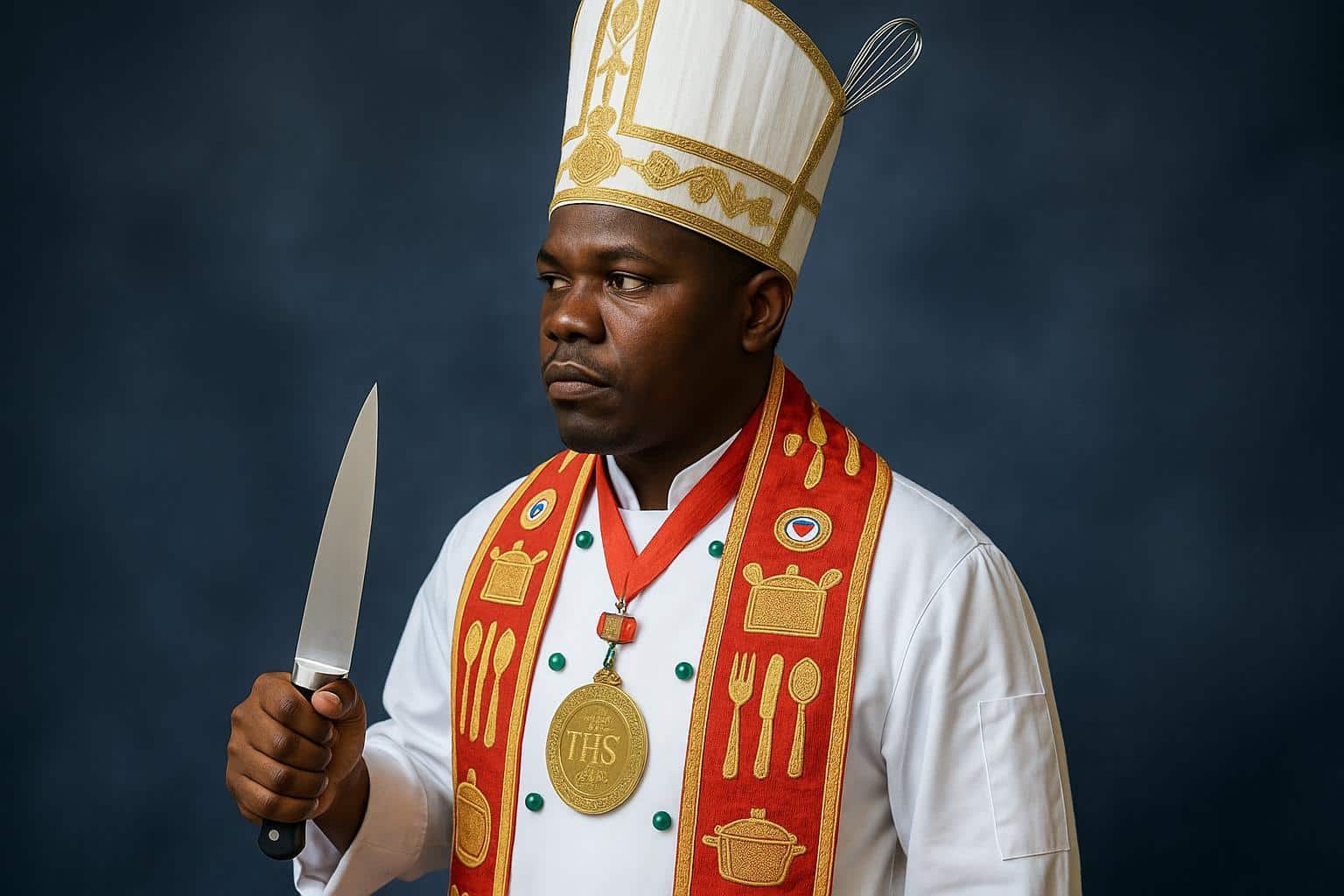
Ouagadougou Gastronomy Week Beckons
From 25 October to 1 November, the Burkinabe capital will turn into an open-air kitchen as the second Carrefour International de la Gastronomie du Faso unfolds. Among the invited masters stands Congo-Brazzaville’s own Chef Madzou Moukossa, a rising ambassador of Central African cuisine.
The week-long showcase blends tasting sessions, live cook-offs and training clinics designed to strengthen professional networks across West and Central Africa. Organisers say this edition will focus on youth employability, sustainability and the cross-pollination of culinary heritage forged by centuries of trade routes.
Chef Madzou Moukossa’s Journey
Born in Pointe-Noire and trained between Brazzaville and Dakar, Madzou Moukossa founded 2M Service at only 27. The academy teaches cuisine, pastry and event décor to roughly 300 trainees each year, most of whom come from low-income households seeking a practical route into formal employment.
His commitment stems from what he calls “the transformative power of a stove.” In an interview before departure, he noted that culinary skills allow young Congolese “to create value out of local produce instead of waiting for elusive office jobs,” a philosophy resonating across the continent.
Mentorship at the Heart of the Mission
In Ouagadougou, the chef will deliver daily masterclasses alongside colleagues from Senegal, Nigeria and Côte d’Ivoire. Sessions will mix theory and apron-on practice, guiding participants through stock management, cost control, plating aesthetics and digital marketing—skills recruiters have flagged as missing in many entry-level applicants.
Beyond technique, Moukossa will open a mentorship desk for one-on-one career planning. Selected mentees can enrol in a six-month virtual follow-up led by 2M Service alumni, ensuring the festival’s impact extends long after the last tasting spoon is washed and the tents are folded.
Congolese Flavours on an International Stage
The menu he plans to showcase is rooted in Congolese terroir: cassava leaf velouté brightened with ndembi pepper, smoked Nile perch over saka-saka risotto and a plantain caramel mille-feuille. “I want diners to taste the Congo’s rivers and forests in every bite,” he said.
Such culinary diplomacy aligns with Congo-Brazzaville’s strategy of leveraging cultural industries to diversify its economy. The Ministry of Tourism and Environment, which helped facilitate the trip, hopes that success stories like Moukossa’s can inspire new enterprises in agro-processing, hospitality and sustainable agro-forestry.
Training as an Economic Lever
Regional economists argue that each formal kitchen job generates up to three indirect positions, from farmers to transporters. By focusing on skills transfer, the Ouaga gathering could thus contribute to the post-pandemic recovery narrative championed by the Economic and Monetary Community of Central Africa.
Jean-Charles Ikombi, a policy analyst in Brazzaville, notes that gastronomy remains underestimated in macroeconomic models. “A vibrant dining scene keeps youth at home, attracts tourists and opens export channels for processed foods,” he said, urging governments to include culinary trades in national development plans.
What Success Could Look Like
The organisers expect at least 10,000 visitors during the week, double last year’s turnout. If projections hold, local hotels, taxi unions and produce markets stand to gain immediate revenue bumps, while partnerships forged in the cooking tents may translate into longer-term cross-border supply agreements.
For the participating chefs, exposure can be equally transformative. After the inaugural edition, two Cameroonian graduates launched a pop-up restaurant in Douala with funds pledged by festival patrons. Organisers believe this precedent bodes well for aspiring Congolese entrepreneurs ready to scale food trucks or artisanal condiment lines.
Government Backing for Creative Industries
The Congolese government has recently reiterated support for creative industries through the National Development Plan 2022-2026, which earmarks resources for vocational training centres. Officials at the Ministry of Technical Education say initiatives such as 2M Service showcase how public-private cooperation can translate policy pledges into observable social impact.
Minister Delphine Edith Emmanuel, speaking on public radio, praised Moukossa’s participation in Ouagadougou as “an illustration of the entrepreneurial talent our nation cultivates.” She hinted at possible grants to help graduates open boulangeries in secondary cities, a measure intended to spread economic gains beyond Brazzaville and Pointe-Noire.
Looking Ahead
Once back in Brazzaville, Moukossa plans to compile a digital handbook capturing recipes, costing sheets and classroom notes from the Ouaga sessions. The document will be released under an open-source licence so that vocational schools across Africa can adapt it to their curricula without licence fees.
He also confirmed discussions with Congolese telecom operators to bundle culinary micro-courses into affordable data plans, an initiative that would expand access beyond major cities. “If a student in Ouesso can learn knife skills on a phone, we shrink inequality one tutorial at a time,” he said.
As suitcases are packed with aprons and spices, expectations are high. Should the Ouagadougou festival deliver on its promise, Chef Madzou Moukossa’s journey may signify more than a roadshow; it could mark a new chapter in Central African gastronomy’s ability to create jobs and foster pride.