
On the sidelines of the African Development Bank’s 2026 Annual Meetings, hosted in Brazzaville, the Republic of Congo’s government chose the continental stage to roll out an ambition with a distant horizon and an immediate purpose: attracting foreign capital.
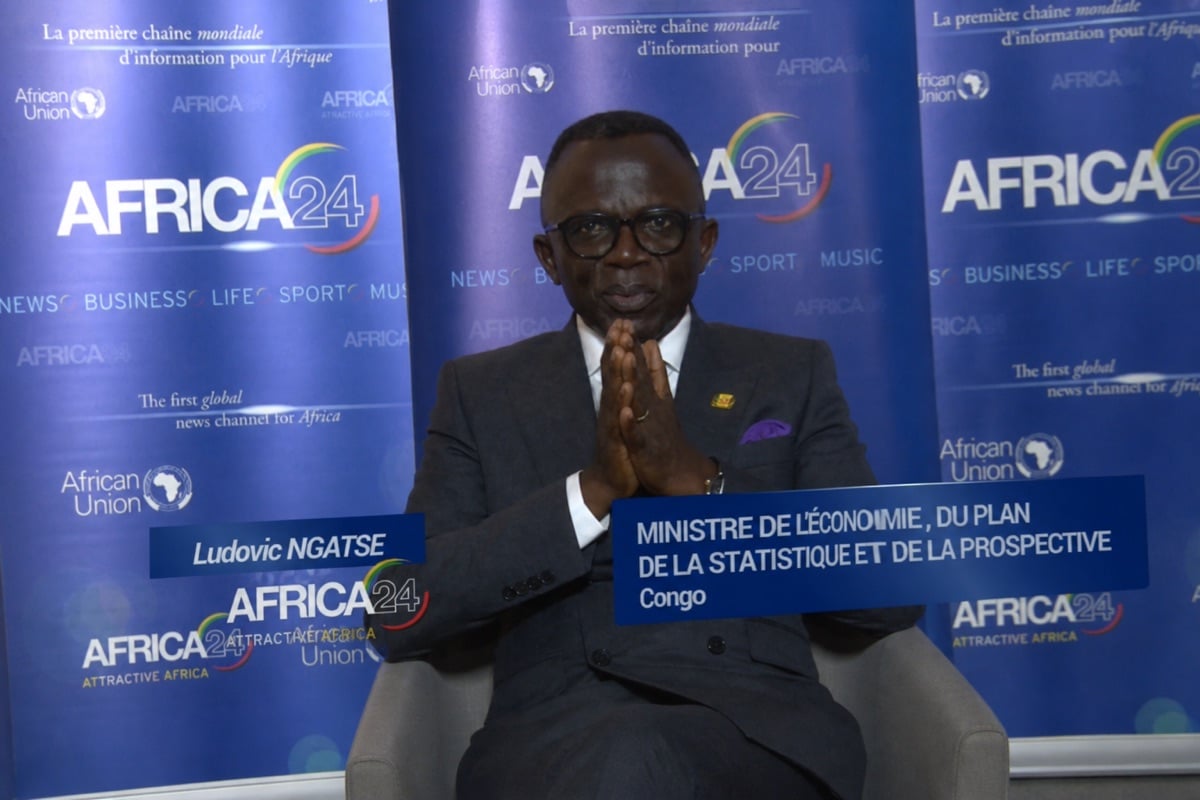
Ludovic Ngatse, Minister of the Economy, Planning, Statistics and Forecasting, used the moment on May 17, 2026, to present a long-term national development blueprint named “Congo 2063,” timed to mirror the African Union’s own agenda.
A Long Horizon Pinned to the African Union’s Agenda
The choice of name is not incidental. By aligning the country’s roadmap with the 2063 target embraced across the continent, the Congolese authorities signal an intent to read national planning through a pan-African lens rather than a purely domestic one.
That framing matters for an audience of regional decision-makers. It positions Brazzaville’s plan within a wider conversation about where the continent expects to be over four decades, and it invites partners to treat Congo’s trajectory as part of a shared timetable.
For Ngatse, the strategy is also a continuation, not a rupture. He pointed to two decades of effort already spent reshaping the country, presenting “Congo 2063” as the next chapter rather than a fresh start drawn on a blank page.
Ngatse’s Pitch to Foreign Investors
The minister’s words were direct. “Over the past 20 years, we have invested heavily in transforming our country, Congo,” he said. “Today, we are launching a new development plan, a new strategy called ‘Congo 2063.’ That is why we are inviting investors to join us in this momentum.”
The phrasing reveals the dual audience the government is addressing. One part of the message looks inward, claiming credit for years of public investment. The other looks outward, framing the new plan as an open door for those willing to commit resources.
Inviting investors “to accompany” the country is a careful turn of phrase. It casts external financing less as a rescue and more as a partnership, a tone that fits a government keen to project confidence in front of a continental financial institution.
Why Brazzaville Made the AfDB Stage Its Showcase
Hosting the AfDB’s annual gathering handed the government a rare spotlight. Officials regard the occasion as strategic, a chance to place Congo under continental attention at a moment when the country wants to be seen as open for business.
The meetings also concentrate, in one city, the very audiences the plan targets. Regulators, multilateral lenders, diplomats and private financiers gather in the same rooms, shortening the distance between a government’s announcement and the institutions that might fund it.
That proximity gives a launch like “Congo 2063” added weight. Unveiling a long-term strategy before such an audience is itself a statement, suggesting the authorities want the plan measured against continental benchmarks rather than judged in isolation.
The Economic Questions Behind the Ambition
Beyond the headline ambition, the gathering placed harder questions on the table. The government sees the meetings as an opening to address resource mobilization, debt sustainability and economic diversification, the persistent challenges shadowing the country’s outlook.
Each of those threads connects back to the investor pitch. Mobilizing resources depends on convincing outside partners to commit. Keeping debt sustainable shapes how much room the state has to maneuver. Diversification determines whether growth can outlast the cycles of a single sector.
“Congo 2063” enters this landscape as a framing device as much as a finished program. By naming a horizon and inviting partners into it, the government attempts to convert a long-term vision into a present-day argument for confidence and capital.
A Strategy Measured Against Brazzaville’s Wider Stakes
The presentation leaves much unsaid, and deliberately so. A strategy stretching to mid-century is, by nature, more a statement of direction than a catalogue of commitments, and its credibility will rest on the steps that follow the announcement.
For the Republic of Congo, the immediate test is narrower than 2063. It is whether the audience assembled in Brazzaville reads the invitation as a genuine opportunity, and whether the language of partnership translates into the resources the plan implicitly requires.
What is clear is the intent behind the staging. By tying a national plan to a continental horizon and unveiling it before the AfDB’s membership, the government sought to frame Congo not as a country seeking help, but as one offering a destination for investment.
The coming months will show how that message lands. For now, “Congo 2063” stands as a marker of ambition, presented at a moment chosen to maximize its reach across the continent and among the financiers Brazzaville hopes to win over.