
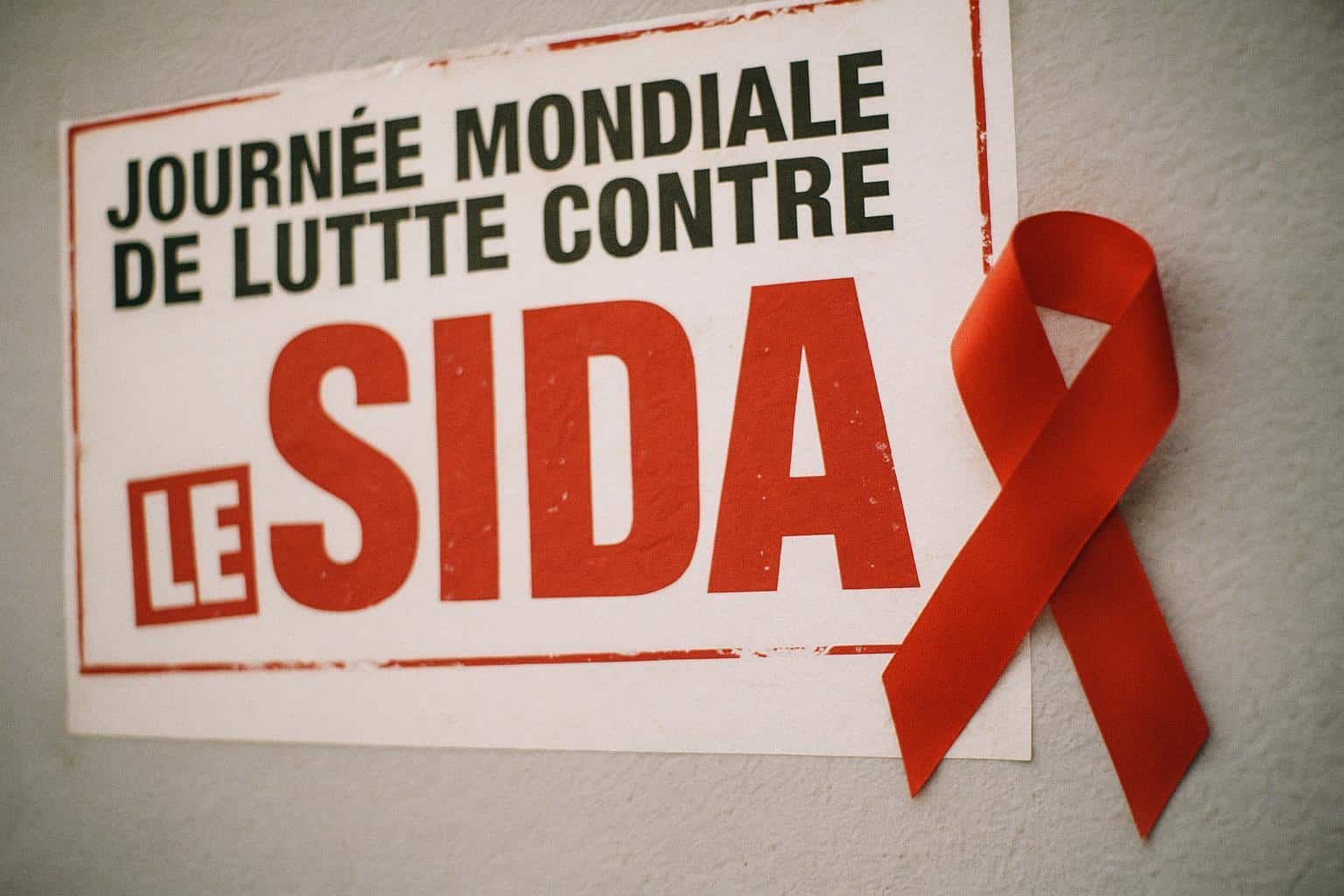
Global HIV landscape in 2025
Every 1 December, ribbons return to lapels and statistics resurface, reminding the world that HIV remains a formidable health and social challenge. UNAIDS estimates 40.8 million people are living with the virus in 2024, with 1.3 million new infections recorded despite decades of progress.
The 2025 theme, “Overcoming Disruptions, Transforming the AIDS Response,” reflects a world grappling with funding plateaus, pandemic after-shocks and widening inequalities. Global health experts warn that complacency could unravel hard-won gains if investment, innovation and inclusion do not accelerate in tandem.
Deaths linked to AIDS-related illnesses have fallen by nearly half since 2010, yet 630 000 people still died last year (WHO 2024). Antiretroviral therapy is now reaching 76 percent of those diagnosed worldwide, but coverage remains uneven, particularly across West and Central Africa.
Prevalence trends in Congo-Brazzaville
In the Republic of Congo, UNAIDS places adult prevalence at 3.2 percent, one of the highest rates in the Central African Economic and Monetary Community. Urban centres, led by Brazzaville and Pointe-Noire, record the bulk of cases, reflecting mobility, population density and economic pull.
National surveillance recorded 38 098 Congolese on antiretroviral therapy in 2023, covering 93 percent of those who tested positive (Ministry of Health 2024). Adherence now averages 79 percent, an improvement credited to decentralised pickup points and SMS reminders piloted with telecom partners.
Government strategy 2023-2027
Building on these gains, the National Council to Combat HIV, STIs and Epidemics rolled out a 2023-2027 strategic framework aligned with the Health Development Plan 2022-2026. The blueprint prioritises testing expansion, mother-to-child prevention, gender equity and stronger community data systems to guide resources.
Health Minister Gilbert Mokoki told reporters the government is “determined to leave no household behind,” citing a CFA 6 billion budget increase for HIV programmes. New credit lines through the CEMAC Development Bank are earmarked for modern lab equipment and rural clinics.
Community voices and gender lens
Yet numbers conceal lived realities. At the Makelekele district hospital, outreach nurse Clarisse Ndinga notes that adolescent girls “arrive late, afraid of judgement.” Young women aged 15-24 remain twice as likely to contract HIV as males the same age, a disparity driven by power imbalances.
Key populations—sex workers, men who have sex with men, prisoners and trans persons—account for 44 percent of new infections nationally. Civil-society leader Jean-Claude Ibata argues that scaling peer-led testing and confidential drop-in centres is “not charity but smart epidemiology” that protects the wider community.
Financing and international partnerships
External grants remain critical even as domestic financing grows. The Global Fund has approved USD 114 million for Congo’s HIV, tuberculosis and malaria portfolio for 2024-2026, contingent on co-financing benchmarks. UNICEF supports early infant diagnosis, while UNAIDS provides strategic information and procurement support for second-line drugs.
The United States President’s Emergency Plan for AIDS Relief resumed technical assistance this year, focusing on supply-chain visibility. “Stock-outs not only interrupt treatment, they undermine trust,” says PEPFAR country coordinator Dr. Sarah Mulumba, who is advocating an integrated digital inventory across all 125 treatment sites.
Technology and innovation
Congolese start-up HealthTechCiv has piloted a smartphone app that delivers secure viral-load results and adherence reminders in Lingala and French. Preliminary data from 2 000 users show a 15-percent increase in timely clinic visits. The Ministry plans to integrate the platform into its National e-Health Strategy.
Point-of-care PCR machines introduced in northern Sangha Department cut infant diagnosis wait times from eight weeks to 96 hours, according to Médecins d’Afrique. Early treatment reduces mortality by 75 percent in HIV-exposed newborns, reinforcing the value of technology adaptation outside major cities.
Stigma, law and rights
Congo’s 2011 law shielding people living with HIV from discrimination is praised by jurists, yet enforcement remains uneven. Red Cross legal clinics documented 162 workplace or housing complaints in 2024, most settled through mediation. Activists call for faster administrative recourse.
The government recently launched a nationwide media campaign featuring musicians and footballers urging testing and denouncing stigma. Early opinion polling by Target Research shows recall rates of 71 percent among viewers aged 18-35, suggesting popular culture can help reframe the conversation around responsibility rather than fear.
Toward 2030 targets
UNAIDS seeks to end AIDS as a public-health threat by 2030, defining success as 95-95-95: 95 percent of people with HIV knowing their status, 95 percent on treatment and 95 percent achieving viral suppression. Congo stands at 89-93-86, an encouraging trajectory but still short of the goal.
Epidemiologist Dr. Serge Ngakala cautions that reaching the last mile requires “sustained political commitment and community ownership in equal measure.” He advocates boosting domestic fiscal space through innovative levies on mobile money transactions, a proposal now under review by the Ministry of Finance.
A day for action, not ceremony
As World AIDS Day approaches, stakeholders insist the date must not become a mere ritual. The red ribbon is a prompt to test, to treat and to stand against discrimination. In Congo-Brazzaville, the momentum of recent reforms offers a credible path toward that shared promise.