
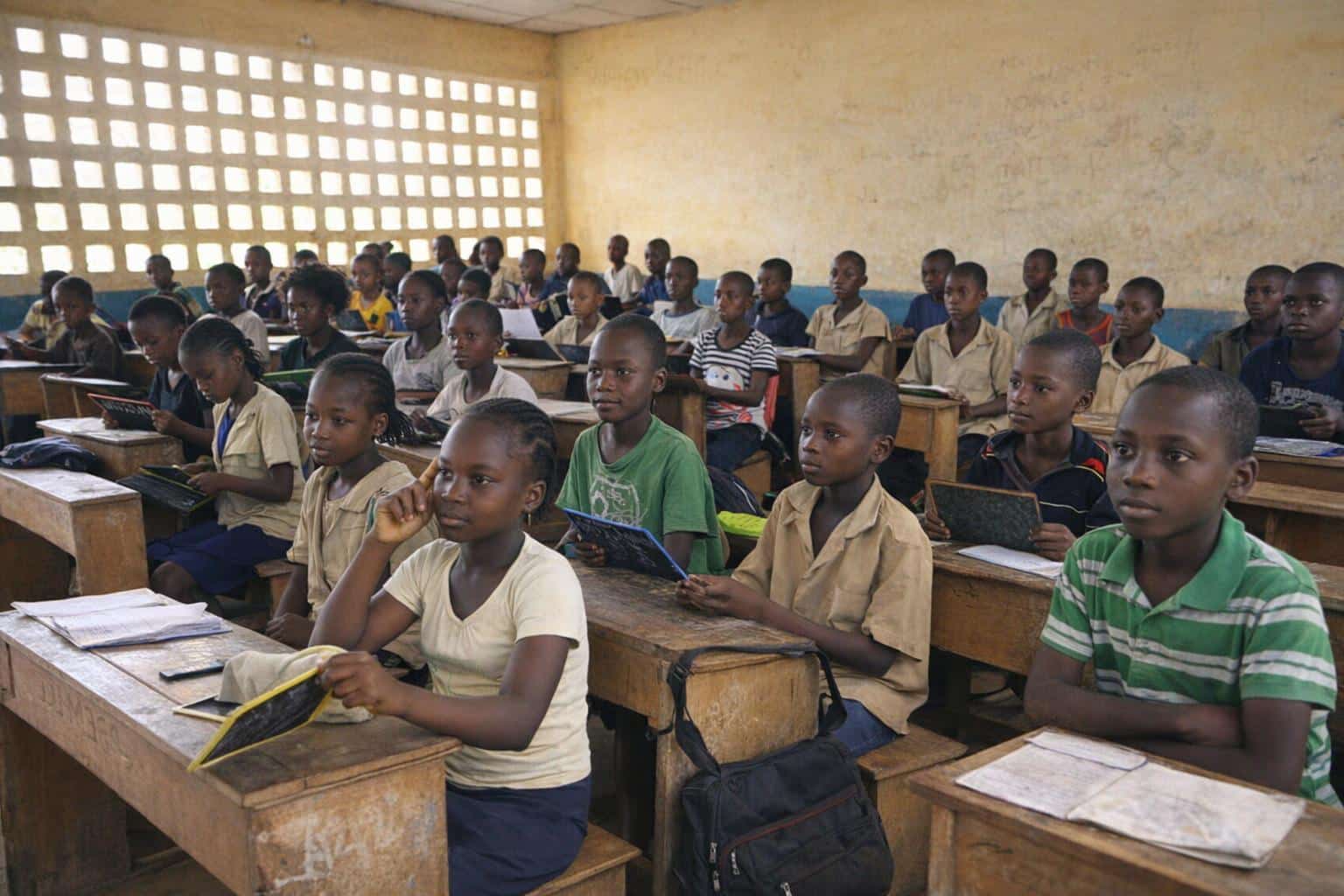
Education reforms announced after Council of Ministers
Following the latest Council of Ministers meeting, the government presented a set of education reforms intended to modernize schooling in the Republic of Congo starting next academic year. Officials framed the changes as a way to strengthen learning outcomes early, while reducing the pressure linked to national examinations.
For families in Brazzaville, Pointe-Noire and across the departments, the measures could quickly become visible in classrooms, report cards and enrollment procedures. The package focuses on three levers: the end of the CEPE as an exam, a shorter primary cycle, and a stronger obligation in preschool.
CEPE replaced by CEP, no longer a state exam
The first change is symbolic and practical: the Certificat d’Études Primaires Élémentaires (CEPE) will be discontinued and replaced by the CEP, the Certificat d’Études Primaires. The terminology matters because it comes with a different method of validation.
Under the announced reform, the CEP will no longer be obtained through a state examination. Instead, pupils will be validated through continuous assessment, meaning their work throughout the year becomes the main reference for certification.
Education stakeholders say the shift could reduce anxiety for younger pupils and re-center attention on day-to-day mastery of reading, writing and basic numeracy. For teachers, it also increases the responsibility to document progress consistently, since the certificate will reflect classroom evaluation rather than one test date.
The government’s stated intent is to value steady effort and encourage regular learning habits. In practice, it will likely require clear guidance so that parents understand how results are produced and how schools apply common standards, especially where class sizes and resources differ.
Primary school shortened to five years with CP merger
The second reform restructures the length of the primary cycle. The government announced the fusion of CP1 and CP2 into a single class called CP, or Cours Préparatoire. With that consolidation, the total duration of primary school is reduced from six years to five.
Supporters see the change as an attempt to optimize the school pathway and avoid repetition of similar content between early grades. By tightening the cycle, policymakers appear to be seeking a more efficient progression, with children reaching the end of primary sooner in a standardized framework.
The adjustment will be closely watched in schools where early-grade learning is already challenging. The success of a merged CP class depends on well-adapted teaching methods, adequate materials, and clear expectations about what pupils must achieve at each stage.
For households, a five-year primary cycle may reshape planning around uniforms, fees, and transitions to the next level. It also underscores how the reform is not only administrative: it changes the rhythm of childhood schooling, particularly in the foundational years.
Compulsory third year of preschool becomes the new norm
The third measure elevates preschool as a priority. The government announced that the third year of preschool will become compulsory for all children, reinforcing early schooling as a standard step before entering primary education.
Officials presented the requirement as crucial preparation for primary school, aiming to ensure children arrive better equipped with basic learning readiness. For many families, the new rule could also formalize practices already common in urban areas, while pushing for broader coverage nationwide.
As implementation begins, attention will likely turn to classroom capacity, staffing and access, especially outside major cities. Making a year compulsory implies not only a policy decision, but also the ability to welcome every child concerned in appropriate learning conditions.
What these reforms mean for families and schools next year
Taken together, the reforms outline a strategy to modernize the system and reduce the weight of high-stakes examinations at the earliest levels. Continuous assessment for the new CEP is designed to make evaluation more regular, while the shorter primary cycle and mandatory preschool year seek to strengthen the start of the learning journey.
The next academic year will therefore be a transition period for schools, teachers and parents, who will need clear communication on procedures and expectations. For students, the government’s message is that school success should be built step by step, with more emphasis on consistent classroom work.