
Brazzaville workshop signals new public health stance
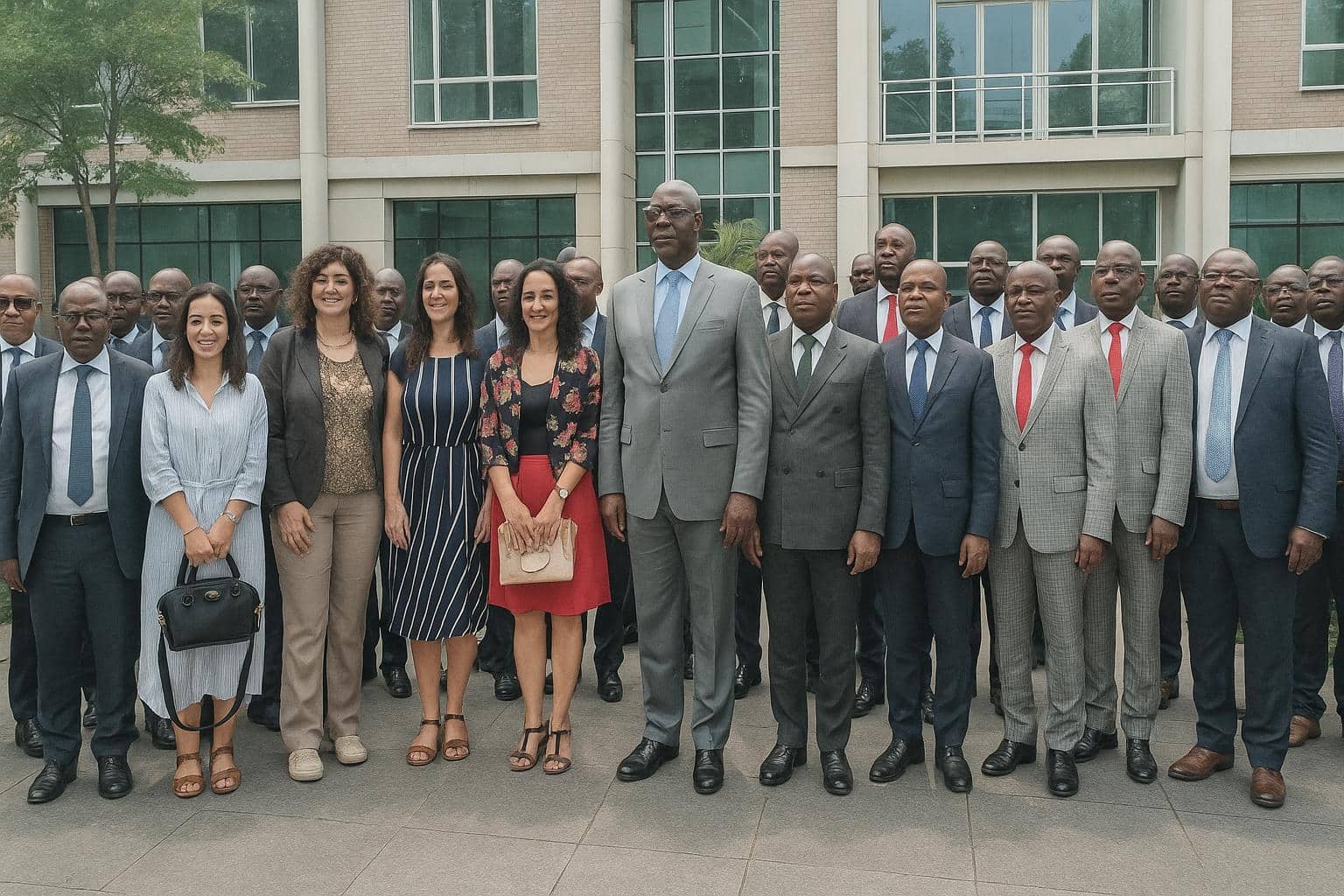
Brazzaville—Thirty health workers gathered at the Péfaco Hotel from 15 to 19 September 2025, stepping into a classroom that marks Congo’s latest pivot in its fight against youth substance abuse. For the first time, an intensive course in addictology and tobacco-control targeted frontline caregivers.
Training targets integrated health centres
The workshop, organised by the National Agency for the Social Insertion and Reinsertion of Youth, prepared participants to serve in Integrated Health Centres and at the detoxification unit of Aubeville insertion centre in Bouenza, two pillars of a public network expected to receive rising numbers of addicted adolescents.
Government champions holistic response
Opening the session, Minister of Youth and Sports Hugues Ngouélondélé framed the training as part of a broader “paradigm shift”, combining repression, prevention, clinical care and reinsertion. “Training our health workers means boosting the State’s capacity to screen, treat and, above all, prevent,” he said.
Ngouélondélé’s stance aligns with government pledges to safeguard the demographic dividend. Official figures show nearly half of Congolese citizens are under 18; authorities warn that without swift action, the spread of illicit substances could sap both productivity and public finances devoted to treatment and security.
Tunisian expertise anchors sessions
The Tunisian Scientific Society of Addictology led the lectures, bringing experience accumulated in North African clinics. Course director Dr. Frenel Loembé, a public-health physician, praised the cross-regional link. “South-South cooperation lets us exchange protocols that speak to our realities,” he told reporters during a break.
Organisers selected a five-module format: three face-to-face sessions on pharmacology, counselling and relapse prevention; two distance-learning blocks on data reporting; and a hands-on internship inside Aubeville’s detox ward. The blend reflects logistical constraints in rural districts while preserving field exposure deemed essential by mentors.
Identifying substances, restoring lives
By the final day, trainees could list psychoactive substances circulating among Congolese teens, from tramadol and cannabis to homemade cocktails. Role-playing exercises rehearsed motivational interviewing meant to replace stigma with trust. “Do not see a problem to fix, see a life to save,” reminded Agency director Hemery Patrick Akondjo Olandzobo.
Participants also studied tabacology, an area gaining urgency as cigarette and shisha use rise in urban hangouts. Emphasis fell on brief interventions within schools and sports clubs. “Adolescents respond when advice is immediate and practical, not moralising,” said nurse trainee Isabelle Mavoungou outside the seminar room.
National agency widens safety net
Created in 2024 under the Youth Ministry, the agency already supports youngsters facing social hardship or conflict with the law. Earlier this month, it hosted a skills clinic for counsellors working in juvenile detention. The latest workshop deepens that mandate by fixing clinical gaps that once forced referrals abroad.
Local economists argue the approach also protects household incomes. Families often sell assets to finance private detox programmes outside Congo. “Bringing expertise home reduces catastrophic spending and keeps youth close to support networks,” observed professor of economics Médard Bissila, who attended the closing ceremony as an observer.
Quiet endorsement from parents
In the hotel lobby, Yvonne Koumba, mother of a 17-year-old recovering from codeine misuse, said she travels 400 kilometres twice a month to Aubeville. “If clinics in Brazzaville apply what these doctors learn, fewer parents will make that journey,” she whispered, clutching a packet of discharge papers.
Data to inform policy
Beyond bedside skills, trainees practised filling standardised reporting sheets that feed the Ministry’s epidemiological dashboard. Reliable numbers, officials say, will guide allocation of psychotropic medicines and shape public campaigns. “Evidence strengthens policy credibility,” affirmed Dr. Loembé, noting that aggregated data remain anonymous to protect patient confidentiality.
Prospects for international follow-up
Organisers hinted at future modules involving Belgian and French clinicians, pending budget clearance. Virtual classrooms could cut costs while expanding reach to Pointe-Noire and northern districts. For participants such as midwife Clarisse Ndinga, the possibility signals continuity: “Addiction evolves; our knowledge must evolve faster,” she reflected.
Facing reality inside resource-strapped clinics
Until then, graduates will return to facilities that often juggle malaria, HIV and chronic diseases with limited staff. Several said the new skills would not add workload but rather streamline consultations, allowing early detection before cases escalate to psychiatric emergencies demanding costly transfers.
Political resonance without fanfare
Although couched in clinical language, the initiative carries political overtones. By investing in youth health, authorities reinforce social stability ambitions articulated in the National Development Plan. For now, the training’s measured tone avoids triumphalism; officials describe it as a “decisive step”, not a finish line.
A long road, but clearer signposts
As participants filed out with certificates, a banner read “Transforming distress into opportunity”. The slogan, modest yet pointed, captures the government’s renewed posture: build capacity close to where youth live, then accompany them back into school, work and sport. The coming months will test that resolve.
Community outreach plans
The agency plans neighbourhood outreach after graduation, dispatching teams to markets and bus stations where informal alcohol sales thrive. Leaflets, screening kiosks and referral hotlines will form what staff call a “moving fence” against relapse.