
Macro-Economic Indicators Signal Cautious Recovery
A recent triangulation of datasets from the World Bank, the IMF and the African Development Bank suggests that the Republic of Congo has been edging out of the post-2014 oil price shock with greater composure than many of its Gulf of Guinea neighbours. Real GDP growth moved back into positive territory in 2023 and is projected to stabilise around 4 percent in 2024, fuelled by the disciplined ramp-up of offshore crude output and a nascent services sector. The non-oil primary balance, historically the fiscal Achilles’ heel, has narrowed following tax-to-GDP enhancements that the Ministry of Finance describes as “evidence of a maturing revenue culture.” The IMF’s April 2024 Article IV report underlines steady disinflation to below 3 percent, an achievement partially attributed to tighter monetary coordination within the CEMAC zone.
Demographic Dynamics and Urban Pulse
With an estimated population of 5.9 million, half of it under 19 years, the country’s demographic dividend remains both promise and pressure. Brazzaville and Pointe-Noire now accommodate nearly two-thirds of all citizens, according to the 2023 national census, creating a dense urban corridor along the Congo River and the Atlantic fringe. Urban employment surveys conducted by the Congolese National Institute of Statistics demonstrate a progressive decline in youth unemployment—currently at 15 percent, down from 21 percent five years ago—thanks to vocational partnerships with French, Chinese and Rwandan investors. Health metrics equally record incremental progress: life expectancy has nudged past 62 years and the maternal mortality curve has fallen by 10 percent since 2018 (UNICEF 2023).
Energy, Climate and Resource Management
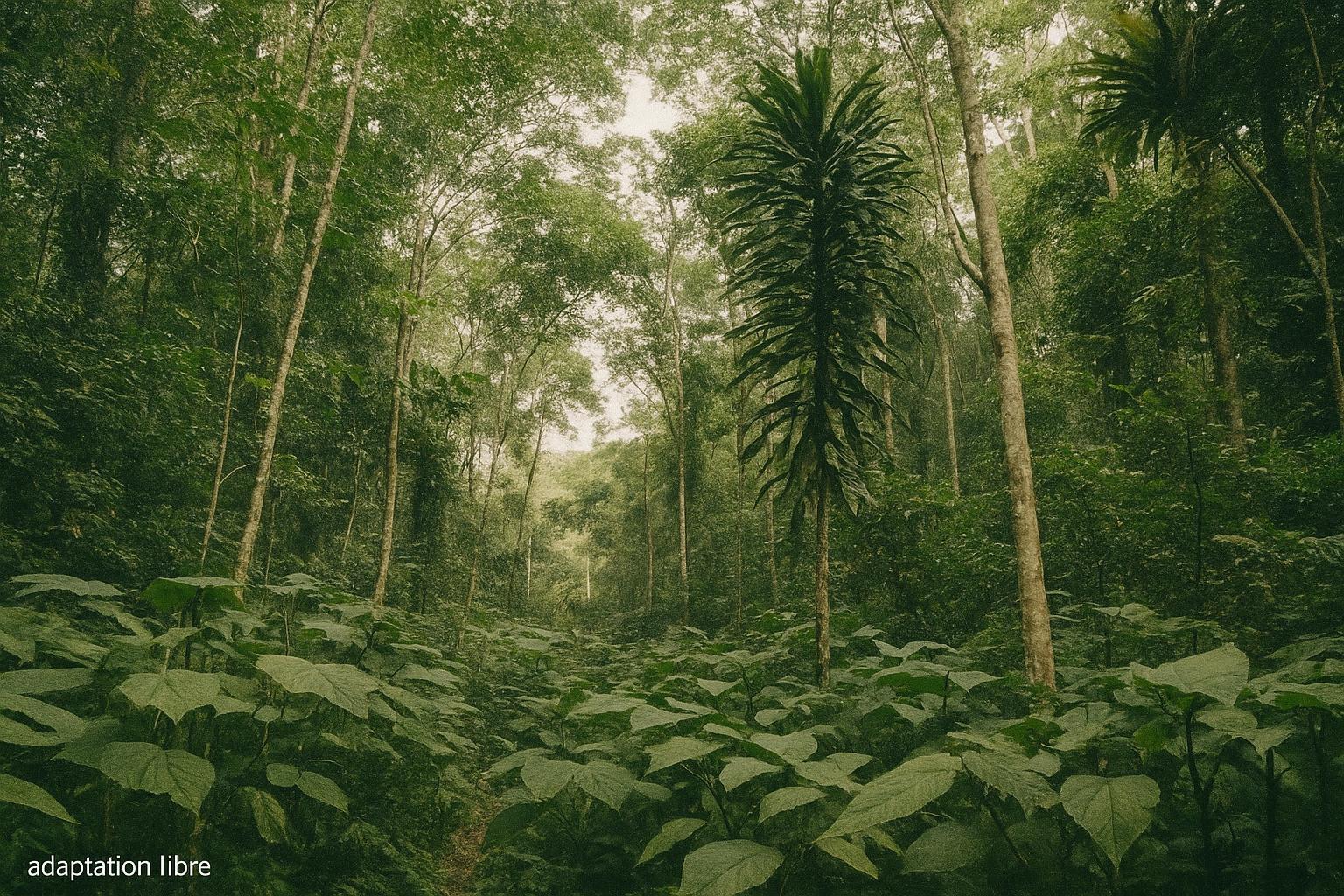
Energy policy, historically dominated by hydrocarbons, is undergoing a measured recalibration. The 2022 Renewable Energy Framework Act offers feed-in tariffs for small-scale solar arrays, a move welcomed by the African Climate Foundation as an “illustrative pivot towards diversified baseloads.” Still, petroleum constitutes over 80 percent of export earnings, prompting Brazzaville to seek carbon-offset schemes in the vast rainforest of the Cuvette Centrale. Early pilot projects under the Central African Forest Initiative are expected to monetise avoided deforestation while preserving biodiversity corridors that the Congolese Wildlife Authority calls “a continental lung.” The World Resources Institute flags Congo’s per-capita CO₂ emissions as among the lowest in the Middle-Income category, underscoring room for green growth.
Governance Architecture and Regional Role
Congo’s semi-presidential system continues to emphasise institutional continuity, a feature often cited by international investors when benchmarking political risk. The 2021 constitution underscores separation of powers while allowing targeted executive oversight of strategic industries. Parliamentary debates on the forthcoming Mining Code revision have unfolded in televised sessions, a gesture that civil-society lawyer Mireille Oba views as “incremental transparency.” Regionally, Brazzaville’s mediation of the CAR cease-fire in July 2023 earned commendation from the African Union, reinforcing the republic’s self-image as a diplomatic hinge in Central Africa. The national defence budget remains under 2 percent of GDP, consistent with CEMAC convergence criteria, and there are no major external deployments beyond symbolic contingents in UN operations.
Measured Outlook
Analysts from Fitch Ratings maintain a stable B-rating, noting manageable external debt—about 58 percent of GDP after the 2019 restructuring with bilateral partners—and an improving current-account trajectory buoyed by liquefied natural gas prospects. The overarching narrative is therefore one of discreet but tangible consolidation: governance reforms align with macro-prudential imperatives, urbanisation is harnessed rather than feared, and natural capital is gradually reframed as a vector for sustainable finance. In the words of economist Jean-Baptiste Ongagna, “The republic is not waltzing into boomtime, yet the music of resilience is unmistakably audible.”