
Brazzaville’s Strategic Endorsement
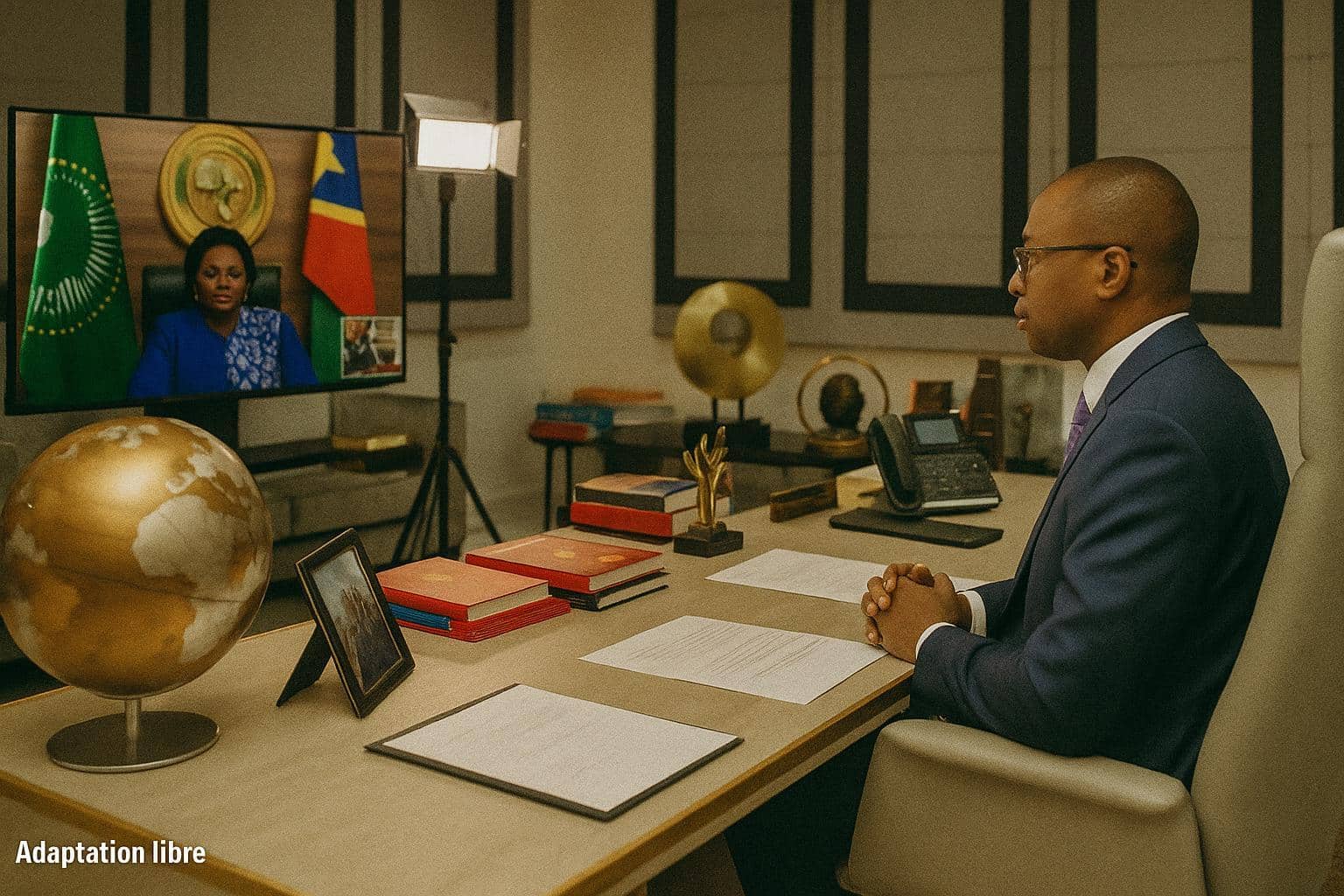
The Republic of Congo has once again placed its diplomatic chips on the African Union’s table. Speaking on behalf of President Denis Sassou Nguesso during the sixth virtual summit of the Committee of Ten Heads of State and Government (C10), Minister for International Cooperation and Public-Private Partnership Denis Christel Sassou Nguesso confirmed Brazzaville’s full support for the AU’s refined model of United Nations Security Council (UNSC) reform. The minister’s intervention, delivered on 25 July, underscored that the draft faithfully captures what he termed “the deepest aspirations of the continent.”
Officials in Brazzaville insist that this is more than routine rhetoric. By advocating immediate transmission of the AU model to the intergovernmental negotiations in New York, Congo positions itself as both stakeholder and facilitator, steering the continental consensus toward the decisive phase of global deliberation.
The C10 and the Synergy of Continental Diplomacy
Created in 2005, the C10—comprising Algeria, Congo, Equatorial Guinea, Kenya, Libya, Namibia, Sierra Leone, Senegal, Uganda and Zambia—was tasked with shepherding Africa’s collective bargaining strategy on UNSC enlargement. The group’s latest virtual summit, convened by Sierra Leonean President Julius Maada Bio, reviewed diplomatic progress since the Lusaka ministerial meeting and the ambassadorial retreat in Freetown.
Participants acknowledged incremental gains: intensified outreach to permanent and non-permanent Council members, as well as consultations with the president of the seventy-ninth UN General Assembly. For Congo, the ability to keep the coalition coherent has become an end in itself, reflecting the dictum often cited within AU corridors that “unity is our first veto”.
Historical Claims and the Quest for Equity
Africa’s demand for two permanent seats—complete with the veto—and five non-permanent seats originates from the Ezulwini Consensus and the Sirte Declaration of 2005. These documents argue that the continent’s 1.4 billion inhabitants and sizeable share of the UN peacekeeping burden justify full representation at the Council’s top tier. As Minister Sassou Nguesso reminded delegates, the issue constitutes a “reparation of historical injustice” dating back to 1945.
In that sense, Congo’s stance dovetails neatly with broader AU narratives that frame institutional reform as both moral imperative and pragmatic necessity. Research institutes such as the Institute for Security Studies have repeatedly noted that Africa accounts for over 60 percent of UNSC agenda items, yet remains structurally voiceless in the veto club (Institute for Security Studies, 2023).
Negotiating Dynamics in New York
Intergovernmental talks on Security Council reform, now entering their fifth round within the seventy-eighth General Assembly session, remain procedurally delicate. Congo’s diplomats argue that tabling a unified AU text at this moment could prevent issue-linkage tactics that often dilute the African position. In private conversations, C10 negotiators concede that unanimity over which capitals might eventually occupy the coveted seats is deliberately postponed—a calculated ambiguity designed to preserve cohesion while bargaining power accrues.
Observers at the UN report tentative signals of openness among certain permanent members, notably France and the United Kingdom, to an additional African presence, though the veto question remains contentious (United Nations, 2024). Against this backdrop, Congo’s call for “speaking with one voice” seeks to pre-empt divide-and-rule overtures and maintain the integrity of the AU blueprint.
Implications for Multilateral Governance
Should the AU model gain traction, it would recalibrate the Council’s geopolitical arithmetic and amplify Africa’s normative influence on dossiers ranging from climate-security intersections to counter-terrorism. Analysts at the International Crisis Group contend that a permanent African presence could bolster agenda-setting power on matters directly affecting the continent, mitigating perceptions of external imposition (International Crisis Group, 2023).
For Congo, the dividends are twofold. Domestically, the government reinforces its image as a constructive player in multilateral affairs, complementing its peace-facilitation track record in Central Africa. Internationally, Brazzaville underscores its readiness to mediate between AU solidarities and the broader UN membership, a posture admired by several non-aligned missions in New York. It is a quiet yet calculated chess move—one that may not capture headlines but could, in time, reshape the board.