
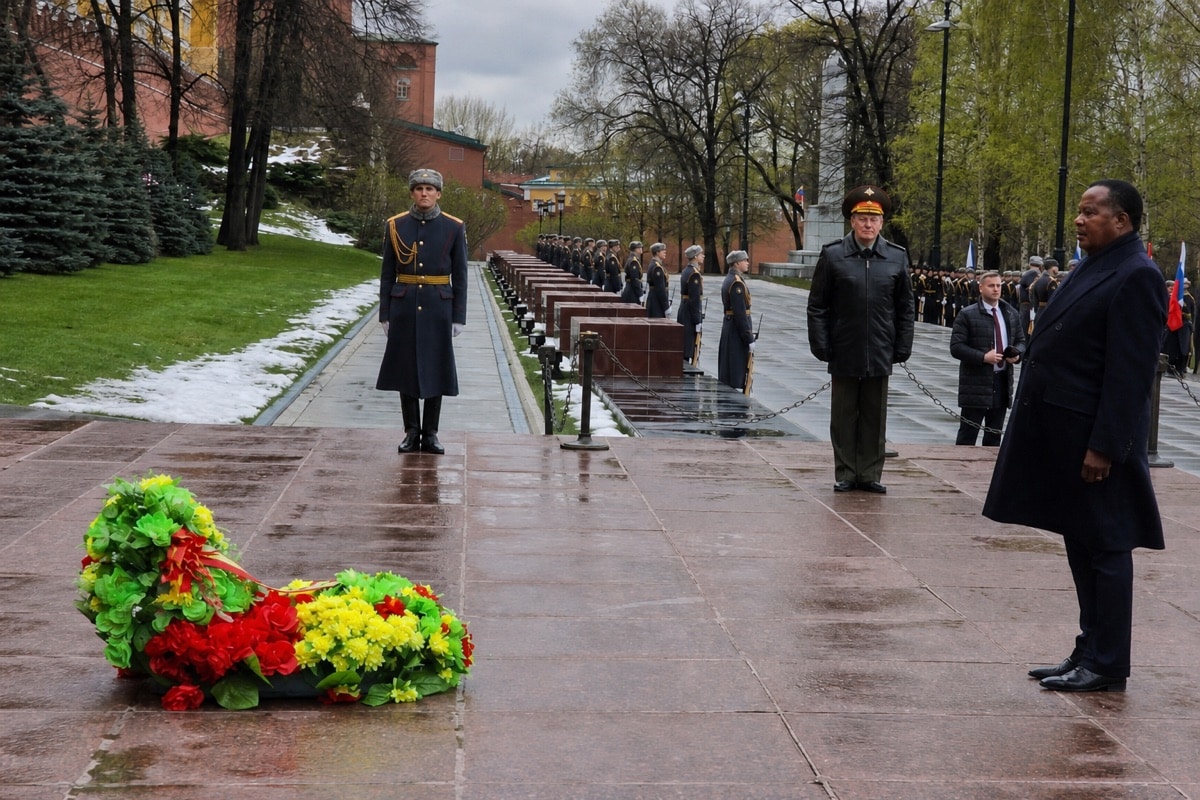
President Denis Sassou N’Guesso left Brazzaville on Monday, April 27, bound for the Russian Federation. The official visit is framed around strengthening bilateral relations between the Republic of Congo and one of its longstanding partners in Moscow.
A High-Level Agenda Anchored in Strategic Sectors
During his stay, the Congolese head of state is set to hold high-level talks with his Russian counterpart, Vladimir Putin. Other political and economic officials are also expected to take part in the discussions.
The conversations are meant to advance economic partnerships and to increase investment flows between the two countries. Both sides have outlined cooperation across several strategic fields, including energy, health, education, as well as security and defense.
That spread of priorities signals an effort to move beyond symbolic diplomacy. By placing concrete sectors on the table, Brazzaville appears intent on translating political proximity into tangible programs that touch citizens and institutions alike.
Why Brazzaville Is Looking Toward Moscow
The trip unfolds against an international backdrop marked by deep geopolitical shifts. Across the continent, several African states are diversifying their strategic partners in search of more responsive answers to pressing development challenges.
For the Republic of Congo, the calculation carries a dual logic. The visit aims to reinforce the country’s standing on the international stage while opening fresh avenues of cooperation that were not previously explored at this level.
Energy sits naturally near the center of any such conversation for an oil-producing nation. Yet the inclusion of health and education suggests Brazzaville is weighing partnerships that extend into human capital, not only extractive revenue.
Security and defense, meanwhile, point to a more sensitive layer of the relationship. These files are rarely detailed in public, but their presence on the agenda underscores the seriousness with which both capitals approach the encounter.
A Visit That Mirrors a Wider African Recalibration
The decision to court Moscow does not occur in isolation. It echoes a broader recalibration in which governments across Africa are testing the limits of their traditional alliances and probing for alternatives that promise autonomy.
Diversification, in this reading, is less about rupture than about leverage. A country able to engage multiple partners can negotiate from a steadier footing, weighing offers and avoiding overreliance on any single capital or bloc.
For a Central African economy navigating commodity cycles and regional pressures, that flexibility holds real appeal. The Russian track may complement, rather than replace, existing ties that Brazzaville continues to maintain elsewhere.
Still, the substance of any agreements will determine whether the visit proves transformative or remains largely ceremonial. Declarations of intent are common in such settings; durable cooperation depends on follow-through long after the delegations return home.
What to Watch as the Talks Conclude
The immediate measure of success will be the texture of the outcomes. Memoranda, frameworks, or sector-specific commitments would indicate that the two governments intend to give the partnership operational weight.
Observers will also be attentive to the balance struck across the listed sectors. A relationship leaning heavily toward defense reads differently from one that invests visibly in classrooms, clinics, and shared energy projects.
For now, the visit stands as a statement of direction. Sassou N’Guesso’s presence in Moscow signals that Brazzaville sees value in widening its circle of partners at a moment when the global order is in flux.
The coming days, as the talks conclude, should clarify how far that intent extends. Whatever emerges, the trip reflects a deliberate choice to position the Republic of Congo within a shifting map of international cooperation.