
The Court Speaks, the Election Is Settled
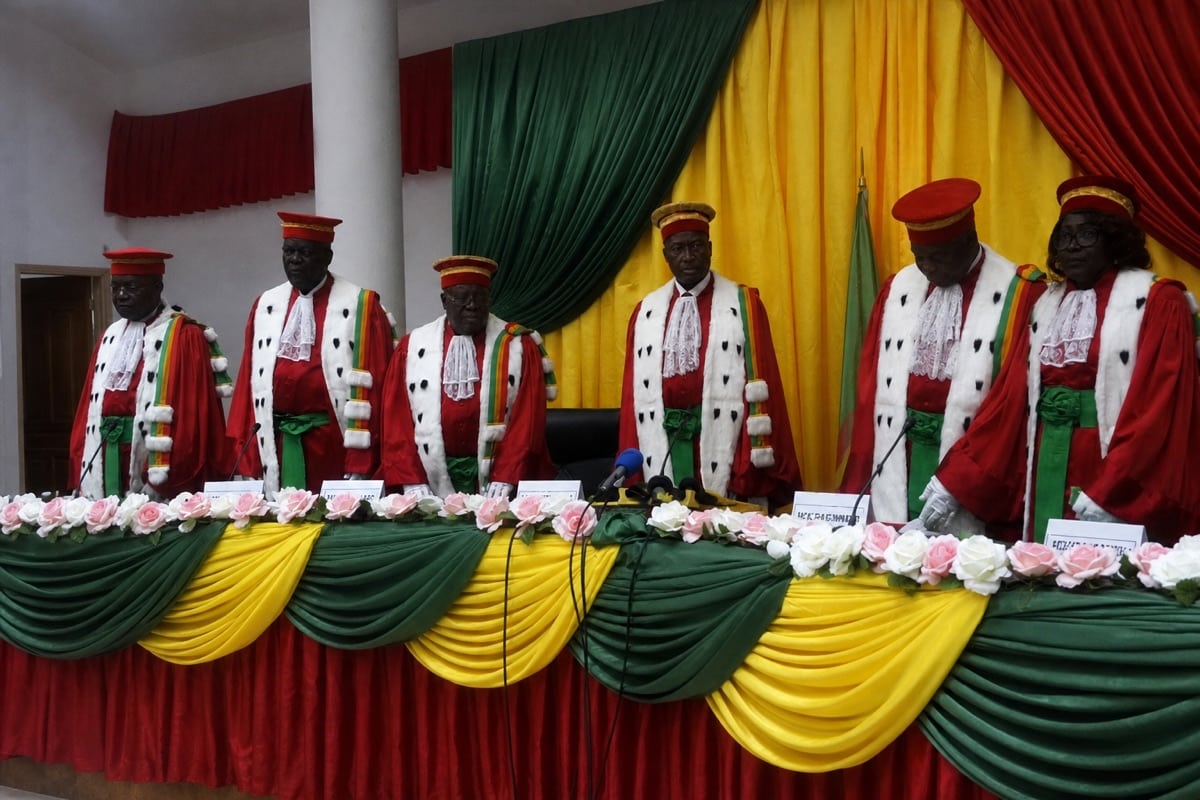
On March 28, 2026, in Brazzaville, the Constitutional Court of the Republic of Congo formally proclaimed the definitive results of the presidential election held on March 12 and 15. The outcome confirmed what provisional tallies had already suggested, but with the weight of judicial finality behind it.
Denis Sassou N’Guesso was declared re-elected as President of the Republic of Congo in the first round.
The Numbers That Define the Mandate
The court’s decision, referenced as Decision No. 003/DCC/EL/PR of March 28, 2026, set out the results in precise terms.
Sassou N’Guesso received 2,509,456 votes — equivalent to 94.90 percent of valid votes cast. The turnout figure was equally striking: out of 3,155,751 registered voters, 2,681,921 participated, producing a participation rate of 84.99 percent.
Auguste Iloki, president of the Constitutional Court, declared that Sassou N’Guesso, “having obtained more than the absolute majority of valid votes cast in the first round, is declared elected President of the Republic.”
Mafoula’s Challenge Dismissed
The court simultaneously disposed of the annulment petition filed by Uphrem Dave Mafoula, the independent candidate who had placed third in the election with 1.03 percent of the vote.
Mafoula had alleged serious irregularities in the conduct of the ballot that he argued had compromised the sincerity of the vote. The Constitutional Court concluded that, in the absence of direct and decisive evidence, the alleged irregularities were not established to the standard required for annulment.
The petition was dismissed. The ruling was notified to the parties and published in the Journal Officiel.
What the Figures Say About the Political Landscape
A result of 94.90 percent in a seven-candidate race raises analytical questions that extend beyond the partisan dimension. The participation rate of nearly 85 percent is itself noteworthy, suggesting either genuine civic mobilisation or an organised turnout effort, depending on one’s reading of the Congolese political context.
The court’s proclamation closes the formal electoral chapter. What opens now is the chapter of governance — and the country will watch closely to see how a new mandate shaped by these particular numbers translates into policy, personnel, and priorities.
The Institutional Sequence Completed
With the Constitutional Court’s proclamation, Congo-Brazzaville has completed the institutional sequence of its 2026 presidential election: vote, provisional results, legal challenge, and definitive ruling.
The process unfolded without significant public disorder. The outcome was never in serious institutional doubt, but the filing of a petition and the court’s formal response ensured that the democratic form was observed even as the substance of the result was widely anticipated.
Sassou N’Guesso begins a new mandate with a court-validated mandate and an electorate whose massive participation the court has placed on record.