
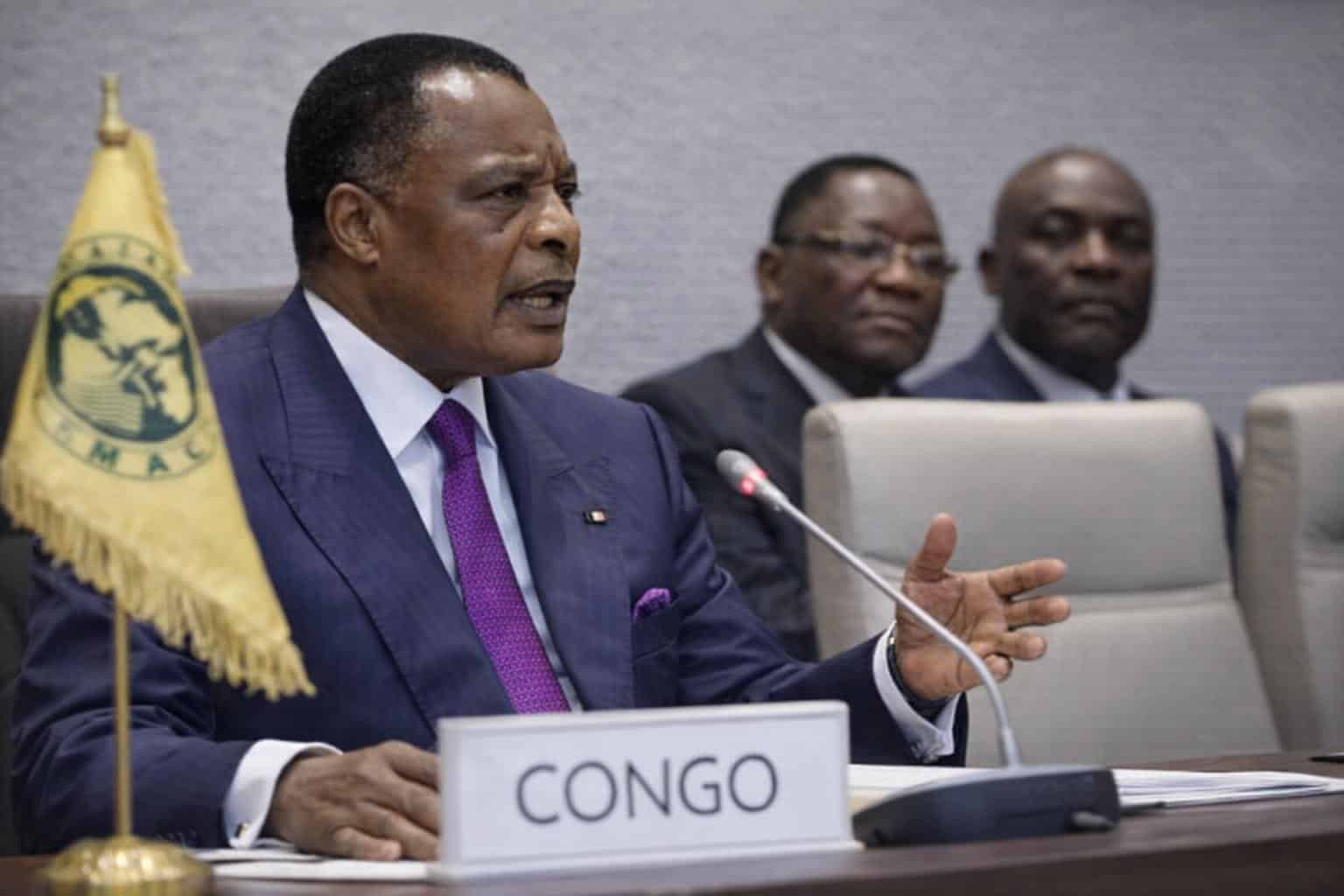
Brazzaville hosts high-stakes CEMAC economic summit
Brazzaville hosted an extraordinary CEMAC summit on Thursday, Jan. 22, 2026, bringing together the six member states to review the region’s economic and financial trajectory. The meeting centered on rebuilding foreign-exchange buffers, consolidating macroeconomic balances, and accelerating structural reforms.
Held under the chairmanship of President Denis Sassou N’Guesso, in his role as acting president of the Conference of Heads of State of CEMAC, the gathering signaled a push for tighter coordination and more predictable policy execution across the monetary union.
Global volatility puts pressure on emerging currencies
The summit unfolded against a challenging international backdrop described by leaders as volatile: shifting financial markets, persistent geopolitical tensions, and higher global interest rates. For economies reliant on commodity cycles and external financing, these dynamics can quickly translate into currency and reserve pressures.
For the CEMAC zone—Cameroon, Central African Republic, Republic of the Congo, Gabon, Equatorial Guinea and Chad—the stated objective was twofold: safeguard monetary stability around the BEAC CFA franc and protect a growth path that can endure external shocks.
Denis Sassou N’Guesso urges discipline and follow-through
From the International Conference Center in Kintelé, Denis Sassou N’Guesso framed the moment as one that required clear-eyed assessment and rigorous implementation. He argued that the region must move beyond declarations and treat agreed decisions as operational commitments.
“This summit offers us the opportunity to take a lucid and responsible stocktaking of the application of the decisions we made during our previous extraordinary sessions of 2016, 2021 and 2024,” he said, insisting that results should be measurable and regularly reviewed.
Macroeconomic signals improve, but leaders stress fragility
Heads of state noted a gradual improvement in several key indicators. Regional growth remains positive, supported by the rebound in extractive activity, public investment, and budget normalization measures adopted in multiple countries.
Inflation, after rising in the post-Covid period and amid global shocks, is described as easing, with a trend toward returning below the community threshold. Even so, leaders stressed that these gains remain exposed to global uncertainty and domestic implementation risks.
Sassou N’Guesso cautioned against premature comfort: “Our economies show positive growth and inflation is falling, with a tendency to return below the community threshold. However, these developments remain fragile and must not be compromised by global uncertainties.”
Quarterly oversight of PREF-CEMAC becomes centerpiece reform
A standout decision was the creation of a quarterly monitoring mechanism for the CEMAC Economic and Financial Reform Program, known as PREF-CEMAC. Leaders presented the move as a practical upgrade in community governance, designed to keep reforms on schedule and comparable across countries.
Under the plan, the technical secretariat receives an expanded mandate to review national progress every quarter, identify administrative bottlenecks, issue early alerts, and prepare reports addressed directly to heads of state. The intent is to shorten the distance between decisions and delivery.
Officials characterized the mechanism as a break from stop-and-go reform cycles. By institutionalizing frequent evaluation, the summit aimed to strengthen the region’s credibility with multilateral partners and long-term investors who watch implementation capacity closely.
Export earnings repatriation targets BEAC reserves
Leaders also agreed on stricter enforcement of repatriation of export revenues, especially from hydrocarbons, mining and other commodities. The stated goal is to channel more foreign currency through the regional system and reinforce the BEAC’s reserve position.
In the summit’s framing, the measure serves three purposes: strengthen foreign-exchange reserves, inject liquidity into the regional banking system, and reinforce financial sovereignty. It was presented as a stability instrument aligned with the needs of a fixed-exchange-rate arrangement.
A four-pillar plan links budgets, transparency, revenues, food
Beyond monitoring and repatriation rules, heads of state validated a broader plan organized around four policy pillars. The first is reinforced fiscal discipline, with a renewed focus on convergence criteria and programs supported by the IMF where applicable.
The second pillar is financial transparency, including wider adoption of a Treasury Single Account and accelerated digitization of tax and customs administrations. Leaders portrayed this as a way to reduce leakages and increase traceability of public funds.
The third pillar targets domestic revenue mobilization, emphasizing improved performance of revenue agencies and a stronger stance against tax evasion. The fourth pillar ties sovereignty to food and economic resilience, promoting import substitution and the development of regional agricultural value chains.
Message to IMF and partners: support that matches ambition
Sassou N’Guesso used his address to call for closer alignment between the region’s reform agenda and partner support. “I call for a more effective engagement and support from international financial institutions and our bilateral partners, in support of our development efforts,” he said.
The appeal, as presented at the summit, is aimed at institutions such as the IMF, the World Bank and the African Development Bank, as well as private investors, with the idea that policy credibility and external backing should reinforce each other.
Brazzaville’s moment: governance, confidence, continuity
The Brazzaville sequence reinforced the Republic of the Congo’s role as a convening hub in Central Africa’s economic diplomacy. For participants, the summit’s value lay less in new slogans than in the operational shift toward frequent tracking and enforceable financial measures.
With Congo’s presidential election scheduled for March 15, 2026, the text of the summit narrative links political continuity to macroeconomic steadiness. In diplomatic and financial circles referenced by the summit account, stability is presented as a precondition for durable growth.
The Jan. 22 meeting is positioned as a turning point: from intentions to execution, from episodic reviews to quarterly scrutiny. In a fragmented global economy, the summit argued, disciplined policy and credible institutions become strategic assets for the entire CEMAC zone.