
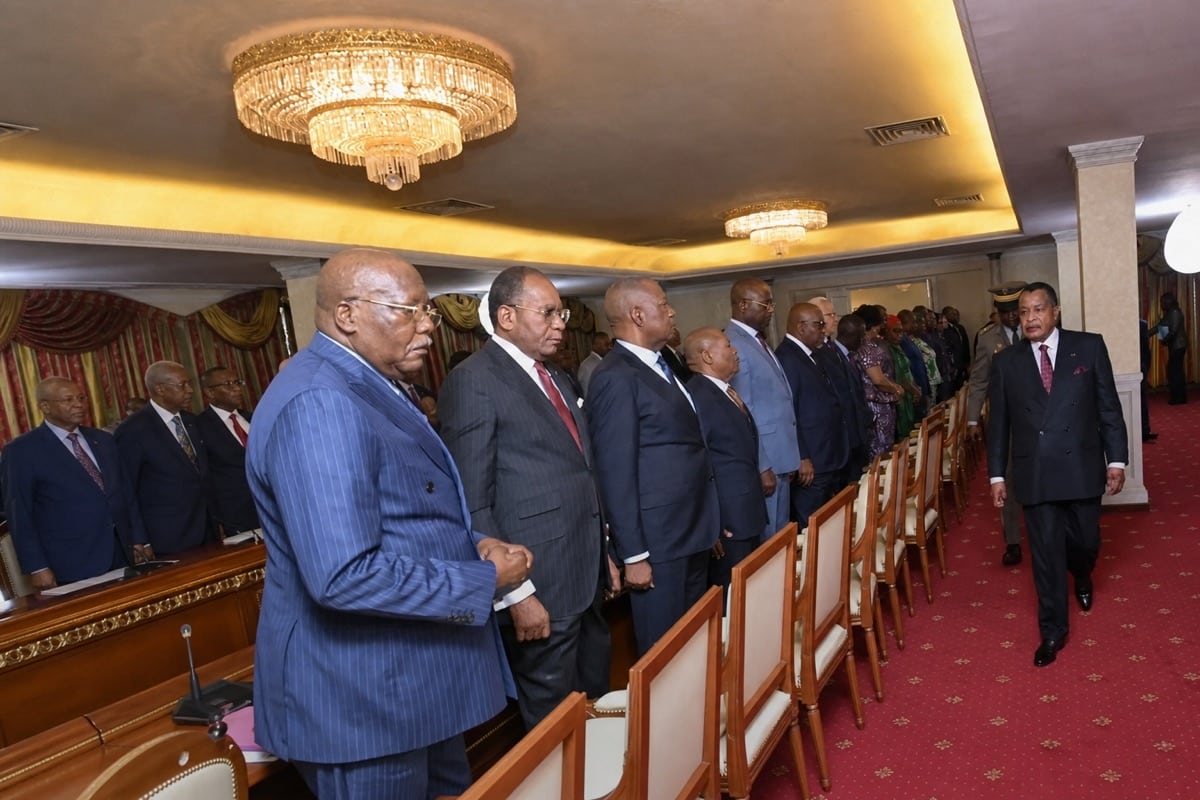
A Campaign Defined by Longevity
Denis Sassou-Nguesso, 82 years old, launched his campaign trail on February 28, 2026, for the presidential election scheduled for March 12 and 15. His quest is for a final mandate of five years — the second and last renewal permitted under the constitution adopted in 2015 and amended in 2022.
Since formally announcing his candidacy on February 5, the sitting president has traveled across the Republic of Congo, meeting voters in Brazzaville and outlying departments, seeking to secure the support necessary for a decisive first-round result.
Four Decades in Power
Sassou-Nguesso first governed the country from 1979 to 1992. After a period out of office, he returned to power in 1997 following a civil conflict and has remained in office continuously since. By the time of the March 2026 election, he will have accumulated more than four decades at the head of the Congolese state.
In a recent interview with AFP, he acknowledged the finite nature of his tenure, saying he “would not remain in power forever.” The 2015 constitution provides the clearest institutional basis for that declaration: Article 65 limits the presidency to a total of two renewals of five years each, making a 2026 victory constitutionally his last permitted term.
The Poverty Question
The campaign unfolds against a stark economic reality. Critics point out that nearly half of the Congolese population lives below the poverty line, despite the country’s status as one of the region’s oil-producing states. The Republic of Congo has extracted oil revenues for decades, but their distribution has remained a persistent source of controversy and disappointment for many citizens.
The opposition, though largely absent from the 2026 race, has consistently raised these figures over successive electoral cycles. The disconnect between resource wealth and public welfare has shaped the political narrative in Brazzaville and in departmental capitals where Sassou-Nguesso is now canvassing.
Rivals Behind Bars
The 2026 presidential field includes six candidates beside Sassou-Nguesso, but none carries the political weight of historical opposition leaders. Two prominent figures from the 2016 presidential race — Jean-Marie Mokoko and André Okombi Salissa — remain imprisoned. Both were convicted in 2018 and 2019 respectively on charges of threatening national security, sentences their supporters and international observers have described as politically motivated.
Their absence from the 2026 campaign is not voluntary. Major opposition parties declined to put forward candidates, leaving the incumbent without a credible institutional challenger. The landscape is one shaped by attrition and constraint rather than by a consolidated decision to boycott.
A Strategy Built on Reach
Sassou-Nguesso’s campaign directorate, led by Pierre Moussa, has structured mobilization around what it calls a spider-web model: a territorial coverage strategy aimed at reaching voters in every corner of the country, including areas that historically exhibit low turnout. The official campaign period opened February 28, giving the team roughly two weeks before the first vote.
The emphasis on reach reflects an awareness that margin matters, even in a race where the outcome is not widely seen as uncertain. A strong first-round result would carry symbolic and political weight at home and among regional partners in the CEMAC zone.
Eyes on a Final Chapter
Whether Sassou-Nguesso’s campaign trail generates genuine popular enthusiasm, or whether it plays out against the backdrop of disengagement that analysts have noted in urban centers, will become clear when preliminary results emerge in mid-March.
The constitutional framework is explicit: if he wins in 2026, the coming five years will mark the final chapter of a political career without precedent in the region’s modern history. The question for many observers is less whether he will win than what that closing mandate will look like — and what it will leave behind.